Mill Community Record Hartford
FIND ‘MILL COMMUNITIES’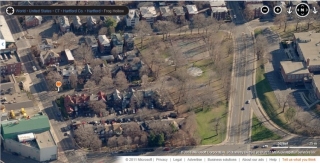
- Architectural and Historical Information
Number of Existing Buildings
Two multi-unit rowhouses.
Dates of Construction
1888, 1895, 1899
Housing Types
Brief Description
George Keller Historic District is an area containing Putnam Street, Columbia Street, one block of Park Terrace and Pope Park North. All together, the properties form a rhomboid shape in plan that defines the district. In size, the area stretches one city block north and south and two short blocks east and west. It is flanked by Capitol Avenue on the north and Russ Street on the south. This small neighborhood is part of the 35 block Frog Hollow National Register District. The district includes three rows of attached houses entirely different in concept, scale, style and originality. These are located off Capitol Avenue along Columbia Street and Park Terrace, designed by Hartford architect George Keller. The first row of 12 single family units was put up on the west side of Columbia Street in 1888. Well received, it was followed by the row across the street in 1899 and by that on Park Terrace in 1895. These are modest homes but done professionally and designed cohesively in brick with large expanses of shingled roofs, wooden porches, and shed dormers. The row on the west side of Columbia Street is anchored at each end by a large round tower with conical roof straight from a medieval keep, while the roof line of the Park Terrace row consists of an arrangement of central paired towers flanked by dormers running out to end pavilions. The district has two-fold significance. Here in the late 19th and early 20th centuries, manufacturing processes and inventions emerged that were important to Hartford, the United States of America and the world. Also, today with its building stock almost intact, the district is an example of how simultaneous growth of industrial, residential and commercial facilities complemented each other as urbanization progressed. [2 and NR]