Mill Record West Haven
RETURN TO ‘FIND MILLS’Disclaimer: Content for these properties was compiled in 2014-2017 from a variety of sources and is subject to change. Updates are occasionally made under Property Information, however the Connecticut Trust for Historic Preservation (dba Preservation Connecticut) makes no representation or warranty that the information is complete or up-to-date.
- Complex Name (Common)
- American Buckle & Cartridge Co.
- Complex Name (Historic)
-
- American Buckle & Cartridge Co.
- Address or Location
- 291 Campbell Avenue, West Haven
- County
- New Haven
- Historic Designation
- Associated Mill Community
- n/a
- Historic Information
Companies Associated w/Complex
- American Buckle & Cartridge Co. 1885-1889
- American Buckle Co. 1889-mid-20th c.
Use (Historic)
Largest Documented Workforce
25-49 (1939).
Historic Narrative
The American Buckle and Cartridge Company was organized by George R. Kelsey in 1885. Kelsey was a native of Middletown, Connecticut, who established the American Buckle Company in that town during the early 1850s, and relocated to West Haven in 1856 after his factory was destroyed by fire. Kelsey subsequently took a job as manager and treasurer of the West Haven Buckle Company, which had been established in 1853, and remained associated with that company for the rest of his life. The West Haven Buckle Company was exceptionally profitable during and after the American Civil War (largely due to government contracts) and this success, as well the overall demand for the company’s products, likely inspired Kelsey to organize his second buckle manufactory, which he merged with another of his ventures, the Kelsey Cartridge Company. In addition to producing an assortment of metal buckles, the resultant American Buckle and Cartridge Company manufactured shotgun shells that were sold to other firms for filling and distribution. This activity was continued until 1889 when the munitions side of the business was acquired by the Ammunition Manufacturers Association, a corporation formed by the Winchester Repeating Arms Company, Union Metallic Cartridge Company, the United States Cartridge Company, and Phoenix Metallic Cartridge Company, in order to control ammunition prices. After the acquisition, all of the American Buckle and Cartridge Company’s ammunition equipment and related patents were sold to the Peters Metallic Cartridge Company of Cincinnati, Ohio, and the Campbell Avenue plant was dedicated to the manufacture of buckles and similar items. George R. Kelsey died in 1889, after which control of the subsequently reorganized American Buckle Company passed to his son, Israel A. Kelsey. By the late-1890s, the company’s product line included a variety of stamped metal buckles used on garters, hats, overshoes, suspenders, and trousers. The firm’s success necessitated that additions be made to the Campbell Avenue plant in 1903, 1915, 1917-1918, and ca. 1940, and by 1950 the resultant complex was twice the size of the original mill. A steady flow of patent licenses granted during the 1930s indicate that the firm continued to innovate during this period. The American Buckle Company ceased operations during the mid-20th century.
- Architectural Information
Number of Existing Buildings
Roughly nine (9) adjoining blocks.
Dates of Construction
1885, 1903, 1915, 1917-1918, ca. 1940.
Architect
n/a
Builder
n/a
Building Type
Architectural Description
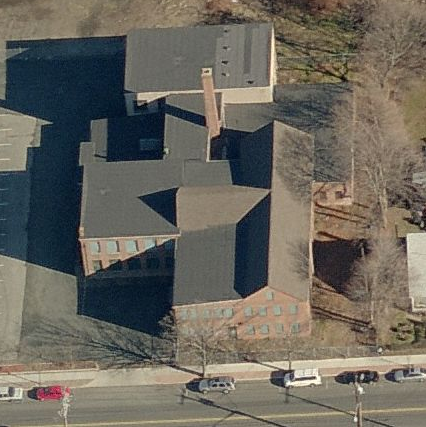
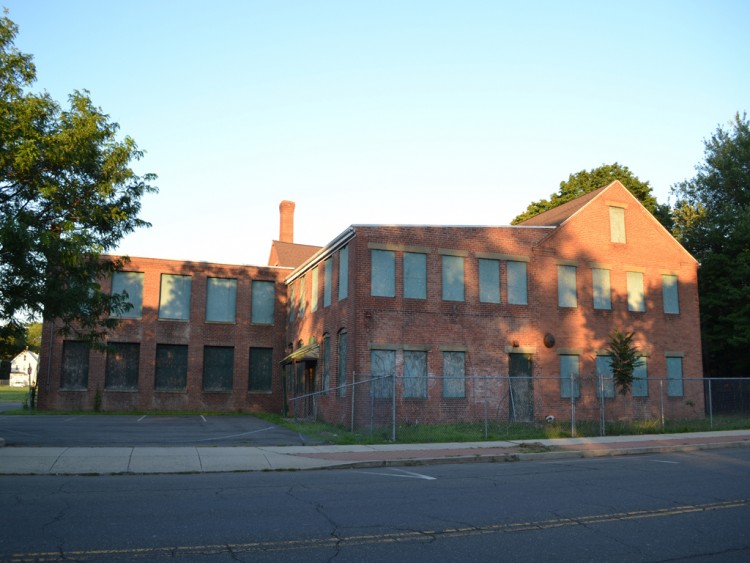
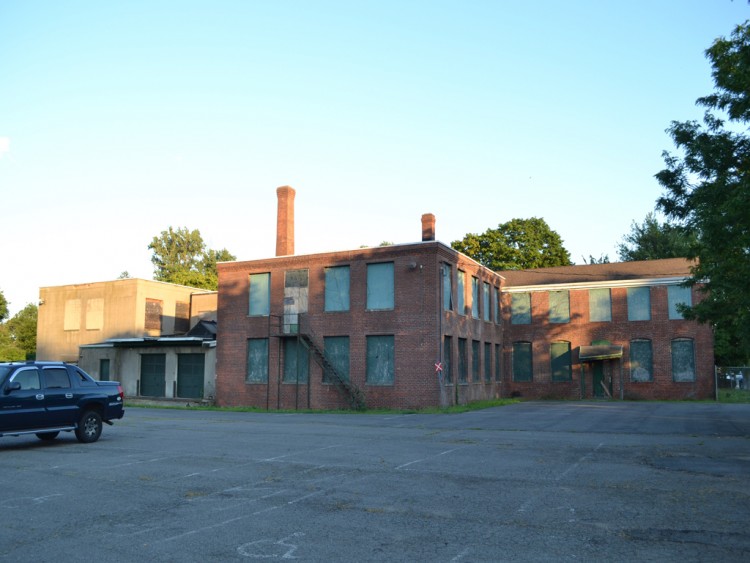
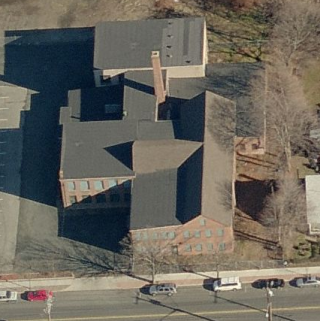
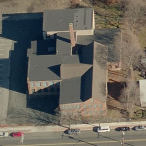
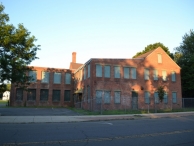
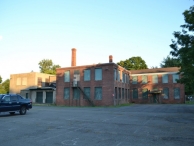
The former American Buckle Company plant is comprised of roughly nine primary adjoining blocks located on the east side of Campbell Avenue, approximately 115’ north of Campbell Avenue’s intersection with Walnut Street. Two of the blocks were erected as part of the original mill in 1885. They consist of a two-story, 28’ x 100’ red brick manufacturing block, which has a two-story, 28’ x 26’ cross-gable ell on its north (side) elevation. The primary block has rectangular window openings with heavy stone lintels, a corbelled brick cornice with cornice returns, and a front-facing gable roof. The ell was likely of similar detailing, however, it has since been enveloped by later additions and only its gable-end remains visible. A two-story, 28’ x 46’ red brick addition was erected on the northwest side of the intersection between the main block and the northern ell in 1903. This housed additional manufacturing space and has rectangular window openings with stone lintels on its west (facade) elevation, a mix of segmental-arched and rectangular window openings (the latter with stone lintels) on its north (side) elevation, and a shed roof. Entries are located on both the west and north sides of the block with the northern door sheltered by a shed-roofed portico. Further additions to the plant were completed in 1915 when a two-story, 40’ x 45’ red brick block was built adjoining the north side of the factory, and a one-story, 50’ x 22’ red brick boiler house and manufacturing block was erected along the eastern (rear) elevation of the original mill. Both blocks have large rectangular window openings with concrete sills, lintels comprised of doubled courses of bricks laid in rowlock orientation, corbelled brick cornices, and flat roofs. Two two-story blocks were erected at the eastern end of the mill between 1917 and 1918. These measure 18’ x 40’ and and 63’ x 42’, respectively, and are constructed of terra cotta tile faced with stucco. The blocks are of plain styling and have flat roofs. The final addition to the plant was completed ca. 1940 when a one-story, 32’ x 34’ concrete block shipping and receiving area was built on the east side of the northern 1915 block. Like the 1917-1918 blocks, this has been faced with stucco and lacks decorative ornamentation. Two garage-style door openings and a single pass-through door are located on the block’s north elevation, while three gabled skylights formerly allowed light into the interior of the building.
Exterior Material(s)
Structural System(s)
Roof Form
Roof Material
Power Source
Condition
Fair
Condition Notes
The complex is in fair condition. Although sections of the exterior walls are in need of cleaning and minor repairs, the mill appears to be structurally sound. All of the window openings have been boarded up or infilled and it is unclear whether or not the original fenestration remains in the former case.
- Property Information
-
Specific Location
One legal parcel (291 Campbell Avenue) totaling 1.2 acres located on the east side of Campbell Avenue, approximately 115’ north of Campbell Avenue’s intersection with Walnut Street.
Adjacent To
Exterior Visible from Public Road?
Yes
Parcel ID / Assessor Record Link
- 027/0322/0/0000. / Link →
Acreage
1.2
Use (Present)
- Sources
-
Form Completed By
Lucas A. Karmazinas
Date
08/04/2015
Bibliography
- List of Connecticut Manufacturers, 1922, 1924, 1930, 1932.
- Directory of Connecticut State Manufacturers, 1936, 1939.
- Industrial Directory of Connecticut, 1947.
- Register of War Production Facilities in Connecticut, 1951.
- Map of New Haven County; Clark, Richard, 1859.
- Atlas of New Haven County, Beers, Ellis & Soule, 1868.
- Aerial Survey of Connecticut, 1934, 1965.
- Sanborn Map Company, 1901, 1923, 1951.
- History of the City of New Haven to the Present Time, 1887.
- A Modern History of New Haven and Eastern New Haven County, 1920.
- Representative View(s)Click on image to view full file
-
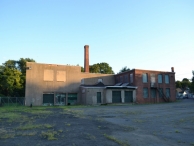
Photographer
Lucas A. Karmazinas
Photography Date
08/04/2015