Mill Record Stafford
RETURN TO ‘FIND MILLS’Disclaimer: Content for these properties was compiled in 2014-2017 from a variety of sources and is subject to change. Updates are occasionally made under Property Information, however the Connecticut Trust for Historic Preservation (dba Preservation Connecticut) makes no representation or warranty that the information is complete or up-to-date.
- Complex Name (Common)
- B.P. Cooley Co.
- Complex Name (Historic)
-
- B.P. Cooley Co.
- Address or Location
- 2 River Road, Stafford
- County
- Tolland
- Historic Designation
- Associated Mill Community
- n/a
 What can you do at this mill?
- Historic Information
Companies Associated w/Complex
- B.P. Cooley Co. 1936-2003
- Smith & Cooley Co. 1881-1936
- William Smith & Co. 1875-1881
Use (Historic)
Largest Documented Workforce
100 (ca. 1900)
Historic Narrative
The B.P. Cooley Company was originally established in 1850 as William Smith and Company. The firm was founded by Stafford resident William Smith, and originally operated as a dealer of woolen flocking and wool processing supplies. The company initially maintained a frame warehouse on the south side of the Central Vermont Railroad line, which was eventually replaced with the extant three-story brick building along River Road in 1875. Smith was joined by his brother, Chauncey Smith, in 1855, however, Chauncey retired in 1870, leaving sole control of the company in the hands of William Smith. Smith’s son-in-law, William H. Cooley, was brought into the business in 1870, as was his son, William H. Smith, in 1873. After William Smith Sr. died in 1881, the company continued as the Smith and Cooley Company into the 1930s. Up until the late-1870s, William Smith and Company operated solely as a commercial dealer of woolen goods and industrial products. In 1877, however, the firm began to actively manufacture the woolen products that they had formerly sold to various manufacturers. The company initially had to rely on waterpower provided by a neighboring mill, until 1878 and 1879 when boilers were installed to drive the machinery. In 1885, the firm purchased the cotton warp mill formerly operated by the Glyn Company a mile north of Stafford Springs along Furnace Avenue (since demolished) in order to further expand their production of woolen flock and shoddy. By 1886, the Smith and Cooley Company operated three pickers and twenty-three cards at the Glyn Mill, and four flock cutters and a dyeing plant in their River Road mill. The Smith and Cooley Company continued to improve their River Road plant during the late-19th and early-20th centuries. A new red brick boiler and dye house was built on the south side of the complex in 1893, and in 1916 and 1917, respectively, a two-story red brick wool storage building and a three-story red brick machine shop and rag grinding building were erected on the east side of the company’s office block. These would form the core of the plant for the remainder of its history. In 1936, Benjamin P. Cooley purchased Robert Smith’s rights to the Smith and Cooley Company and reorganized the firm as the B.P. Cooley Company. Cooley continued to manage the firm until his death in 1941, at which time it was acquired by Albert W. Dolge of Hazardville, Connecticut, and Frank M. Leuthner of Oxford, Massachusetts. The pair retained the company name and it continued to operate as both a dealer and manufacturer of wool shoddy and flock. In 1952, Leuthner’s son, Frank Leuthner, joined the firm and he led the company until his death in 2002. The company closed its doors the following year, having been operated for its final 15 years by just one employee, Frank Paris, who worked for the company for almost 40 years. The River Road plant has since been occupied by a mix of small commercial and office tenants.
- Architectural Information
Number of Existing Buildings
Three (3) adjoining primary blocks.
Dates of Construction
1875, 1893, 1916, 1917.
Architect
n/a
Builder
n/a
Building Type
Architectural Description
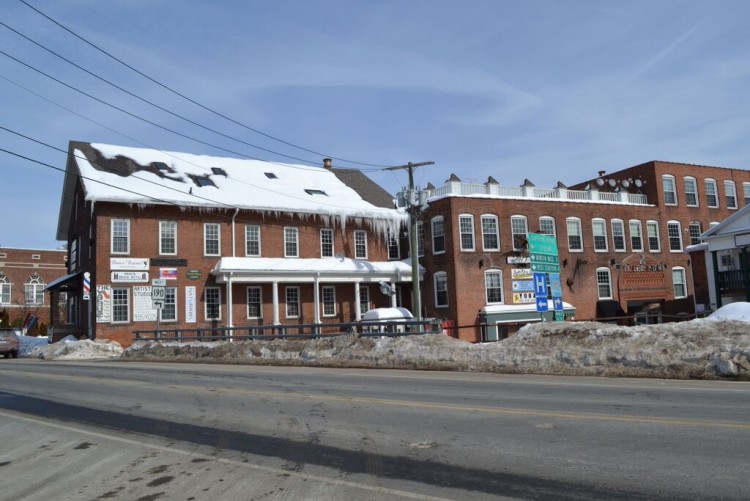
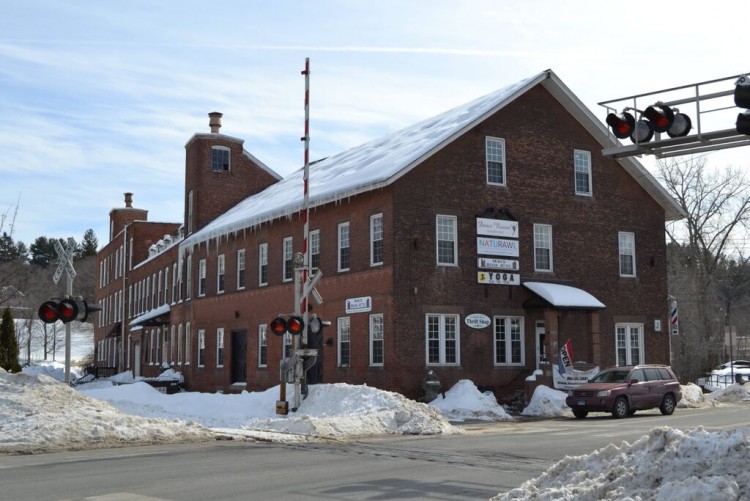
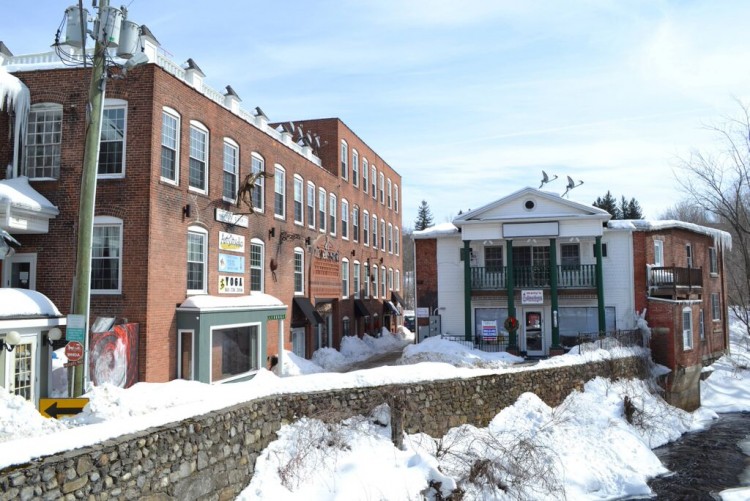
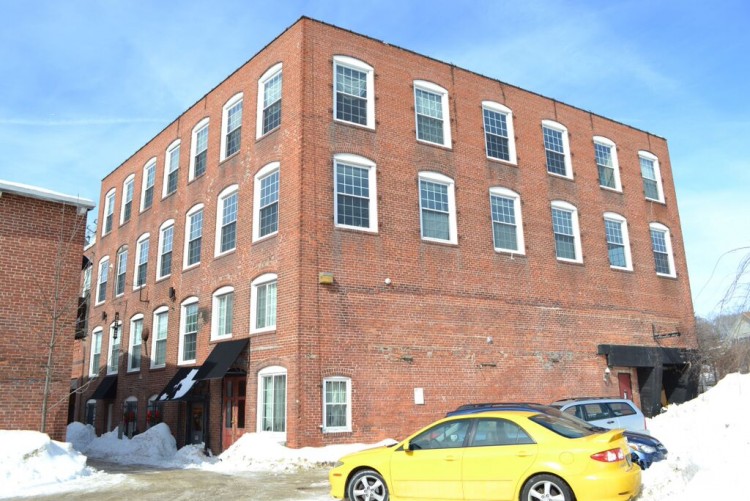
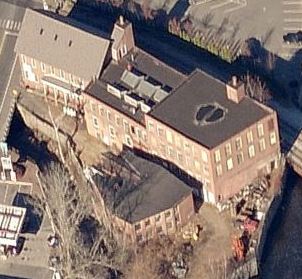
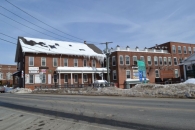
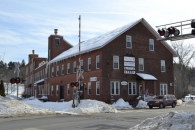
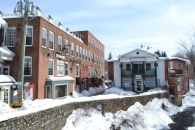
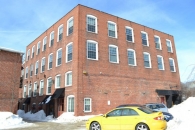
The former B.P. Cooley Company plant is comprised of three adjoining blocks and one freestanding building located on the east side of River Road, directly south of the Central Vermont Railroad line, north of the convergence of the Middle and Willimantic Rivers, and 180’ south of the four-way intersection of River Road, Main and East Main Streets, and Furnace Avenue. The earliest surviving structure is a two-and-a-half-story, 45’ x 64’ red brick office and storage building erected in 1875. The structure nearly abuts the east side of River Road and its west gable end faces the street. The building has heavy brownstone sills and lintels, double-hung vinyl sash, and an entry with a shed-roof porch centered on its façade. A loading dock once located along the building’s north elevation, facing the rail line, has been removed, however, two wooden sliding doors remain as evidence of the structure’s former utility as a warehouse. Frame buildings previously located to the east of the 1875 building were removed in 1916 and 1917, when a two-story, 60’ x 60’ red brick wool storage building and a three-story, 61’ x 73’ red brick machine shop and rag grinding building were erected on the east side of the company’s office block. A three-story red brick stair tower is located on the north side of the plant between the 1875 and 1916 blocks, and a second four-story stair tower is located at the center of the 1917 building. Both the 1916 and 1917 buildings have red brick walls, segmental-arched window openings with double-hung vinyl sash, tile coping, and flat roofs. A loading dock and several loading bays with wood doors are located on the north elevation of the two blocks, and various pass-through doors can be found on their south side. A red brick building erected in 1893 as a dye house and boiler plant stands roughly 10’ south of the 1916 and 1917 blocks. The two-story structure has an irregular footprint measuring roughly 58’ x 65’, and its rectangular window openings have concrete sills and flat brick lintels laid in soldier course. The low-pitch hipped roof has exposed rafter tails on its east (rear) elevation and a pedimented cross-gable porch supported by full-height columns projects from the west (façade) side of the building. The latter feature is not original to the building and appears to have been constructed ca. 2005 when the structure was converted for commercial use.
Exterior Material(s)
Structural System(s)
Roof Form
Roof Material
Power Source
Condition
Fair
Condition Notes
The factory is in fair condition. The majority of the exterior walls appear to be reasonably well maintained, however, show some signs of staining and deterioration. The original wood windows throughout the plant have been replaced with vinyl sash and a non-original façade has been added to the north elevation of the 1893 building.
- Property Information
-
Specific Location
One 0.72-acre parcel (2 River Road) on the east side of River Road, directly south of the Central Vermont Railroad line, north of the convergence of the Middle and Willimantic Rivers, and 180’ south of the four-way intersection of River Road, Main and East Main Streets, and Furnace Avenue.
Adjacent To
Exterior Visible from Public Road?
Yes
Parcel ID / Assessor Record Link
- 51/ / 89 / Link →
Acreage
0.72
Use (Present)
- Sources
-
Form Completed By
Lucas A. Karmazinas
Date
02/24/2015
Bibliography
- Map of Tolland County, Wm. C. Eaton & H.C. Osborn, 1857.
- Atlas of Tolland County, O.W. Gray, 1869.
- Sanborn Map Company, 1884, 1892, 1897, 1911, 1921, 1930, 1943.
- Aerial Survey of Connecticut, 1934, 1965.
- Birdseye View of Stafford Springs, Conn., O.H. Bailey & Co., 1878.
- List of Connecticut Manufacturers, 1922, 1924, 1930, 1932.
- Directory of Connecticut State Manufacturers, 1936, 1939.
- Industrial Directory of Connecticut, 1947.
- Register of War Production Facilities in Connecticut, 1951.
- Hartford Courant, 2002, 2003.
- History of the Town of Stafford, Stafford Library Assoc., 1935.
- Stafford, Connecticut, 250th Anniversary, 1969.
- Stafford Illustrated, Young, William, 1895.
- Town of Stafford HRI, Gibbs, James, 1993.
- Representative View(s)Click on image to view full file
-
Photographer
Lucas A. Karmazinas
Photography Date
02/24/2015