Mill Record Norwalk
RETURN TO ‘FIND MILLS’Disclaimer: Content for these properties was compiled in 2014-2017 from a variety of sources and is subject to change. Updates are occasionally made under Property Information, however the Connecticut Trust for Historic Preservation (dba Preservation Connecticut) makes no representation or warranty that the information is complete or up-to-date.
- Complex Name (Common)
- E.H. Hotchkiss Co.
- Complex Name (Historic)
-
- E.H. Hotchkiss Co.
- Address or Location
- 15 Cross Street, Norwalk
- County
- Fairfield
- Historic Designation
- Associated Mill Community
- n/a
- Historic Information
Companies Associated w/Complex
- E.H. Hotchkiss Co. 1897-1955
- Jones Mfg. Co. 1893-1897
- Thomas Cousin’s Shoe Factory ca. 1880-ca. 1893
- Vanderbilt Chemical Corp. 1955-ca. 1980
Use (Historic)
Largest Documented Workforce
100-199 (1939).
Historic Narrative
The E.H. Hotchkiss Company was originally incorporated in Norwalk, Connecticut in 1893 as the Jones Manufacturing Company. Among the principal organizers of the firm was Eli Hubbell Hotchkiss, a native of Waterbury, Connecticut who also owned a stationery business in that city. Hotchkiss acquired majority control of the Jones Manufacturing Company in 1897, at which time the name of the business was changed to the E.H. Hotchkiss Company. The E.H. Hotchkiss Company primarily manufactured automatic paper fastening machines, most notable being its No. 1 Paper Fastener, which upon its conception in 1895 was the first mass marketable device of its kind in the world. While previous staplers necessitated loading the metal fasteners individually, the No. 1 used a connected strip of staples that were separated, driven into a stack of paper, and folded closed by a single blow to the machine’s plunger. The combination of the product’s effective operation and low cost made it an immediate success in the United States and upon being exported to Japan it provided the Japanese word for stapler, ‘hochikisu,’ as no such implement had existed there previously. Eli H. Hotchkiss died on March 16, 1917, however the business remained family owned as his widow, Julia S. Hotchkiss, and her father, William C. Jessup retained ownership of the firm. The company’s Hoyt Street plant was substantially enlarged around 1930, and the firm remained in business in Norwalk until the late 1940s. In 1947, the business was sold to the Vail Manufacturing Company of Illinois, which relocated the firm and sold its Norwalk plant in 1955. The property was acquired by the R.T. Vanderbilt Company, a chemical manufacturing and research firm organized in 1916 by Robert T. Vanderbilt, a resident of New York, New York. R.T. Vanderbilt’s main offices were located at 230 Park Avenue in New York, however, the company established research and manufacturing facilities on Winfield Street in Norwalk during the 1920s. The Vanderbilt Chemical Corporation division of the R.T. Vanderbilt Company retained its Hoyt Street plant until the late 1970s.
- Architectural Information
Number of Existing Buildings
Roughly four (4) adjoining primary blocks.
Dates of Construction
ca. 1880, ca. 1930, ca. 1960.
Architect
n/a
Builder
n/a
Building Type
Architectural Description
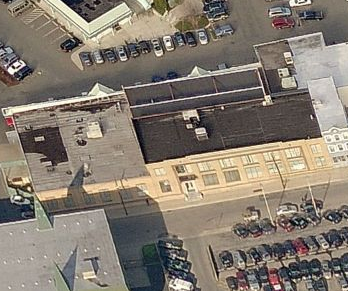
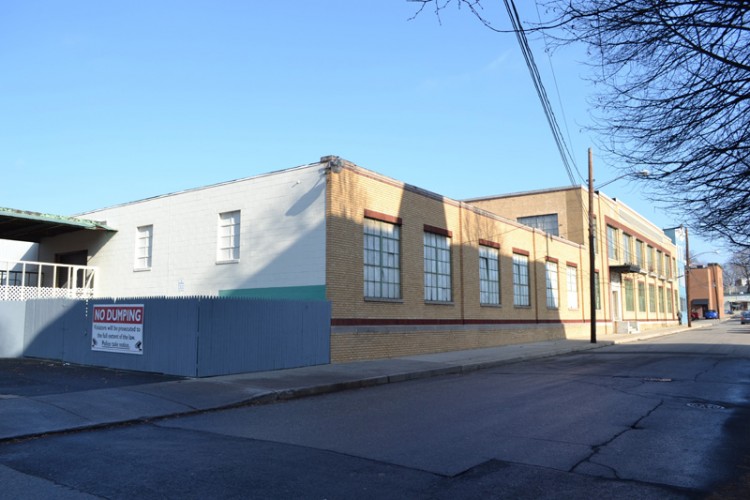
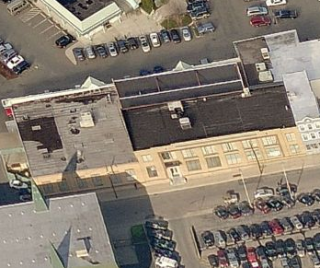
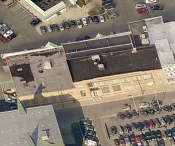
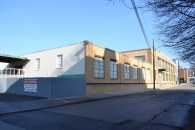
The former E.H. Hotchkiss Company plant is comprised of roughly six primary adjoining blocks located on the north side of Hoyt Street, roughly 200’ west of Hoyt Street’s intersection with Main Street. The oldest block associated with the factory was erected as a three-story Italianate style brick tenement building ca. 1880. A map from 1891 shows the building adjoining a three-story brick factory building (this demolished ca. 1955) occupied by Thomas Cousin’s shoe factory, suggesting that it may have been built specifically as worker housing associated with the neighboring mill. The tenement measures roughly 22’ x 62’ and it has rectangular window openings with stone sills and lintels, a prominent gabled cornice with heavy paired brackets and large dentils, and a flat roof. The tenement was converted for office and storage use ca. 1920. The E.H. Hotchkiss Company significantly expanded the Hoyt Street plant ca. 1930. It was at this time that the two-story, 135’ x 50’ yellow brick block was erected adjoining the west elevation of the tenement building. The new block housed factory space on the first floor and offices on the second. The building has a concrete and red brick watertable, an eight-bay façade of which the central six bays are delineated by yellow brick piers with concrete caps and framed by several courses of red brick, a stepped yellow brick parapet with a red brick cornice and concrete coping, and a flat roof. The large rectangular window openings consist of paired or tripartite pivot-hung sash with concrete sills and red brick lintels. Five of the façade (south elevation) windows on the second floor have prominent cast stone flower boxes with cast stone corbels and diamond-shaped detailing. The primary entry to the building is located in the second-to-last bay on the western end of the façade. This has a stone stairs, a prominent cast stone door surround that is embossed with the word ‘OFFICE’ above the doorway, and a flat-roofed cast iron marquis supported by highly detailed iron brackets and with a course of metal leaf and dart detailing along its roofline. The paired wood and glass entry doors are set back within the door surround. Further additions to the plant completed ca. 1930 include a one-story, 102’ x 48’ brick manufacturing block with a sawtooth roof that adjoins the north elevation of the office building, and a one-story, 102’ x 47’ brick garage and boiler plant with a flat roof adjoining the northeast corner of the office block and the north elevation of the tenement building. The final addition to the plant was constructed ca. 1960 when a one-story, 90’ x 88’ concrete block manufacturing building was erected adjoining the west elevation of the office block. This has a yellow brick façade that mimics many of the details of the office including a concrete and red brick watertable, rectangular window openings with concrete sills and red brick lintels, a red brick cornice, and concrete coping. The building has a flat roof.
Exterior Material(s)
Structural System(s)
Roof Form
Roof Material
Power Source
Condition
Fair
Condition Notes
The complex is in fair condition. The north (elevation) has been heavily altered as part of a commercial rehabilitation project, however, the primary elevations retain their historic character. Overall, the plant appears to be well maintained and structurally sound.
- Property Information
-
Specific Location
One legal parcel (15 Cross Street) totaling 2.36 acres located on the north side of Hoyt Street, roughly 200’ west of Hoyt Street’s intersection with Main Street.
Adjacent To
Exterior Visible from Public Road?
Yes
Parcel ID / Assessor Record Link
- 1/72/21/0. / Link →
Acreage
2.36
Use (Present)
- Sources
-
Form Completed By
Lucas A. Karmazinas
Date
12/10/2015
Bibliography
- List of Connecticut Manufacturers, 1922, 1924, 1930, 1932.
- Directory of Connecticut State Manufacturers, 1936, 1939.
- Industrial Directory of Connecticut, 1947.
- Register of War Production Facilities in Connecticut, 1951.
- Map of New Haven County; Clark, Richard, 1859.
- Atlas of New Haven County, Beers, Ellis & Soule, 1868.
- Aerial Survey of Connecticut, 1934, 1951, 1965, 1970, 1985.
- Sanborn Map Company, 1891, 1896, 1901, 1906, 1922, 1950, 1958.
- Norwalk Directory; Various editions.
- Hartford Courant, 1894, 1900, 1954, 1955.
- Norwalk; Grant, Lisa Wilson, 2014.
- Representative View(s)Click on image to view full file
-

Photographer
Lucas A. Karmazinas
Photography Date
12/10/2015