Mill Record Waterbury
RETURN TO ‘FIND MILLS’Disclaimer: Content for these properties was compiled in 2014-2017 from a variety of sources and is subject to change. Updates are occasionally made under Property Information, however the Connecticut Trust for Historic Preservation (dba Preservation Connecticut) makes no representation or warranty that the information is complete or up-to-date.
- Complex Name (Common)
- E.J. Manville Machine Co.
- Complex Name (Historic)
-
- E.J. Manville Machine Co.
- Address or Location
- 574 East Main Street, Waterbury
- County
- New Haven
- Historic Designation
- Associated Mill Community
- n/a
- Historic Information
Companies Associated w/Complex
- E.J. Manville Machine Co. 1878-1947
- National Machinery Co. 1947-c.1970
Use (Historic)
Largest Documented Workforce
n/a
Historic Narrative
The history of the E.J. Manville Machine Company starts in 1823, when Eli Josiah Manville was born in Watertown, Connecticut, into a family of farmers. Manville himself was drawn to the mechanical arts, and became a machinist apprentice in the 1840s at the shop of Warner and Isabel, makers of wool carding machinery, in Naugatuck. Manville later worked at the National Armory in Springfield for a short time, and moved to Waterbury in 1852. During his first few years in town, Manville owned his own gas and steam pipe business, and was a superintendent at the New England Buckle Company (est.1852). During the Civil War he was employed by Blake and Johnson, a company which made wire goods and had its own machine manufacturing department; he was appointed superintendent of the machine division. Eli Manville proved to be a talented machinist who developed several important machines, and filed for many patents, largely during the 1860s and 1870s, and frequently assigned to the companies he worked at. His most important patents include the Four-Slide machine, in 1855, which made wire pins, and the Manville Shaper in 1875. The wire pin machine (on display at the Mattatuck Museum) could draw, bend, and cut steel wire to a variety of specifications, and engendered the rapid growth of firms such as the Oakville Pin Company of Oakville, the American Pin Company of Waterbury, and the Excelsior Needle Company in Torrington. For a short time in the 1870s, Manville worked with the Hendey Machine Company of Torrington, a notable manufacturer of machine tools, before he established his own company, the E.J. Manville Machine Company, in Waterbury in 1878. In 1886, the company was incorporated with a capital stock of $25,000. That same year, Eli Manville died, leaving the company to his five sons, who had all worked with him at various times. In 1894, Frank Manville was awarded a patent for a machine which made eyelets and paved the way for the eyelet industry in the Naugatuck Valley. After being in several locations, in 1904 the firm constructed the building that stands today on East Main Street. There were some reported labor struggles in 1915, when 188 of the 225 workers struck to protest management's refusal to accede to an eight-hour workday and time and a half for overtime. The National Machinery Company of Ohio (est. 1874) purchased the E.J. Manville Company in 1947. They continued to build parts for Manville machine until the late 1960s. Today an eyelet and tool manufacturer occupies the building.
- Architectural Information
Number of Existing Buildings
Three (3) primary blocks.
Dates of Construction
1904, c.1920, c.1970s
Architect
n/a
Builder
n/a
Building Type
Architectural Description
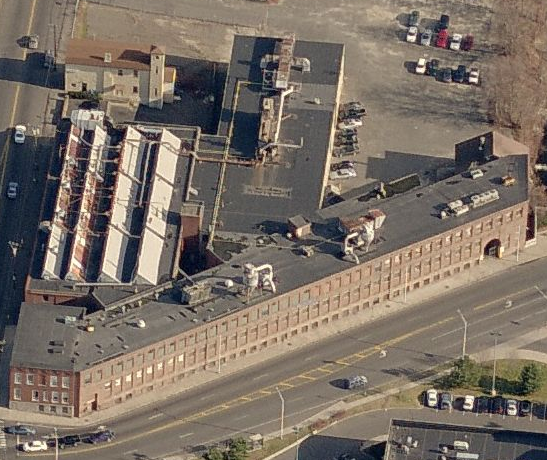
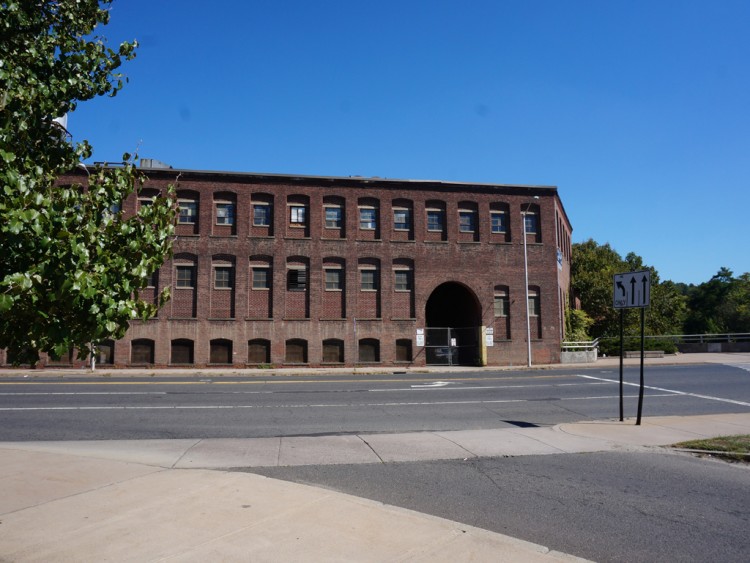
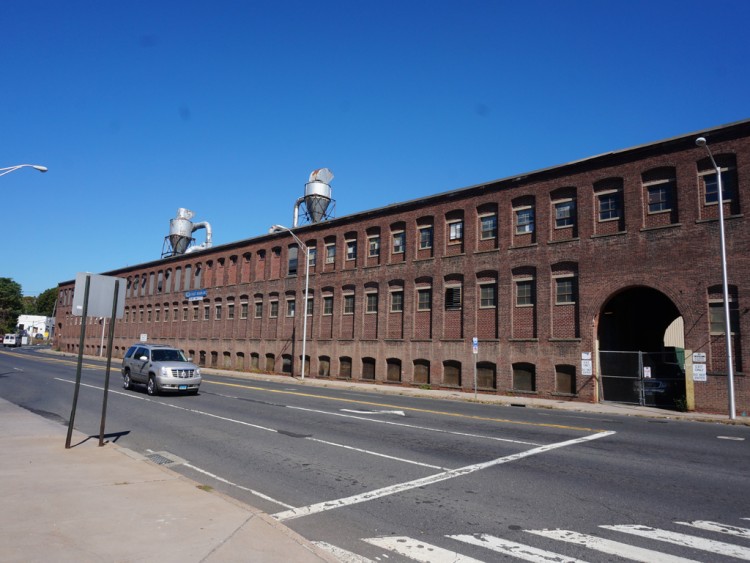
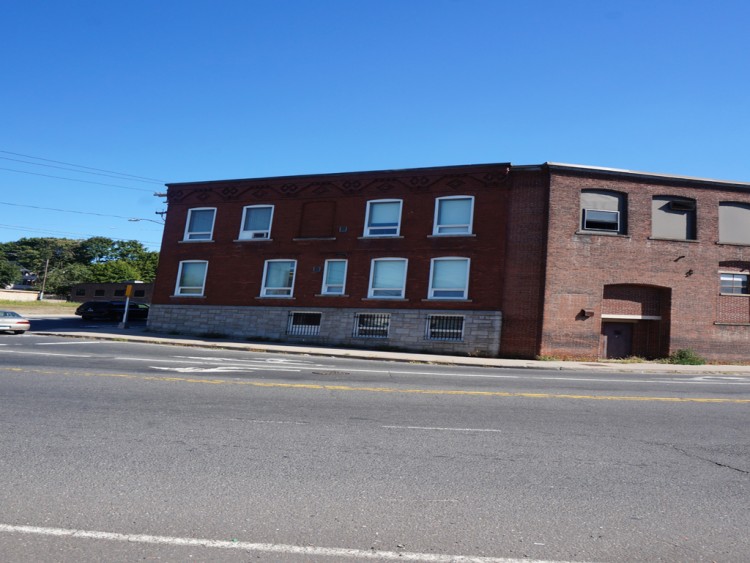
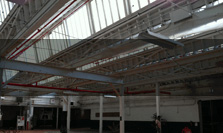
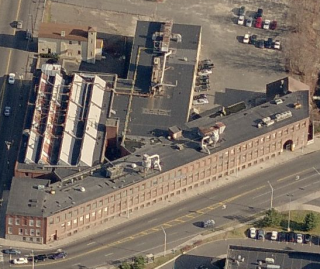
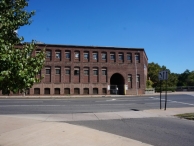
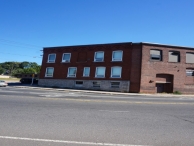
The former E.J. Manville Machine Company factory building is composed of three major blocks. The largest, two-story 1904 brick building with a wood structural system and flat roof, runs parallel to Brass Mill Drive and measures approximately 400 feet by 55 feet. The company offices were located at the northern end which is decorated with relief brickwork along the roof line. There is also a large brick archway and tunnel that allowed vehicles to pass through the front of the building into the back courtyard of the complex. A two-story rectangular brick and steel structured building with saw tooth skylights, approximately 200 feet by 100 feet, dates to c. 1920. The most recent addition measures approximately 245 feet by 75 feet, and is a two-story steel building, likely from the 1970s or 1980s.
Exterior Material(s)
Structural System(s)
Roof Form
Roof Material
Power Source
Condition
Good
Condition Notes
Very Good Condition
- Property Information
-
Specific Location
One 2.36 acre parcel at the SEC of Brass Mill Drive and East Main Street, north of the Mad River
Adjacent To
n/a
Exterior Visible from Public Road?
Yes
Parcel ID / Assessor Record Link
- 0296-0093-0098 / Link →
Acreage
2.36
Use (Present)
- Industrial
- Other: 1/2026: for sale asking $1.5m
- Sources
-
Form Completed By
Michael Forino
Date
August 2015
Bibliography
- Hartford Courant.
- Pape, William J. History of Waterbury and the Naugatuck Valley, Connecticut,. Chicago; New York: The S. J. Clarke Publishing Company, 1918.
- Kelley, Etna M. The Business Founding Date Directory. Scarsdale, N.Y.: Morgan & Morgan, 1954.
- E.J. Manville Machine Co, :The Art of Screw Thread Rolling, 1906.
- Representative View(s)Click on image to view full file
-

Photographer
Michael Forino
Photography Date
August 2015