Mill Record New London
RETURN TO ‘FIND MILLS’Disclaimer: Content for these properties was compiled in 2014-2017 from a variety of sources and is subject to change. Updates are occasionally made under Property Information, however the Connecticut Trust for Historic Preservation (dba Preservation Connecticut) makes no representation or warranty that the information is complete or up-to-date.
- Complex Name (Common)
- Edward Bloom Silk Co.
- Complex Name (Historic)
-
- Edward Bloom Silk Co.
- Address or Location
- 90 Garfield Avenue, New London
- County
- New London
- Historic Designation
- Associated Mill Community
- n/a
- Historic Information
Companies Associated w/Complex
- Edward Bloom Silk Co. 1921-1936
- Garfield Belt Company ca. 1950s
- National Foreman’s Institute Inc. ca. 1950s
- Templeton Radio Manufacturing Company ca. 1940s
Use (Historic)
Largest Documented Workforce
100-500 (1934-1935)
Historic Narrative
The Edward Bloom Silk Company began operations in New London in 1921. The company was founded by Edward Bloom Sr., of Paterson, New Jersey, who also maintained silk mills in Paterson and Bayonne, New Jersey. Bloom was courted in the interest of establishing an additional silk mill in New London by that city’s Chamber of Commerce early in 1921, and by the end of that year he had acquiesced, a site on Garfield Street had been selected, and a mill erected. At its start, the Edward Bloom Silk Company’s New London plant employed around 100 hands operating as many as 138 looms. These numbers were soon increased after the plant was significantly enlarged through the construction of an additional weaving building in April 1922, and further expansion of the plant later that same year. The company remained in business through the 1920s, however, competition from newly developed synthetic textiles significantly impacted profits during the early 1930s. After attempts to negotiate more favorable property assessments with the City of New London failed in 1933, Bloom decided to extricate his business from the city. The plant carried on for three more years before the silk mill ceased all operations in 1936. The Edward Bloom Silk Company plant was occupied by a variety of entities though the 1940s and 1950s, among them being the Templeton Radio Manufacturing Company, a print shop operated by the National Foreman’s Institute Inc., and the Garfield Belt Company. During the late 1950s the property was owned by the Garfield Holding Corporation, which likely rented industrial space to the aforementioned rotation of tenants. The plant has remained largely under utilized since the departure of the Edward Bloom Silk Company and currently appears to be vacant.
- Architectural Information
Number of Existing Buildings
Roughly six (6) adjoining primary blocks.
Dates of Construction
1919-1921, 1922, late-20th c
Architect
n/a
Builder
n/a
Building Type
Architectural Description
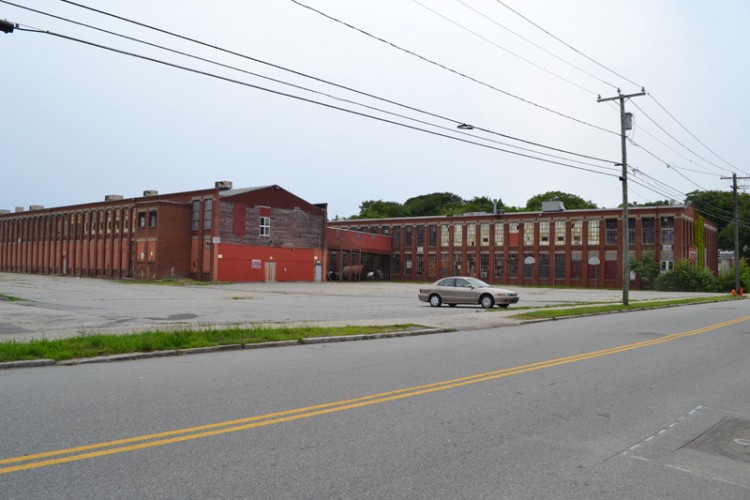
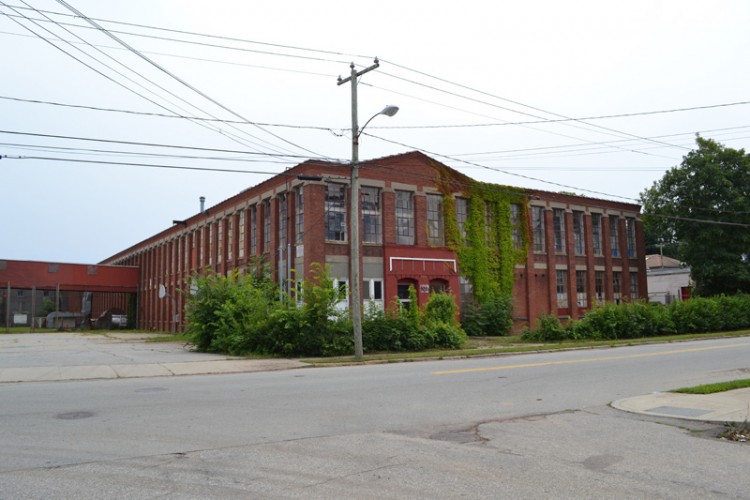
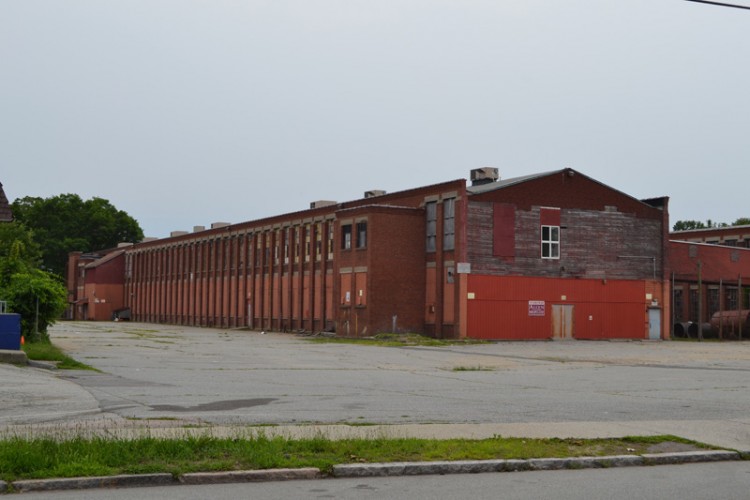
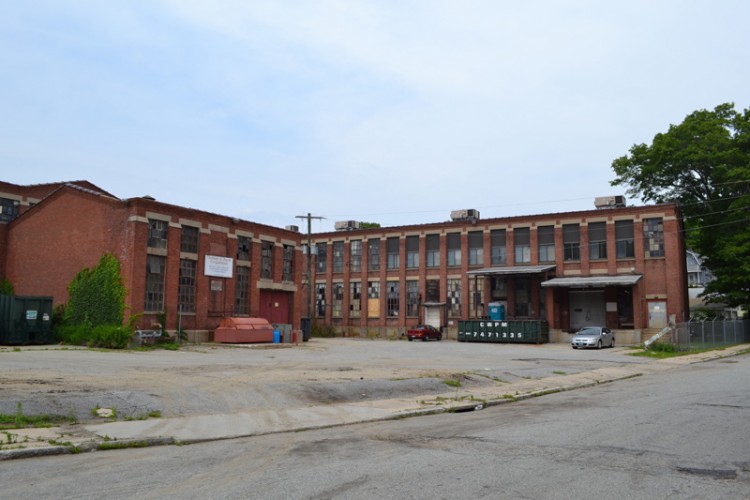
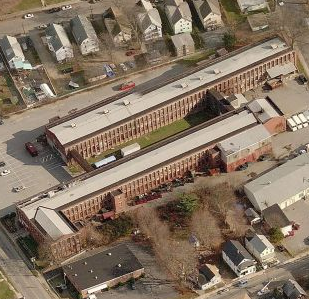
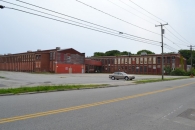
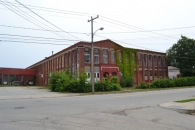
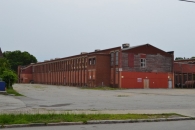
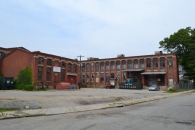
The former Edward Bloom Silk Company plant is comprised of six primary adjoining blocks located on the south side of Garfield Avenue and north side of McDonald Street opposite Garfield Avenue’s intersection with Elm Street. The original portion of the complex is that on the western side of the property. This was erected between 1919 and 1921 and consists of a two-story, 46’ x 390’ red brick manufacturing building with a two-story, 51’ x 51’ red brick ell adjoining the northern end of its west elevation, and a two-story, 48’ x 40’ red brick powerplant abutting its south elevation. The details of the three blocks are nearly identical. They are of brick pier construction and have poured concrete foundations, tall rectangular window openings with concrete sills and lintels, multi-pane metal sash with hopper style openings, corbelled brick parapets, tile coping, and low-pitch gable roofs. The two-story brick piers framing the window bays have concrete caps that link the upper-story lintels spanning each bay. There is a one-story entry porch on the façade (north elevation) of the main block. This is of poured concrete construction and has two segmental-arched door openings and a plain cornice. An incised date above the entry reads ‘1919’. Two additions to the 1921 factory were completed during the late-20th century. These include a two-story, 30’ x 78’ red brick and concrete block ell at the southern end of the main block’s west elevation, and a one-story, 27’ x 27’ concrete block loading dock at the southern end of the main block’s east elevation. Major additions to the former Edward Bloom Silk Company plant were made in 1922. The result was a two-story, 56’ x 394’ red brick block standing roughly 60’ east of, and running parallel to, the original factory. The new facility, however, was built set back approximately 150’ south of Garfield Avenue, while the original building has a setback of 38’. The details of the 1922 building are identical to the original blocks and it is connected to the 1921 plant by second-story catwalks at its north and south ends.
Exterior Material(s)
Structural System(s)
Roof Form
Roof Material
Power Source
Condition
Good, Fair
Condition Notes
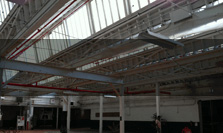
The complex is in good to fair condition. Although most of the exterior walls of the plant are in need of cleaning and some repairs, the facility appears structurally sound. Most of the original windows remain, however, many are missing panes or have been boarded over.
- Property Information
-
Specific Location
One legal parcel (90 Garfield Avenue) totaling 3.59-acres located on the south side of Garfield Avenue and north side of McDonald Street opposite Garfield Avenue’s intersection with Elm Street.
Adjacent To
n/a
Exterior Visible from Public Road?
Yes
Parcel ID / Assessor Record Link
- E12/ 156/ 1 / Link →
Acreage
3.59
Use (Present)
- Other: Property purchased by Park Lane Group 10/2019 for res redev. Listed on NR in 2020. DECD awarded $2m in brownfields grant 6/2021 for abatement and remediation in advance of residential rehab with 90 units affordable housing.10/2023: the City Council approved a credit enhancement agreement of $2m in tax breaks for the redevelopment.
- Residential
- Vacant
- Sources
-
Form Completed By
Lucas A. Karmazinas
Date
07/02/2015
Bibliography
- List of Connecticut Manufacturers, 1922, 1924, 1930, 1932.
- Directory of Connecticut State Manufacturers, 1936, 1939.
- Industrial Directory of Connecticut, 1947.
- Register of War Production Facilities in Connecticut, 1951.
- Map of New London County; Baker, William A., 1854.
- Atlas of New London County, Beers, Ellis & Soule, 1868.
- Sanborn Map Company, 1884, 1891, 1896, 1901, 1907, 1912, 1921, 1951, 1954.
- The Day, 1921, 1922, 1936.
- The Whaling City; Decker, Robert Owen, 1976.
- Representative View(s)Click on image to view full file
-
Photographer
Lucas A. Karmazinas
Photography Date
07/02/2015