Mill Record New Britain
RETURN TO ‘FIND MILLS’Disclaimer: Content for these properties was compiled in 2014-2017 from a variety of sources and is subject to change. Updates are occasionally made under Property Information, however the Connecticut Trust for Historic Preservation (dba Preservation Connecticut) makes no representation or warranty that the information is complete or up-to-date.
- Complex Name (Common)
- Fafnir Bearing Co.
- Complex Name (Historic)
-
- Fafnir Bearing Co.
- Address or Location
- 33 John Street, New Britain
- County
- Hartford
- Historic Designation
- Associated Mill Community
- n/a
- Historic Information
Companies Associated w/Complex
- Eastern Malleable Iron Works, Vulcan Iron Works Branch 1913-ca. 1936
- Fafnir Bearing Co. ca. 1940-1984
- Vulcan Iron Works 1878-1913
Use (Historic)
Largest Documented Workforce
Unknown (Fafnir Main Plant, 30
Historic Narrative
The Vulcan Iron Works was established in 1878 for the production of refined malleable iron castings. The firm was organized with $75,000 in capital and was led by William Foulds, president; and Hiram Oldersaw, secretary and treasurer. The company’s foundry was located on the north side of Whiting Street, between John Street and the Berlin branch of the New York, New Haven, and Hartford Railroad. A substantial plant was built up here by the 1890s, this consisting of two large foundries and numerous ancillary structures covering over three acres and comprising some 600 feet of frontage along John Street. By 1892 the company employed over 150 hands and was one of the largest foundry concerns in Connecticut. The Vulcan Iron Works thrived through the first decade of the twentieth century. In 1913, the company merged with several of the most prominent foundry firms on the east coast to form the Eastern Malleable Iron Company. The entities involved in this wide-reaching deal included the Vulcan Iron Works, the Bridgeport Malleable Iron Works of Bridgeport, CT; the Naugatuck Malleable Iron Works of Naugatuck, CT; the Wilmington Malleable Iron Works of Wilmington, DE; and the Troy Malleable Iron Works of Troy, NY. Regardless of this merger, the Vulcan Iron Works continued to operate on John Street as a branch division of the Eastern Malleable Iron Company and the firm made significant contributions to the war effort during the First World war, including producing over a million hand grenades, all of the foot mounts required by the military’s Browning machine guns, assorted stanchions and port lights for naval vessels, as well as various truck castings. The Eastern Malleable Iron Company invested heavily in its John Street plant in the post-war period. A massive building project conducted in 1924 replaced the southern half of the expansive plant through the construction of a new L-shaped foundry building measuring roughly 150’ x 282’ overall. The plant was abandoned, however, around 1936, after operations were consolidated in the company’s other factories. The John Street plant fell vacant for several years following the departure of the Eastern Malleable Iron Company, however, the rapid expansion of New Britain’s industrial output during the Second World War brought a new tenant in the form of the Fafnir Bearing Company, which purchased the plant shortly after the outbreak of the war. The Fafnir Bearing Company had been organized in 1911, a period in which the domestic ball bearing market was negligible compared to foreign competition. By the 1930s, its founder, Howard Hart, had nurtured the firm into an international leader. The demand for ball bearings during the Second World War quickly outpaced the capacity of the company’s primary plant on Booth Street in New Britain (since demolished), and its acquisition of the Vulcan Iron Works factory allowed it to successfully supply the bearings used in all American planes and naval vessels, and well as other machinery. Towards this end, the John Street plant was principally employed in the production of Hamilton propeller bearings. The Fafnir Bearing Company continued to operate the former Vulcan Iron Works plant following the conclusion of World War II as the suppressed availability of consumer goods during the war presented a record demand for their product in the post-war period. Around 1950, the buildings occupying the northern half of the John Street complex were demolished to accommodate a new sprawling plant opposite Pleasant Street. Further additions took place through the mid-1950s. The Fafnir Bearing Company maintained their John Street plant until 1984 when the company’s operations were consolidated in Newington, Connecticut.
- Architectural Information
Number of Existing Buildings
Roughly seven (7) primary blocks.
Dates of Construction
1924, ca. 1950, ca. 1954-1965.
Architect
n/a
Builder
n/a
Building Type
Architectural Description
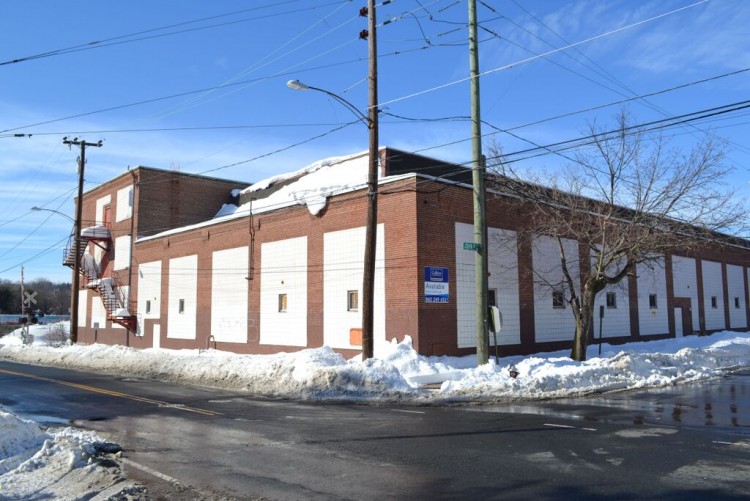
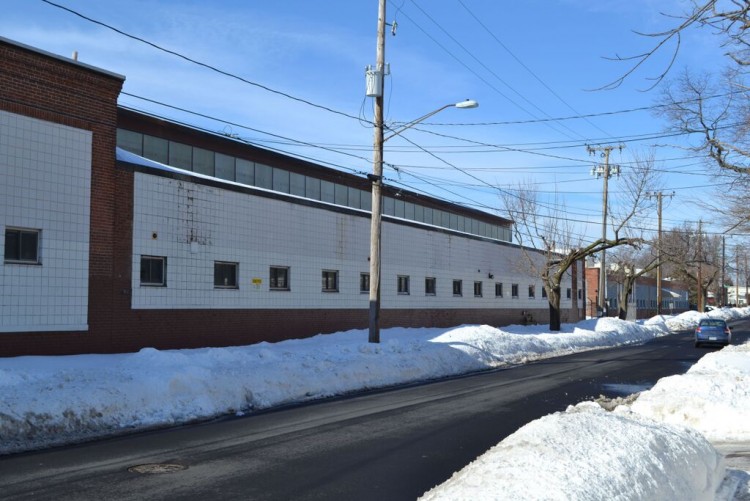
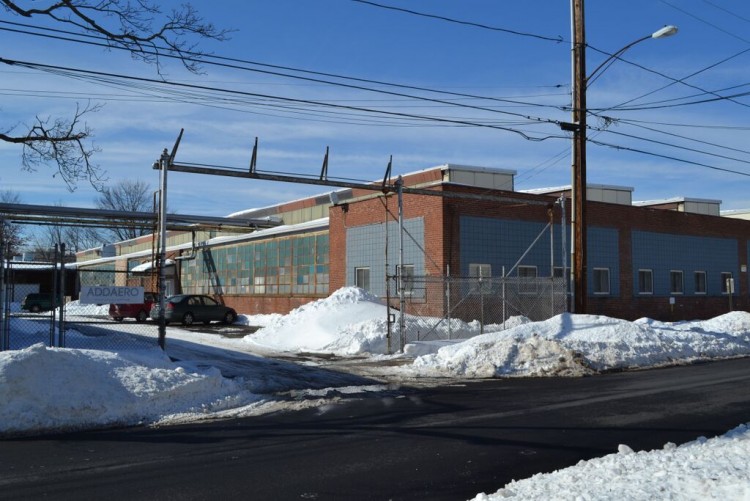
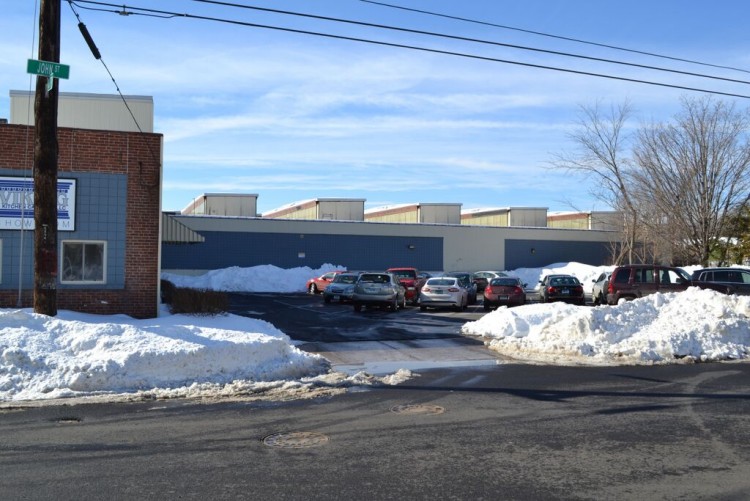
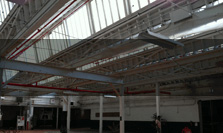
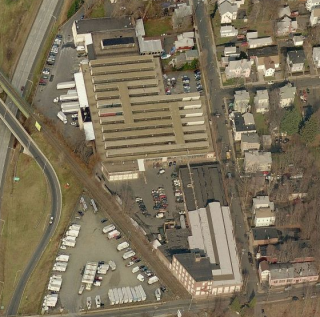
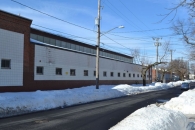
The former Fafnir Bearing Company plant is comprised of approximately seven primary buildings in two separate clusters of adjoining blocks located on the west side of John Street between Whiting and Park Streets. The oldest buildings associated with the complex were erected by the Vulcan Iron Works branch of the Eastern Malleable Iron Company in 1924. These include the two red brick blocks located at the southern end of the plant along Whiting Street. Both of the buildings have concrete foundations and plain brick walls rising to a corbelled brick cornice. The eastern of the two buildings stands one-and-a-half-stories tall and measures roughly 106’ x 278’. It has a clerestory monitor running the length of its low-pitch hip roof, however, the monitors have been boarded up. The second of the two 1924 blocks abuts the western elevation of the aforementioned building and anchors the southwest corner of the plant. This three-story, flat-roofed block has an irregular footprint measuring roughly 90’ x 110’ overall. The large rectangular window openings throughout both of the 1924 blocks have been infilled with concrete block and small modern windows. A one-story, steel frame block with red brick curtain walls was erected along John Street on the north side of the easternmost of the two 1924 blocks ca. 1950. This stands one-and-a-half-stories tall and measures roughly 108’ x 162’. Like its southern neighbor, it has tall clerestory monitors extending the length of its roof. The monitors have boarded up and the majority of the windows throughout the building have been infilled with concrete block and modern windows (some of the original multi-pane metal sash survives on the western side of the building). Another addition was built on the north side of the westernmost of the two 1924 blocks between 1954 and 1965. This is a utilitarian one-story structure used for storage and shipping departments. It has a concrete foundation, red brick walls, and a flat roof. Its irregular footprint measures roughly 70’ x 130’. A cluster of three one-story manufacturing blocks occupies the northern half of the former Fafnir Bearing Company plant. The southernmost block was built ca. 1950 and is a one-story, steel frame building with red brick curtain walls. It has an L-shaped footprint measuring roughly 364’ x 308’ overall. Its flat roof is topped by rows of 6’-tall clerestory monitors. The building’s windows have been infilled with concrete block and the monitors have been boarded over. The last two primary blocks associated with the plant are located on the north side of the ca. 1950 block and were built around the same time. They are plain one-story buildings measuring roughly 112’ x 132’ and 50’ x 156’.
Exterior Material(s)
Structural System(s)
Roof Form
Roof Material
Power Source
Condition
Fair
Condition Notes
The factory is in fair condition. The majority of the exterior walls are in good condition, however, the vast majority of the window openings throughout the plant have been reduced with concrete block infill and the clerestory monitors have been boarded up.
- Property Information
-
Specific Location
One 7.49-acre parcel (33 John Street) on the west side of John Street between Whiting and Park Streets.
Adjacent To
Exterior Visible from Public Road?
Yes
Parcel ID / Assessor Record Link
- B8C/ 67 / Link →
Acreage
7.47
Use (Present)
- Sources
-
Form Completed By
Lucas A. Karmazinas
Date
02/12/2015
Bibliography
- List of Connecticut Manufacturers, 1922, 1924, 1930, 1932.
- Directory of Connecticut State Manufacturers, 1936, 1939.
- Map of Hartford County, H & C.T. Smith, 1855.
- Atlas of Hartford County, Beers, Baker & Tilden, 1869.
- Industrial Directory of Connecticut, 1947.
- Register of War Production Facilities in Connecticut, 1951.
- Sanborn Map Company, 1884, 1890, 1895, 1909, 1950, 1954.
- Aerial Survey of Connecticut, 1934, 1965.
- Birdseye View of New Britain, 1875.
- New Britain City Directory, 1860-1960.
- Hartford Courant, 1892, 1919, 1923, 1930, 1945, 1946, 1983, 1984.
- History of New Britain, With Sketches of Farmington and Berlin, Camp, David, N., 1889.
- Roth, Matthew, et al, Connecticut: An Inventory of Historic Engineering and Industrial Sites (Washington DC: SIA, 1981).
- Representative View(s)Click on image to view full file
-



Photographer
Lucas A. Karmazinas
Photography Date
02/12/2015