Mill Record West Hartford
RETURN TO ‘FIND MILLS’Disclaimer: Content for these properties was compiled in 2014-2017 from a variety of sources and is subject to change. Updates are occasionally made under Property Information, however the Connecticut Trust for Historic Preservation (dba Preservation Connecticut) makes no representation or warranty that the information is complete or up-to-date.
- Complex Name (Common)
- Hartford Steel Ball Co.
- Complex Name (Historic)
-
- Hartford Steel Ball Co.
- Address or Location
- 485 New Park Avenue, Elmwood, West Hartford
- County
- Hartford
- Historic Designation
- Associated Mill Community
- n/a
 What can you do at this mill?
- Historic Information
Companies Associated w/Complex
- Ainslie Machine & Tool Works ca.1916-1919
- Hartford Steel Ball Co. 1934-ca. 1965
- Reising Arms Co. 1919-ca. 1925
Use (Historic)
Largest Documented Workforce
50-99 (1939).
Historic Narrative
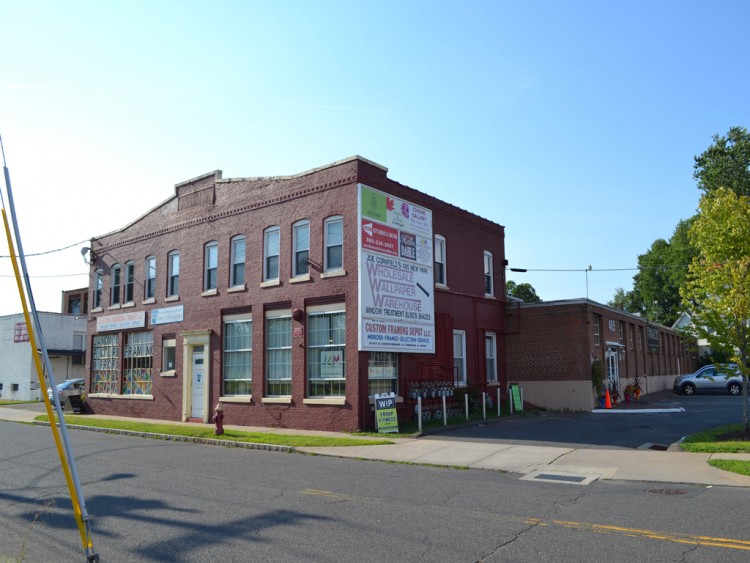
The oldest section of the former Hartford Steel Ball Company plant was originally built by the Ainslie Machine and Tool Works ca. 1916. The latter firm was organized by the Reverend William Ainsile of East Hartford, Connecticut, after he emigrated from England during the early 1900s. The company originally occupied a shop in East Hartford, however, this was moved to West Hartford in 1916 where Ainsile manufactured universal jigs, fixtures, and machine tools during the week, and performed services at the Advent Christian Church on the weekends. The Ainslie Machine and Tool Works remained in operation until 1919 when Ainsile joined with John S. Woodard and Allan K. Smith to incorporated the Reising Arms Company. Reising Arms was the brainchild of Eugene G. Reising, a talented mechanic and firearms designer born in Port Jervis, New York. Reising was employed by the Colt Firearms Manufacturing Company during the period in which the latter firm developed its legendary Colt Model 1911 pistol – under the guidance of renowned engineer and inventor John M. Browning – and he later directed this experience into creating a diverse array of his own weaponry. The Reising Arms Company was organized for the manufacture of automatic or rapid-fire guns, as well as traditional pistols, revolvers, and rifles. Among the earliest and most notable of the company’s products was a .22-caliber automatic pistol that many experts considered among the best produced in the United States. The merits of Reising’s .22-caliber automatic pistol were not, however, great enough to overcome strong competition in the market and the Reising Arms Company closed its doors after falling into financial disarray around 1925. Reising subsequently went on to design weapons for a variety of notable firearms companies including Mossberg and Sons, Marlin, Savage, and Stevens. During World War II the Harrington and Richardson Company of Worcester, Massachusetts, manufactured two of his submachine gun designs, the M50 and M60, the former emerging as a low-cost, easy-to-manufacture alternative to the Thompson submachine gun that saw extensive service in the Pacific Theater. In 1934 the Reising Arms Company plant passed to the Hartford Steel Ball Company, a firm that had operated on Franklin Avenue in Hartford since around 1925. The Hartford Steel Ball Company manufactured a variety of burnishing balls and barrels in an array of metals and glass. By the late 1930s, the plant employed between 50 and 99 hands and was led by Charles H. Abbott, who also served as secretary of the Abbott Ball Company of West Hartford. The firm occupied its West Hartford plant until the mid-1960s, whereupon operations were moved to Rocky Hill, Connecticut. The company remains in operation as Hartford Technologies, Inc.
- Architectural Information
Number of Existing Buildings
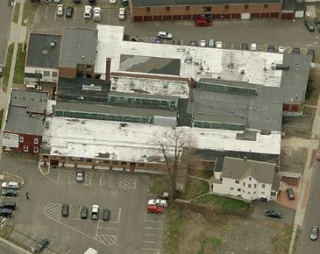
Roughly eight (8) adjoining primary blocks.
Dates of Construction
ca. 1916, ca. 1919, 1935-1950, 1950-1965.
Architect
n/a
Builder
n/a
Building Type
Architectural Description
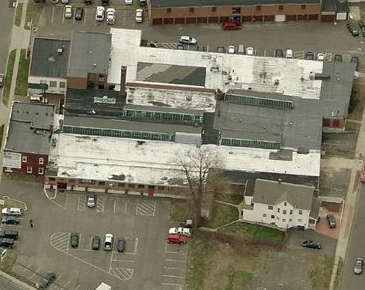
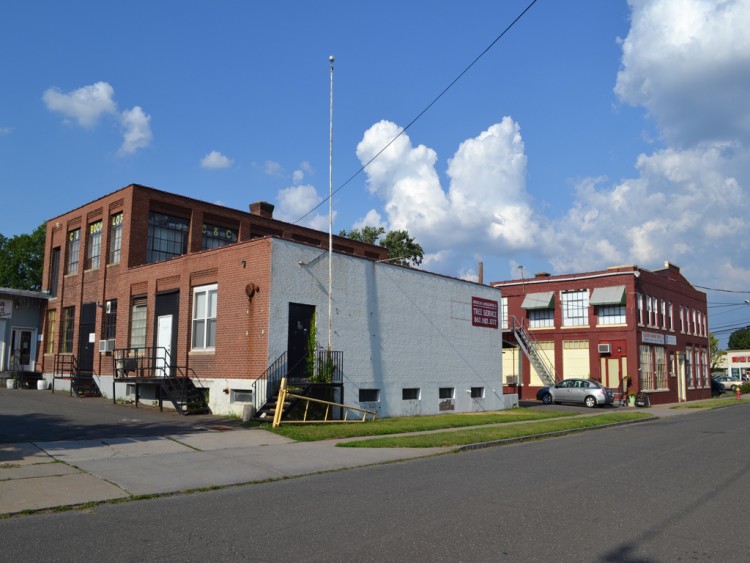
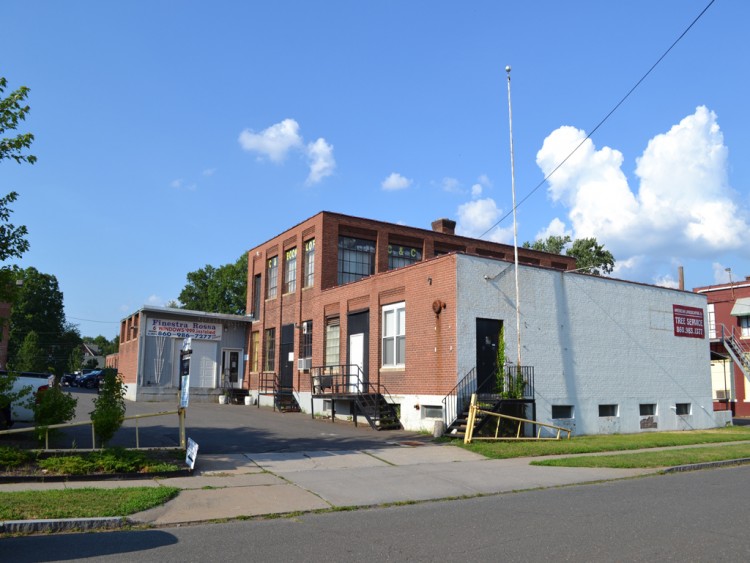
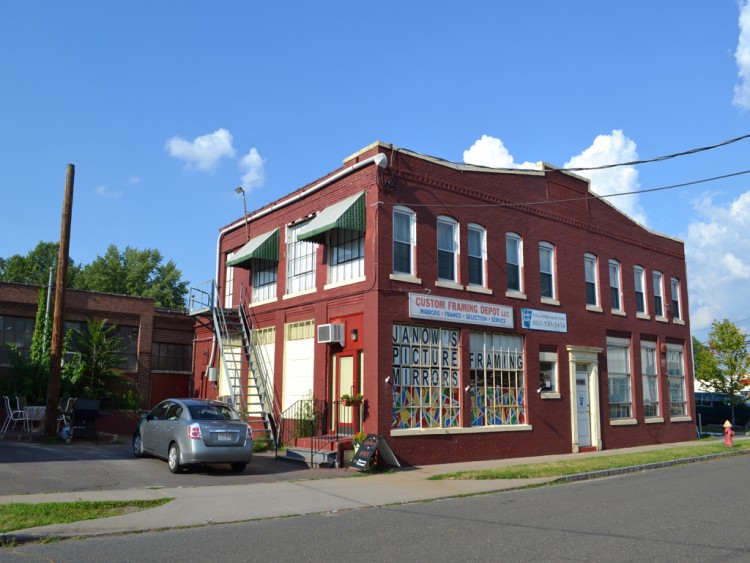
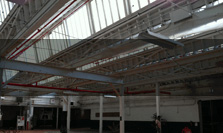
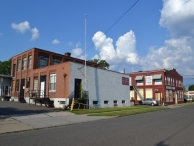
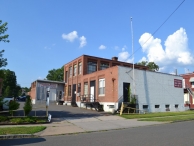
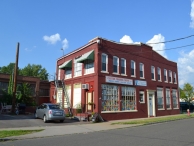
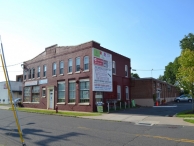
The former Hartford Steel Ball Company plant is comprised of roughly eight adjoining blocks located on the north side of Jefferson Avenue, approximately 150’ west of New Park Avenue. The oldest portion of the plant is a two-story, 60’ x 36’ red brick block located at the southeast corner of the complex. This was erected ca. 1916 and has a mix of rectangular and segmental-arched window openings with stone sills and double-hung or multi-pane metal sash with hopper-style openings, a denticulated brick cornice, stepped brick parapet with concrete coping, and a flat roof. The block’s primary entry is located along Jefferson Avenue, this consisting of a paneled wood door flanked by fluted pilasters and topped by a glass transom and tall entablature above. A one-story, 86’ x 130’ red brick manufacturing block was erected adjoining the north (rear) elevation of the original mill ca. 1919. This has largely been enveloped by later additions, however, large window openings with multi-pane metal sash and hopper style openings are visible on the south (front) elevation and two sawtooth monitors extend along the building’s roof. The majority of the aforementioned additions to the plant were completed between 1934 and 1950. These include three one- or two-story red brick blocks built adjoining the north and west elevations of the ca. 1919 block. The additions share similar details yet appear to have been erected in phases. All have concrete foundations, rectangular window openings with concrete sills and corbelled brick lintels, and flat roofs. Sawtooth monitors are found at various locations. The majority of the additions retain the original multi-pane metal sash with hopper-style openings, this most clearly visible in the two-story, 54’ x 32’ block located directly north of a one-story, 46’ x 30’ red brick block erected at the southwest corner of the factory between 1950 and 1965.
Exterior Material(s)
Structural System(s)
Roof Form
Roof Material
Power Source
Condition
Fair
Condition Notes
The complex is in fair condition. A number of the exterior walls are in need of cleaning or minor repairs and many of the original windows have been replaced with modern units.
- Property Information
-
Specific Location
One legal parcel (485 New Park Avenue) totaling 2.07 acres located on the north side of Jefferson Avenue, approximately 150’ west of New Park Avenue.
Adjacent To
Exterior Visible from Public Road?
Yes
Parcel ID / Assessor Record Link
- H13/3776/485. / Link →
Acreage
2.07
Use (Present)
- Commercial
- Industrial
- Mixed-Use
- Other: New Park Brewing opening
- Sources
-
Form Completed By
Lucas A. Karmazinas
Date
8/17/2015
Bibliography
- List of Connecticut Manufacturers, 1922, 1924, 1930, 1932.
- Directory of Connecticut State Manufacturers, 1936, 1939.
- Industrial Directory of Connecticut, 1947.
- Register of War Production Facilities in Connecticut, 1951.
- Atlas of Hartford City and West Hartford Town, Connecticut; L.J. Richards & Co., 1896.
- Atlas of Hartford City and West Hartford Town, Connecticut; L.J. Richards & Co., 1909.
- Sanborn Map Company, 1917, 1923, 1950.
- Aerial Survey of Connecticut, 1934, 1965.
- Hartford City Directory, Various editions.
- Hartford Courant, 1916, 1919, 1922.
- Representative View(s)Click on image to view full file
-
Photographer
Lucas A. Karmazinas
Photography Date
8/17/2015