Mill Record Torrington
RETURN TO ‘FIND MILLS’Disclaimer: Content for these properties was compiled in 2014-2017 from a variety of sources and is subject to change. Updates are occasionally made under Property Information, however the Connecticut Trust for Historic Preservation (dba Preservation Connecticut) makes no representation or warranty that the information is complete or up-to-date.
- Complex Name (Common)
- Haydon Manufacturing Co.
- Complex Name (Historic)
-
- General Time Instrument Corp.
- Haydon Manufacturing Co.
- Address or Location
- 245 East Elm Street, Torrington
- County
- Litchfield
- Historic Designation
- Associated Mill Community
- n/a
 What can you do at this mill?
- Historic Information
Companies Associated w/Complex
- General Time Instrument Corp. 1947-1968
- Haydon Manufacturing Company 1945-1947
Use (Historic)
Largest Documented Workforce
500 (1956)
Historic Narrative
A. W. (Bill) Haydon (b.1906) came to Connecticut in 1930, licensing his patent for a quiet miniature synchronous induction clock motor to the Waterbury Clock Company, and working as its design engineer. Other timer manufacturers were interested in using the motor, and Haydon decided to incorporate the Haydon Manufacturing Co. in 1937 to take advantage of this market. The Sessions Clock Company in Bristol was an early client, as was General Time Instrument Corp. Around 1942, Haydon Manufacturing Co. was sold to General Time (which had also bought the Seth Thomas Clock Co. in Thomaston), and Haydon assigned several patents to the new ownership. In 1945 Haydon left the firm to establish a new entity. At the same time, Haydon Manufacturing Co. moved from leased quarters in Forestville, to its new factory in Torrington. It continued to produce timing motors, clock movements, and other timing devices and instruments. It was one of several hundred companies that supplied parts for IBM's innovative 701 'defense computer,' which was the first commercially available large-scale electronic computer developed in 1951-52. In 1956, the Torrington plant was expanded by nearly fifty percent. In 1965, General Time executives sought to consolidate the Torrington and Thomaston operations, and announced plans to close the Torrington branch and move production to the Seth Thomas factory in Thomaston. There was immediate push-back from union leaders and the town. In an effort to encourage General Time to remain in Torrington, a referendum vote was held to issue a $525,000 bond for expansion of the Haydon facility: 4,811 voters turned out; only 127 votes were cast against the bond. The vote was an amazing display of public concern for Torrington’s economic future. In 1966, General Time announced that it would build a new facility on a 28-acre site in the Burrville section of town. Construction began in the summer of 1966 and was completed in 1968. But success was short lived. Only three years later, in 1971, the Haydon Division of General Time, then known as the Industrial Controls Division, announced it's plan to sell the factory and move operations to Thomaston, as originally planned in 1965. In 1942, during World War II, Bill Haydon was instrumental in the development of a new bombsight for the Air Force, by designing the gear reduction system for the Farnsworth Automatic Bombing Control System, which superseded the Norden bombsight. After leaving Haydon Manufacgturing Co., he began the A.W. Haydon Co. (incorporated in 1945), later a division of Consolidated Electronics Industries Corp., which produced timers and control devices for aircraft. In 1951, he strated the Haydon Switch and Instrument Co., with two plants in Waterbury, to manufacture precision snap switches. Over his career Haydon was awarded well over fifty patents for various timer motors, clocks, switches, relays, etc.
- Architectural Information
Number of Existing Buildings
Two (2) primary blocks.
Dates of Construction
1945, 1956
Architect
n/a
Builder
n/a
Building Type
Architectural Description
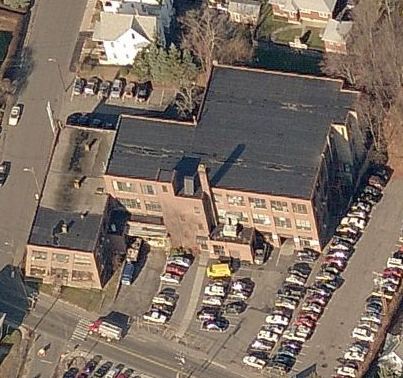
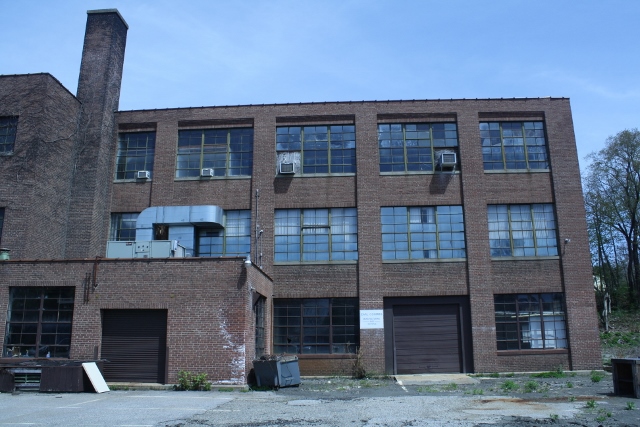
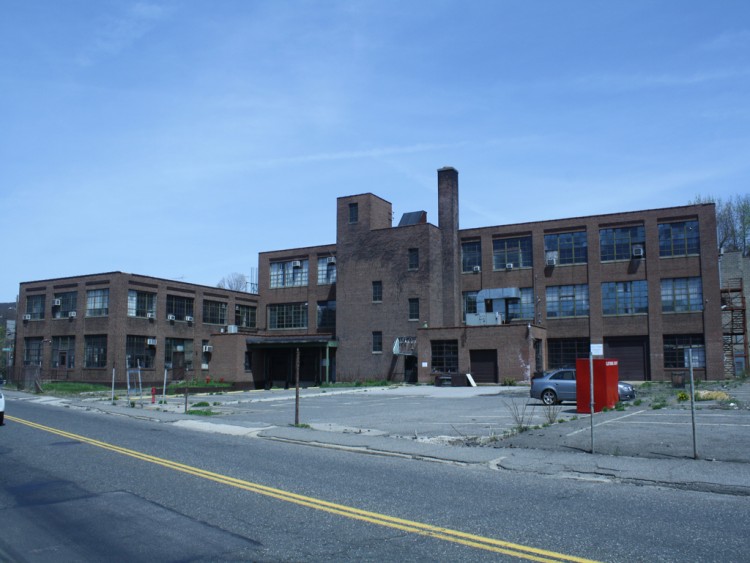
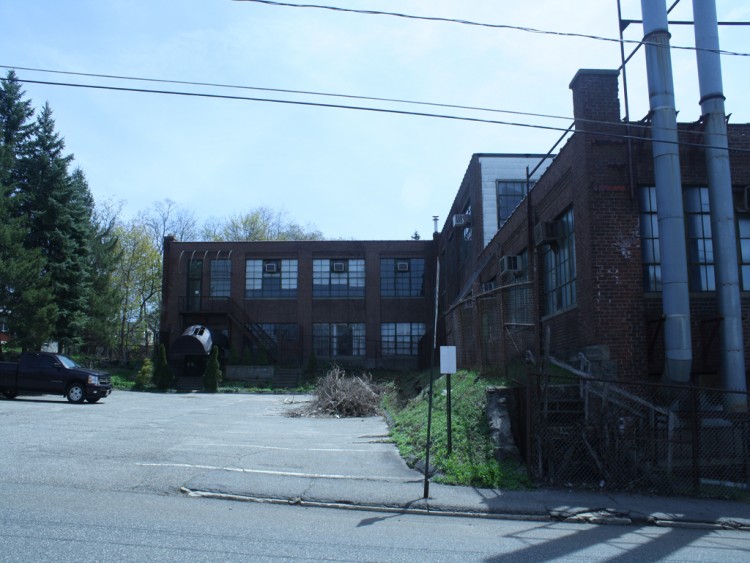
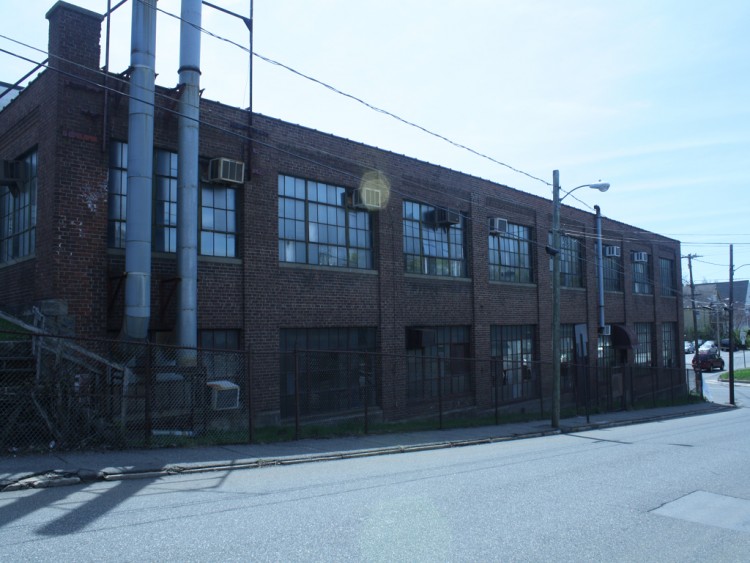
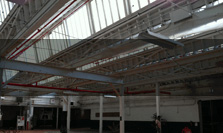
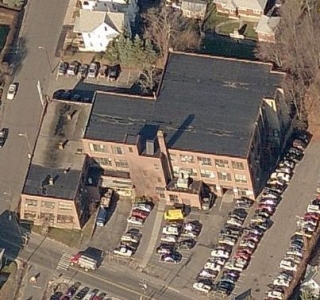
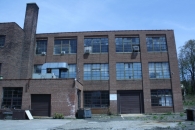
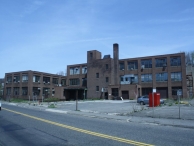
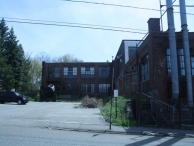
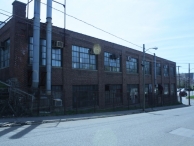
The complex consists of two attached steel-frame brick buildings, both with flat rubber roofs. The building furthest to the west is two-stories and appears to be the older of the buildings, c.1945. To the east is a three-story “L” shaped addition dating to 1956.
Exterior Material(s)
Structural System(s)
Roof Form
Roof Material
Power Source
Condition
Good, Fair, Deteriorated
Condition Notes
n/a
- Property Information
-
Specific Location
The former Haydon Factory Building sits on 1.6 acres at the corner of Brightwood Avenue and East Elm Street
Adjacent To
Exterior Visible from Public Road?
Yes
Parcel ID / Assessor Record Link
- 125/006/011 / Link →
Acreage
1.6
Use (Present)
- Sources
-
Form Completed By
Mike Forino; Renee Tribert rev
Date
August 2014; November 2016
Bibliography
- 'Westclox History from 1950 to 1959,' ClockHistory.com (n.d.). Web; accessed August 2014.
- ‘IBM 701: A Notable First,’ IBM Archives (2002). Web; accessed November 2016.
- 'A. W. Haydon, American Inventor' (1972). Web; accessed November 2016.
- Representative View(s)Click on image to view full file
-
Photographer
n/a
Photography Date
August 2014; November 2016