Mill Record Norwalk
RETURN TO ‘FIND MILLS’Disclaimer: Content for these properties was compiled in 2014-2017 from a variety of sources and is subject to change. Updates are occasionally made under Property Information, however the Connecticut Trust for Historic Preservation (dba Preservation Connecticut) makes no representation or warranty that the information is complete or up-to-date.
- Complex Name (Common)
- Hobshon-Berg Co., Div. of Cavanagh-Dobbs, Inc.
- Complex Name (Historic)
-
- Louis Greenburg & Bros., Inc.
- Hat Corp. of America
- Address or Location
- 230 East Avenue, East Norwalk, Norwalk
- County
- Fairfield
- Historic Designation
- Associated Mill Community
- n/a
 What can you do at this mill?
- Historic Information
Companies Associated w/Complex
- Hat Corp. of America 1932-ca. 1970
- Hobshon-Berg Co., Div. of Cavanagh-Dobbs, Inc. 1928-1932
- Louis Greenburg & Bros., Inc. ca. 1920-ca. 1926
- Streb Fur Cutting Co., Inc. ca. 1926-1950
Use (Historic)
Largest Documented Workforce
900 (1937).
Historic Narrative
The majority of this factory was constructed in 1929 for the Hobshon-Berg Company division of Cavanagh-Dobbs, Inc. Cavanagh-Dobbs was a holding company formed in 1928 by executives of the Crofut and Knapp Company, one of Norwalk, Connecticut’s oldest and most prominent hat producers. Crofut and Knapp began operations in 1858 as a result of a partnership between hatmakers James H. Knapp and Andrew J. Crofut. The firm specialized in firm or ‘hard’ hats and is credited with producing the first derby style hat in America in 1860. The Crofut and Knapp Company was incorporated in 1873 and by the late-19th century it occupied a second sprawling factory complex located at the corner of Tolles and Water Streets in South Norwalk, the heart of Norwalk’s hat industry at the time. As Crofut and Knapp entered the first decade of the 20th century several significant changes took place in what products the firm manufactured and how they were presented to the public. In 1903, the company joined just a handful of hat manufacturers by advertising its wares at a national level. This was done by posting advertisements in several notable publications, among them being the ‘Saturday Evening Post,’ ‘McClure’s Magazine,’ and ‘Collier’s Encyclopedia.’ Following a dip in the demand for derby hats that took place around 1906, the company began focusing on other styles. This included introducing several lines of soft hats – the Knapp-Felt and Knapp-Felt De Luxe – in 1906, and straw hats in 1908. Another significant branding move taken by Crofut and Knapp was the creation of the ‘Dobbs’ brand of hat in 1908. This developed into a direct competitor with another prominent single-named brand, the Stetson, and became Crofut and Knapp’s best selling product line from the 1910s onward. Much of this success was the result of the creation of ‘Dobbs Stores,’ where the public could purchase the company’s products directly. In 1923, the Crofut and Knapp Company completed and occupied a substantial new plant on Van Zant Street in Norwalk. All production was moved from Water Street to East Norwalk, where 1,000 employees were capable of turning out 15,000,000 hats per year. Five years later, John Cavanagh, then president of the business, moved to create a holding company, Cavanagh-Dobbs, Inc., which combined control of both Crofut and Knapp and the Dobbs and Company brands. Both entities retained their market presence, however, ownership fell under the single entity. A similar arrangement took place late in 1928, when Cavanagh-Dobbs acquired F. Berg and Company, a hat manufacturer established in Orange, New Jersey in 1864. F. Berg and Company had relocated to Norwalk in 1926, however, the firm maintained a plant on Belden Street until the merger with Cavanagh-Dobbs. Cavanagh-Dobbs acquired the Danbury, Connecticut hatmaking firm Sunfast Hats the following year, and the latter firm’s two top managers, Alfred A. Hodshon and Alfred A. Hodshon Jr., were brought to Norwalk to manage the combined F. Berg and Sunfast companies, which became the Hodshon-Berg Company division of Cavanagh-Dobbs, Inc. This occupied a newly completed factory on Rowan Street in Norwalk in 1929. This arrangement lasted until 1932, whereupon Cavanagh-Dobbs merged with the Brooklyn, New York-based Knox Hat Company to form the Hat Corporation of America, of which Cavanagh also served as president. In 1950, the Hat Corporation of America expanded its Rowan Street facility, this identified as Plant No. 2, by acquiring a neighboring factory that had previously been occupied by Louis Greenburg and Bros., Inc., a coat manufacturer, and Streb Fur Cutting Co., Inc., a preparer of hat furs. The Hat Corporation of America continued to operate Plant No. 2 until the late 1960s, and moved all work out of Norwalk by 1970.
- Architectural Information
Number of Existing Buildings
Roughly five (5) primary blocks.
Dates of Construction
ca. 1920, 1929.
Architect
n/a
Builder
n/a
Building Type
Architectural Description
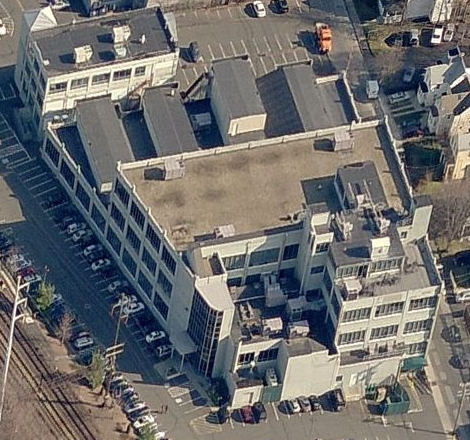
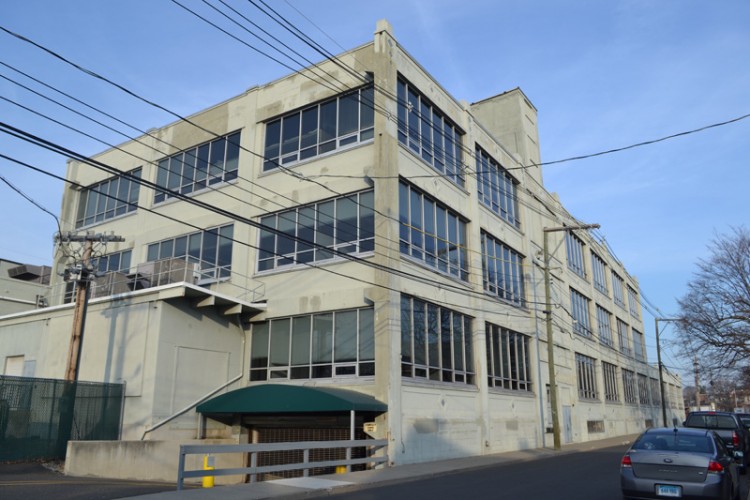
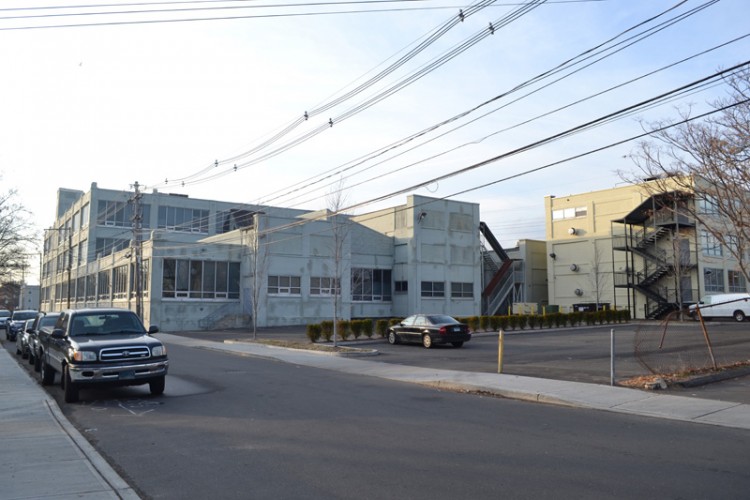
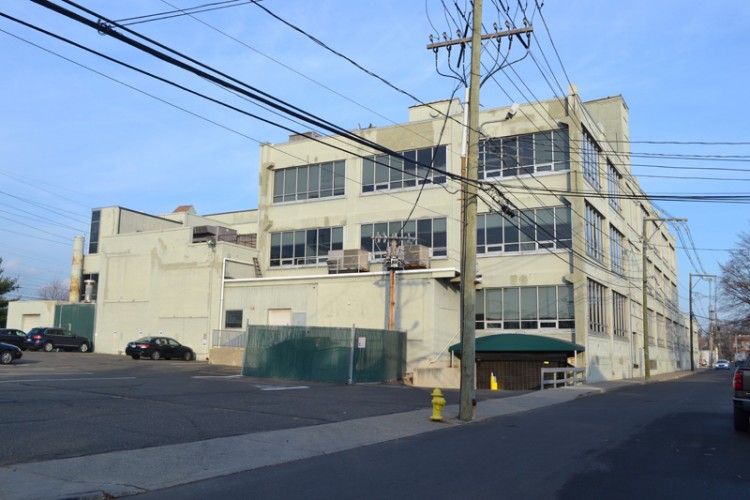
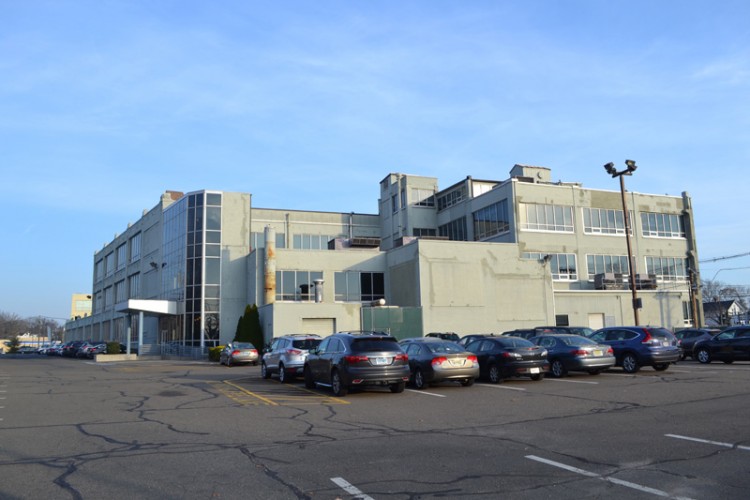
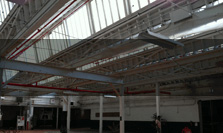
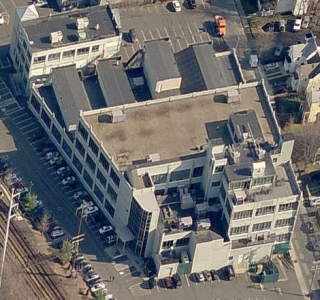
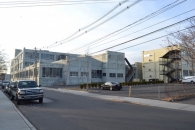
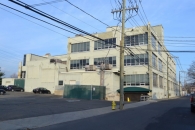
Cavanagh-Dobbs, Inc.’s Hobshon-Berg Company division plant is comprised of roughly five primary adjoining and freestanding blocks located on the north side of Rowan Street, roughly 275’ west of Rowan Street’s intersection with East Avenue. The main block is a three-and-a-half-story reinforced concrete manufacturing block erected in 1929. This is located at the core of the plant and measures roughly 94’ x 54’. It is four bays wide and has a raised basement level with concrete foundation, full-height concrete piers, concrete slab floors, large rectangular window openings with concrete sills, a tall concrete parapet, and a flat roof. The tops of the piers are decorated with embossed diamond-shaped patterns and have molded projections rising above the parapet. The parapet also bears diamond-shaped ornamentation. A three-and-a-half-story, 82’ x 74’ ell adjoins the southern end of the main block’s west elevation. This is identical in detail to the main building and a one-story, roughly 102’ x 51’ penthouse extends across the roofs of the two blocks. This housed the factory’s dining room, which is set back roughly 25’ from the south and west elevations of the plant. A one-and-a-half-story, 82’ x 75’ boiler house adjoins the west elevation of the main block and north elevation of the western ell. This was likewise erected in 1929 and is similar in detail to the aforementioned blocks, yet lacks decorative detailing. A fourth block was erected on the east side of the plant along with the three aforementioned buildings. This adjoins the east elevation of the main building and similarly housed manufacturing space. The block is largely identical in detailing to the other 1929 construction, however, the roof is topped by four large clerestory monitors and a rooftop cafeteria. It measures roughly 90’ x 221’ overall. The final primary block associated with the plant was erected ca. 1920 for Louis Greenburg and Bros., Inc., a coat manufacturer. The factory stands just 10’ east of the 1929 plant and was acquired by the Hat Corporation of America in 1950. The building stands three-stories tall and is of reinforced concrete construction. It measures roughly 50’ x 98’ and has a non-original stair tower with a pyramidal roof adjoining the northern end of its east elevation. The building has a concrete foundation, full-height concrete piers, concrete slab floors, large rectangular window openings with concrete sills, a tall concrete parapet, and a flat roof.
Exterior Material(s)
Structural System(s)
Roof Form
Roof Material
Power Source
Condition
Fair
Condition Notes
The complex is in fair condition. Although the windows throughout the plant were replaced during the mid-20th century, the factory appears to be well maintained and structurally sound.
- Property Information
-
Specific Location
Three legal parcels (all identified as 230 East Avenue) totaling 3.46 acres located on the north side of Rowan Street, roughly 275’ west of Rowan Street’s intersection with East Avenue.
Adjacent To
Exterior Visible from Public Road?
Yes
Parcel ID / Assessor Record Link
Acreage
3.46
Use (Present)
- Mixed-Use
- Other: Apartment rehab proposal in 2018 by Spinnaker Real Estate; adjacent to East Norwalk train station and within TOD area approved in 2016. Mixed use redev (commercial, office and res) as Brim & Crown in process 2020, leasing in 2023.
- Residential
- Sources
-
Form Completed By
Lucas A. Karmazinas
Date
12/11/2015
Bibliography
- List of Connecticut Manufacturers, 1922, 1924, 1930, 1932.
- Directory of Connecticut State Manufacturers, 1936, 1939.
- Industrial Directory of Connecticut, 1947.
- Register of War Production Facilities in Connecticut, 1951.
- Map of New Haven County; Clark, Richard, 1859.
- Atlas of New Haven County, Beers, Ellis & Soule, 1868.
- Aerial Survey of Connecticut, 1934, 1951, 1965, 1970, 1985.
- Sanborn Map Company, 1891, 1896, 1901, 1906, 1922, 1950, 1958..
- Norwalk Directory; Various editions.
- Hartford Courant, 1932.
- New York Times, 1928, 1953, 1957, 1970.
- Norwalk Hour, 1932,.
- Norwalk after Two-hundred & Fifty Years; Norwalk Historical and Memorial Library Assoc., 1901.
- Norwalk; Grant, Lisa Wilson, 2014.
- Representative View(s)Click on image to view full file
-


Photographer
Lucas A. Karmazinas
Photography Date
12/11/2015