Mill Record Putnam
RETURN TO ‘FIND MILLS’Disclaimer: Content for these properties was compiled in 2014-2017 from a variety of sources and is subject to change. Updates are occasionally made under Property Information, however the Connecticut Trust for Historic Preservation (dba Preservation Connecticut) makes no representation or warranty that the information is complete or up-to-date.
- Complex Name (Common)
- John M. Dean Co.
- Complex Name (Historic)
-
- John M. Dean Co.
- Address or Location
- 20 Mechanics Street, Putnam
- County
- Windham
- Historic Designation
- Associated Mill Community
- n/a

- Historic Information
Companies Associated w/Complex
- General Phonograph Corp. 1919-mid-20th c.
- John M. Dean Co. 1910-1917
- John M. Dean Co. mid-20th c.-Present (2016)
- John M. Dean Co., div. Otto Heineman Phonograph Supply Co. 1917-1919
Use (Historic)
Largest Documented Workforce
50-100 (1933).
Historic Narrative
The John M. Dean Company was originally formed in Lowell, Massachusetts in 1899. John M. Dean was a native of Leads, England and he arrived in the United States during the late-1870s. His firm specialized in the manufacture of metal pins, these with applications ranging from textiles to talking machines. In 1910, Dean relocated the company from Lowell to Putnam, Connecticut, where a new factory was erected on Mechanics Street. Following the move, Dean appointed his son, Charles E. Dean, as president of the firm and he assumed the role of treasurer. His younger son, John M. Dean Jr., served as secretary of the company. Upon settling in Putnam, the range of goods produced by the John M. Dean Company was expanded to include textile pins and talking machine needles, as well as comb, faller, feeder, and card pins used in textile mills. Business increased substantially during the First World War, as many of these goods had previously been produced overseas and their importation was ceased or slowed throughout the conflict. John M. Dean remained associated with the company until the business was sold to the New York, New York-based Otto Heineman Phonograph Supply Company. Charles E. and John M. Dean Jr. were retained as managers of the Putnam plant, which operated as a division of the Otto Heineman Phonograph Supply Company until the later was reorganized as the General Phonograph Corporation in 1919. General Phonograph continued to operate the former John M. Dean Company as a phonograph needle plant into the middle of the 20th century, however, the John M. Dean Company has since been reestablished as an independent firm. The business continues to manufacture pins and other pointed metal products as well as performs secondary processes such as heat treating, polishing, and finishing.
- Architectural Information
Number of Existing Buildings
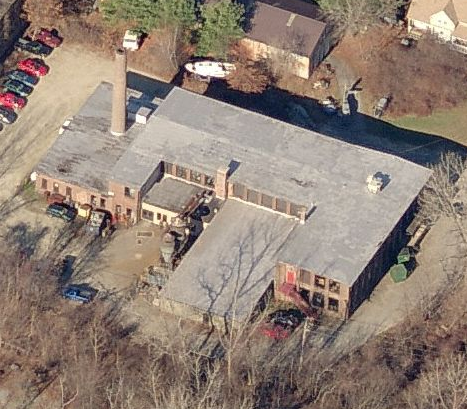
Roughly six (6) adjoining primary blocks.
Dates of Construction
1910, ca. 1915, ca. 1920, ca. 1950, ca. 1970.
Architect
n/a
Builder
n/a
Building Type
Architectural Description
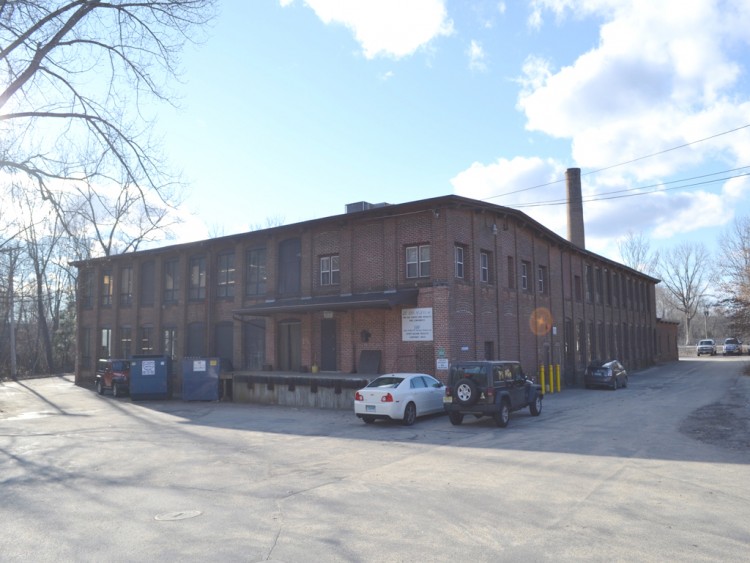
The former John M. Dean Company mill is comprised of six adjoining primary blocks located on the east side of Mechanics Street, at the southwest corner of Mechanics Street’s intersection with Furnace Street. The plant’s original main building is located at the center of the facility and was erected in 1910. It consists of a two-story, 56’ x 100’ red brick block with segmental-arched window openings, brownstone window sills, exposed rafter tails, and a low-pitch front-facing gable roof. Upon its completion, the building housed a grinding shop on the first floor and a finishing room on the second. A one-story, 82’ x 40’ red brick block adjoins the main building’s west (rear) elevation. This was built as a roughly 60’-wide building in 1910, and was enlarged to its present width of 82’ ca. 1915. The building is similar in detail to the main block and housed a temporizing room in its northern half and a boiler room to the southern section. A 40’-tall round red brick chimney rises from the center of building. A substantial manufacturing addition was erected adjoining the east (front) elevation of the grinding and finishing block ca. 1915. This is a two-story, 102’ x 45’ red brick building similar in detail to the original mill but with a side-gabled rather than front-facing roof. A one-story office block once adjoined the northeast corner of the ca. 1915 addition, however, this was removed during the 1970s. It appears that around the same time, a pair of one-story concrete block additions were built adjoining the south side of the factory. These replaced an earlier storage block and measure 78’ x 44’ and 20’ x 38’. The latter adjoins a two-story red brick stair tower erected at the western end of the main block’s south elevation ca. 1950.
Exterior Material(s)
Structural System(s)
Roof Form
Roof Material
Power Source
Condition
Fair
Condition Notes
The complex is in fair condition. Although the original windows have been replaced and a number of the window openings reduced in size or infilled, the majority of the plant appears to be structurally sound.
- Property Information
-
Specific Location
One 1.43-acre parcel (20 Mechanics Street) located on the east side of Mechanics Street, at the southwest corner of Mechanics Street’s intersection with Furnace Street.
Adjacent To
Exterior Visible from Public Road?
Yes
Parcel ID / Assessor Record Link
- 8/137/000 / Link →
Acreage
1.43
Use (Present)
- Industrial
- Other: 12/2023 DECD $200k Brownfield award for RAP for mixed use redev (only portion of award which also funded assessment of former Putnam Foundry at 2 Furnace St). Both were purchased 6/2023 by WD Investments LLC out of Thompson.
- Sources
-
Form Completed By
Lucas A. Karmazinas
Date
01/11/2016
Bibliography
- List of Connecticut Manufacturers, 1922, 1924, 1930, 1932.
- Directory of Connecticut State Manufacturers, 1936, 1939.
- Industrial Directory of Connecticut, 1947.
- Register of War Production Facilities in Connecticut, 1951.
- Map of Tolland County, Wm. C. Eaton & H.C. Osborn, 1857.
- Atlas of Tolland County, O.W. Gray, 1869.
- Sanborn Map Company, 1887, 1892, 1897, 1903, 1910, 1920, 1945.
- Aerial Survey of Connecticut, 1934, 1951, 1965, 1970, 1985.
- Map of Windham County, E.M. Woodford, 1855.
- Atlas of Windham County, O.W. Gray, 1869.
- Hartford Courant, 1913, 1914, 1915.
- A History of Windham County, Connecticut; Bayles, Richard M., ed., 1889.
- A Modern History of Windham County, Connecticut; Lincoln, Allen B., 1920.
- Representative View(s)Click on image to view full file
-


Photographer
Lucas A. Karmazinas
Photography Date
01/11/2016