Mill Record Portland
RETURN TO ‘FIND MILLS’Disclaimer: Content for these properties was compiled in 2014-2017 from a variety of sources and is subject to change. Updates are occasionally made under Property Information, however the Connecticut Trust for Historic Preservation (dba Preservation Connecticut) makes no representation or warranty that the information is complete or up-to-date.
- Complex Name (Common)
- Pickering Governor Co.
- Complex Name (Historic)
-
- Pickering Governor Co.
- Address or Location
- 63 Pickering Street, Portland
- County
- Middlesex
- Historic Designation
- Associated Mill Community
- n/a
- Historic Information
Companies Associated w/Complex
- Pickering Governor Co. 1903-1949
- Standard-Knapp, Inc. 1984-Present (2016)
- Standard-Knapp, Inc., div. Anderson Mfg. Co. 1979-1984
- Standard-Knapp, Inc., div. Hartford-Empire Co. 1949-1979
Use (Historic)
Largest Documented Workforce
Unknown.
Historic Narrative
The Pickering Governor Company was organized in New Jersey in 1861. The firm was established by Thomas R. Pickering, an engineer and powerplant operator. The basis of the company’s formation was Pickering’s invention of a spring-tensioned ball governor, the design of which allegedly having been inspired by the engineer’s inability to accurately control the speed of the steam engine used in his place of employment. The resultant ‘Pickering Governor’ was a fast improvement over traditional gravity governors as the use of springs allowed for both more consistent engine control and the ability to install the governor in horizontal or vertical arrangements. The Pickering Governor was immediately successful and the Pickering Governor Company moved to Portland, Connecticut shortly after the conclusion of the Civil War. The Pickering Governor Company initially occupied a shop at the eastern terminus of Freestone Avenue in Portland. By the late 1890s, however, the firm had outgrown these quarters and rumors that the company might relocate to Hartford, Connecticut in order to occupy a larger space in the Colt Patent Firearms Company factory began to swirl. Management of the Pickering Governor Company eventually decided to remain in Portland for fear of the impact that such a move might have on its workers. In lieu of a move, the company began investigating sites for a new plant in town and such was eventually secured in 1903. Work on the factory began immediately and was completed and occupied in 1904. The new factory was located on the east side of what would become Pickering Street and was designed by architect W.H. Cadwell of New Britain, Connecticut. It was built by the H. Wales Lines Company, a notable construction firm from Meriden, Connecticut. The production of governors continued at the Pickering Governor Company into the mid-twentieth century. New devices were developed as the use of steam engines declined and by the mid-twentieth century the company also manufactured governors used on water wheels, steam turbines, gasoline motors, and other power sources. By 1949, however, the company had fallen into financial difficulties and was subsequently sold to the Hartford, Connecticut-based Hartford-Empire Company, a producer of glassware-manufacturing and other machinery, which operated a branch plant nearby on Wolcott Avenue in Portland. The sale was primarily driven by the Hartford-Empire Company’s need for expanded production capacity at the neighboring plant – this occupied by its Standard-Knapp division – and work previously conducted by the Pickering Governor Company was moved to the Hartford-Empire Company’s Hartford location. The Pickering Governor Company was in turn sold to the Bloomfield, New Jersey-based Champlain Company the following year. Work at the former Pickering Governor Company’s Pickering Street plant continues under Standard-Knapp, Incorporated, which manufactures packaging machinery and materials. The firm remained a division of the Hartford-Empire Company and its later manifestations – the Emhart Manufacturing Company and Emhart Corporation – until 1979 when the business was sold to the Anderson Manufacturing Company of Rockford, Illinois. In December 1984, an employee buyout of the company resulted in the formation of Standard-Knapp, Inc.
- Architectural Information
Number of Existing Buildings
Roughly nine (9) primary blocks.
Dates of Construction
1904, ca. 1950.
Architect
W.H. Cadwell
Builder
H. Wales Lines Company
Building Type
Architectural Description
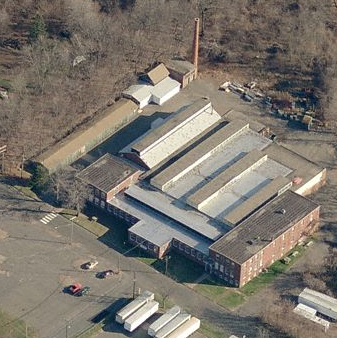
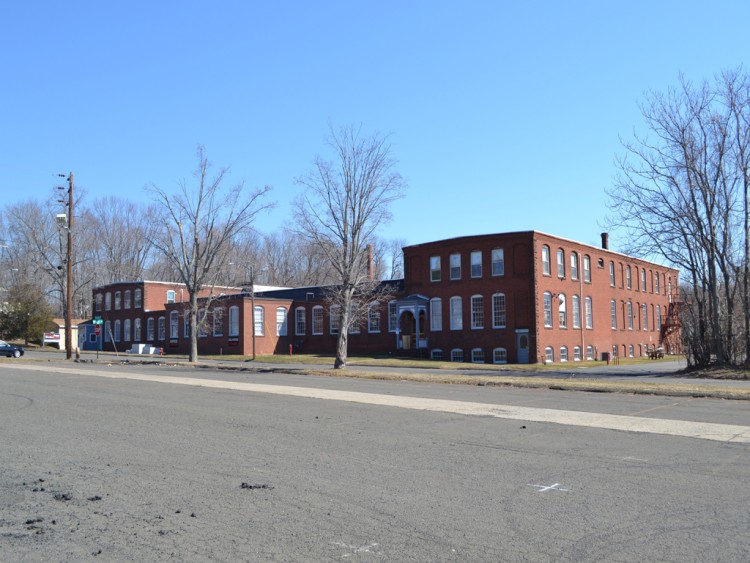
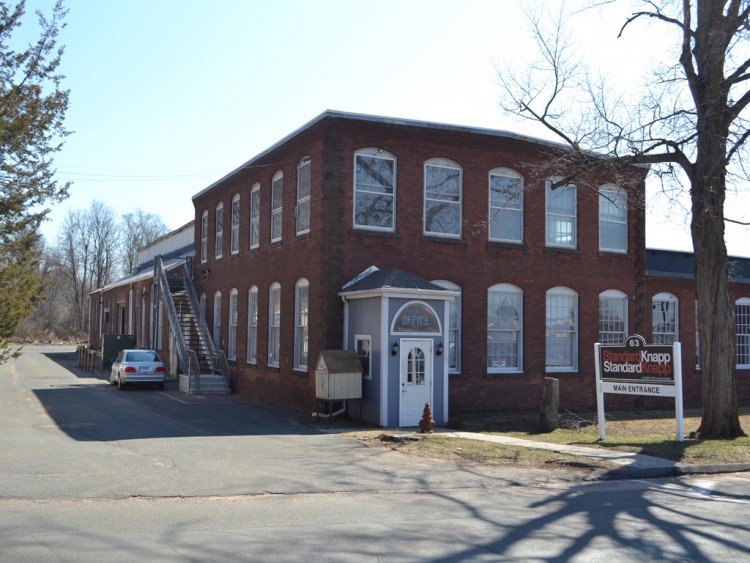
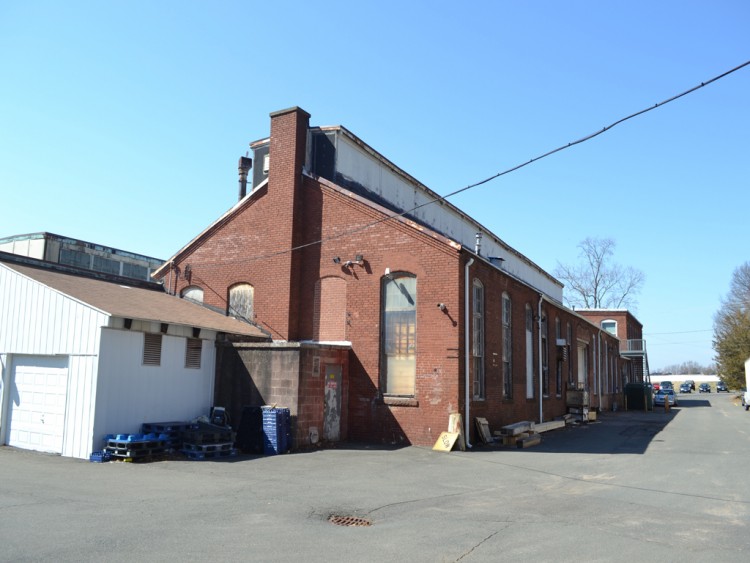
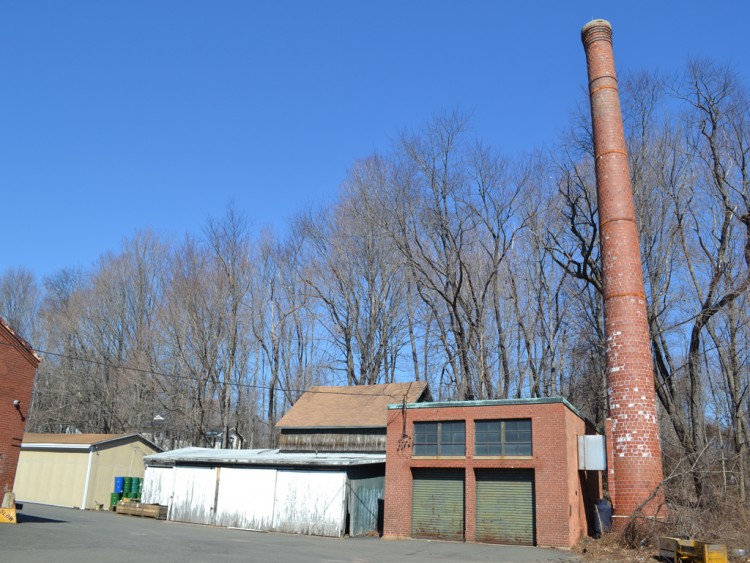
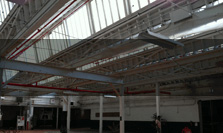
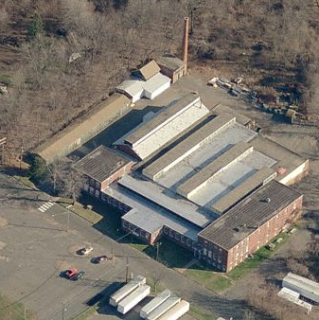
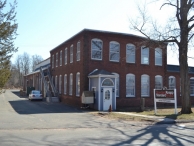
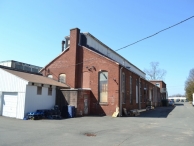
The former Pickering Governor Company plant consists of roughly nine adjoining and freestanding primary blocks located on the east side of Pickering Street, opposite Pickering Street’s intersection with Wolcott Avenue. The original portions of complex include four one- and two-story red brick blocks erected in 1904. The plant’s southernmost block housed the original office and shipping and storage uses, and is a two-story, 42’ x 134’ red brick building with a brownstone block foundation; raised basement level; segmental-arched window openings with brownstone sills; double-hung windows with either twelve-over twelve, four-over-four, or one-over-one sash; brownstone quoins; a corbelled brick cornice; and a low-pitch front-facing gable roof. One of the plant’s primary entrances is located at the northern end of the block’s west (façade) elevation. This is accessed via a set of brownstone steps and consists of a pair of paneled wood doors set below a one-story hipped-roof porch. The porch has square supports and arched openings on its north, west, and south sides. A one-story, 136’ x 52’ red brick block adjoins the office/shipping building’s north elevation. This housed the original plant’s machine shop. The details of the block are nearly identical to the office/shipping building, however, it has a flat – rather than pitched – roof with a nearly full-length clerestory monitor. A one-story, 44’ x 22’ red brick addition was erected centered on the machine shop’s west elevation ca. 1950. The details of the addition are nearly identical to the earlier construction; however, it has a concrete foundation and a flat roof. A two-story, 44’ x 54’ red brick block adjoins the northern end of the machine shop. This housed the original plant’s pattern shop and other than lacking a raised basement level is identical in design to the office/shipping building. A one-story, 44’ x 140’ red brick block adjoins the pattern shop’s east elevation. This was also erected in 1904 and originally housed an iron foundry, brass foundry, and a tumbling shop. The building is of plainer styling than the street-facing blocks and it has segmental-arched window openings with triple-hung windows, a corbelled brick cornice, and a front-facing gable roof with a nearly full-length clerestory monitor. Several additions to the plant were completed after it was acquired by Standard-Knapp in 1950. The most prominent is a one-story, 138’ x 162’ steel-frame manufacturing block erected on the interior side of the original factory’s C-shaped footprint ca. 1950. The addition has a concrete foundation, red brick apron walls, large rectangular window openings with concrete sills and multipane ribbon windows, and a flat roof with three clerestory monitors. A new powerplant was also erected ca. 1950, this being located roughly 65’ northeast of the 1904 foundry block. The powerplant is a two-story, 20’ x 24’ red brick block with a concrete foundation, rectangular garage door and window openings, multipane steel sash, and a flat roof. A cylindrical red brick chimney stands immediately east of the powerplant.
Exterior Material(s)
Structural System(s)
Roof Form
Roof Material
Power Source
Condition
Fair
Condition Notes
The plant is in fair condition. Some of the original windows have been replaced and several of the original monitors have been boarded up, however, overall, the factory appears well maintained and structurally sound.
- Property Information
-
Specific Location
One 3.5-acre parcel (63 Pickering Street) located on the east side of Pickering Street, opposite Pickering Street’s intersection with Wolcott Avenue.
Adjacent To
Exterior Visible from Public Road?
Yes
Parcel ID / Assessor Record Link
- 11/36 / Link →
Acreage
3.5
Use (Present)
- Sources
-
Form Completed By
Lucas A. Karmazinas
Date
03/09/2016
Bibliography
- List of Connecticut Manufacturers, 1922, 1924, 1930, 1932.
- Directory of Connecticut State Manufacturers, 1936, 1939.
- Industrial Directory of Connecticut, 1947.
- Register of War Production Facilities in Connecticut, 1951.
- Atlas of Middlesex County, F.W. Beers & Co., 1874.
- Sanborn Map Company, 1950.
- Aerial Survey of Connecticut, 1934, 1951, 1965, 1970, 1985.
- Middletown City Directories, Various editions.
- The Hartford Courant, 1897, 1903, 1904, 1924, 1930, 1949, 1950.
- "Portland Improves the Steam Engine", ConnecticutHistory.org website.
- Standard-Knapp Company History.
- Representative View(s)Click on image to view full file
-


Photographer
Lucas A. Karmazinas
Photography Date
03/09/2016