Mill Record New Haven
RETURN TO ‘FIND MILLS’Disclaimer: Content for these properties was compiled in 2014-2017 from a variety of sources and is subject to change. Updates are occasionally made under Property Information, however the Connecticut Trust for Historic Preservation (dba Preservation Connecticut) makes no representation or warranty that the information is complete or up-to-date.
- Complex Name (Common)
- Rockbestos Products Corp.
- Complex Name (Historic)
-
- Rockbestos Products Corp.
- Address or Location
- 285 Nicoll Street, East Rock, New Haven
- County
- New Haven
- Historic Designation
- Associated Mill Community
- n/a
 What can you do at this mill?
- Historic Information
Companies Associated w/Complex
- Rockbestos Products Corp. 1920-1992
Use (Historic)
Largest Documented Workforce
475 (1959).
Historic Narrative
The Rockbestos Products Corporation began operations in 1918 as a subsidiary of the New Haven, Connecticut-based Marlin-Rockwell Corporation. The division was established for the purpose of experimental development of insulated and fire-resistant electrical wire and cable, this work initially conducted in the former Whitney Arsenal property along Lake Whitney in Hamden. Early successes led to the formal organization of an independent division of the Marlin-Rockwell Corporation in 1920. This was known as the Rockbestos Products Corporation, which occupied a dedicated factory built immediately north of the Marlin-Rockwell Corporation’s Willow Street factory shortly after its organization. The early successes of the Rockbestos Products Corporation were largely based on the company’s use of asbestos, which allowed the firm to produce wires and cables that were resistant to fire, heat, oils, moisture, and chemicals. An early advertising pamphlet published by the company in 1919 celebrated the inherent qualities of the material noting, ‘Asbestos obviously offers itself as the best possible heat-resisting material. Being a mineral of igneous origin, born of incandescent rock when the earth was formed, it defies heat. It is proof against the chemical action of alkalies and acids; and, in its pure state – free from metallic oxides – is an excellent electrical insulator.’ Although the human health hazards related to contact with asbestos would be increasingly acknowledged during the second half of the 20th century, the material’s qualities made it an ideal insulator for wires and cables used in a variety of applications such as mining, railroads, electrical generation, industrial plants, and electrical appliances. The Rockbestos Products Corporation was sold by the Marlin-Rockwell Corporation in 1923 and the new management comprised Arthur G. Newton, president; J.F. McClelland, vice-president; Carl B. Ely, vice-president; W.C. Armstrong, Jr., secretary and treasurer; and B.H Reeves, general managers. The business remained successful throughout the 1920s and 1930s, and made considerable contributions to the Allied war effort during the Second World War. Military and other government contracts made up a substantial percentage of the company’s business in the post-war period, however, civilian applications also provided a significant amount of work for the firm’s 475 employees throughout the late-1950s and 1960s. The Rockbestos Products Corporation passed through several acquisitions during the 1950s, including being sold to the New York-based Consolidated Coppermines Corporation in 1955, and New York-based Certo de Pasco Corporation in 1959. Rockbestos remained in operation into the late-20th century, and a branch facility was built in East Granby, Connecticut during the late 1970s and early 1980s. The firm’s operations were eventually consolidated in East Granby after the New Haven plant was closed in 1992. Rockbestos continues to operate in East Granby as RSCC Wire and Cable, this a result of its 1996 merger with the Surprenant Cable Corporation, which was founded in 1938 in Clinton, Massachusetts.
- Architectural Information
Number of Existing Buildings
Five (5) adjoining primary blocks.
Dates of Construction
1920, 1957, 1966.
Architect
n/a
Builder
n/a
Building Type
Architectural Description
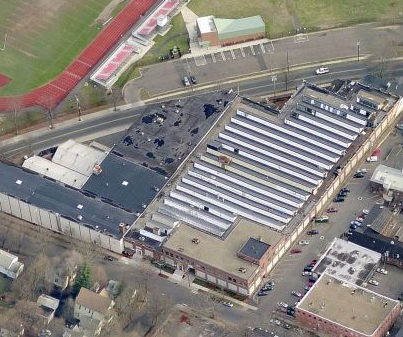
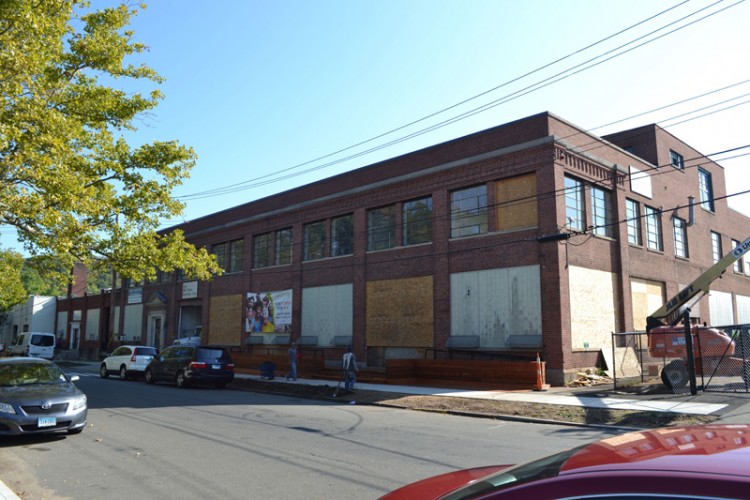
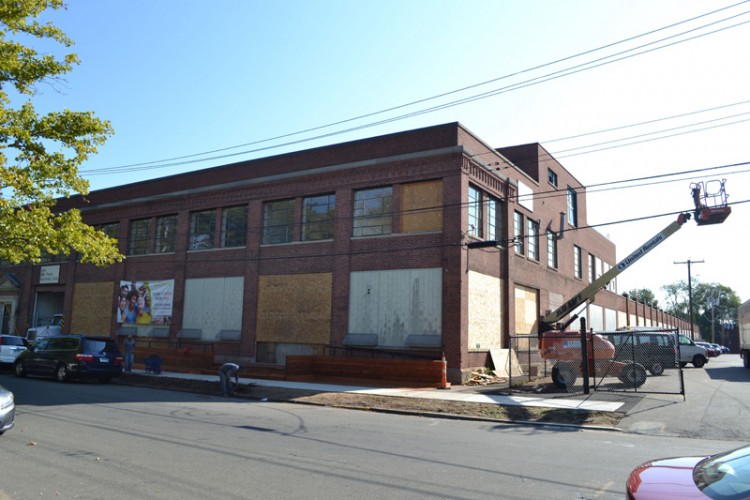
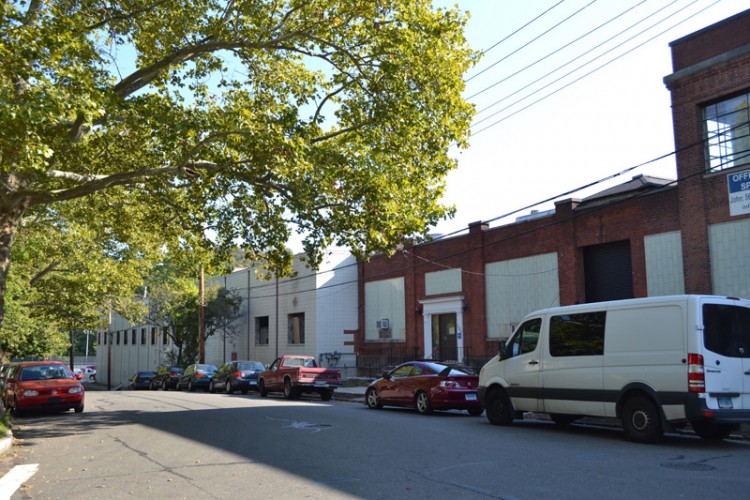
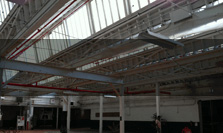
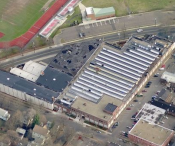
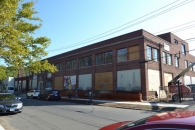
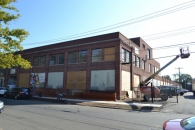
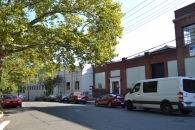
The former Rockbestos Products Corporation plant is comprised of roughly five primary adjoining blocks located on the east side of Nicoll Street, opposite Nicoll Street’s intersection with Canner Street. The main and original block was erected in 1920 as a one-story brick pier factory measuring roughly 210’ x 484’ overall. The building has a raised concrete foundation, large rectangular window openings with concrete sills and brick headers, a crenellated parapet with concrete coping, and a sawtooth monitor roof. The building’s primary entrance is located at the center of the west elevation. This consists of a highly detailed cast stone door surround with plain pilasters, a spayed entablature, wide frieze, and a pedimented and denticulated portico. A secondary entry is located four bays to the north of the main entrance. This has a plain door surround with concrete pilasters, frieze, and entablature. A portion of the southwest corner of the plant, this measuring 140’ wide and 108’ deep, was raised to two stories through the construction of an L-shaped office and laboratory addition ca. 1930. The addition is of a similar design yet has a greater degree of architectural ornamentation than the original block. A denticulated and corbelled red brick and cast stone cornice spans the façade and wraps around the corner of the building to extend along the first bay of the south elevation. The entire addition is topped by a plain red brick parapet with concrete coping. The majority of the window openings throughout the original block have been boarded up, however, the windows in the ca. 1930 addition remain visible. These consist of multi-pane metal sash with hopper-style openings. A pair of one-story gable-roofed storage buildings were erected adjoining the north elevation of the original block in 1957. In 1966, these were partially incorporated within a new two-story, L-shaped, flat-roofed addition erected adjoining the north elevation of the main block and extending north along Nicoll Street. The portion of the addition flanking Nicoll Street is 244’ wide and 64’ deep. The building extends 354’ east of Nicoll Street and is 102’ wide as it runs along the north elevation of the original plant. The addition is of concrete block construction and is broken into bays by recessed vertical courses of masonry. The concrete blocks show a small gridwork pattern on the exterior of the building, however, the addition lacks window openings. The portions of the 1957 blocks that remain visible measure 102’ x 58’ and 84’ x 56’. They have vinyl siding and side-gabled roofs with metal sheathing.
Exterior Material(s)
Structural System(s)
Roof Form
Roof Material
Power Source
Condition
Fair
Condition Notes
The complex is in fair condition. Some of the exterior walls are in need of cleaning and minor repairs and a number of the original windows throughout the complex have been replaced or infilled, however, most of the various sections of the plant are well maintained.
- Property Information
-
Specific Location
One legal parcel (285 Nicoll Street) totaling 3.02 acres located on the east side of Nicoll Street, opposite Nicoll Street’s intersection with Canner Street.
Adjacent To
n/a
Exterior Visible from Public Road?
Yes
Parcel ID / Assessor Record Link
- 197/0442/00100. / Link →
Acreage
3.02
Use (Present)
- Sources
-
Form Completed By
Lucas A. Karmazinas
Date
10/08/2015
Bibliography
- List of Connecticut Manufacturers, 1922, 1924, 1930, 1932.
- Directory of Connecticut State Manufacturers, 1936, 1939.
- Industrial Directory of Connecticut, 1947.
- Register of War Production Facilities in Connecticut, 1951.
- Map of New Haven County; Clark, Richard, 1859.
- Atlas of New Haven County, Beers, Ellis & Soule, 1868.
- Aerial Survey of Connecticut, 1934, 1965.
- Sanborn Map Company, 1901, 1911, 1923, 1950.
- New Haven City Directory; Various editions.
- History of the City of New Haven to the Present Time, 1887.
- A Modern History of New Haven and Eastern New Haven County, 1920.
- Rockbestos: Asbestos-Covered Wires and Cables for Every Service; Marlin-Rockwell, 1919.
- Hartford Courant, 1930, 1953, 1955, 1959, 1980, 1992.
- Representative View(s)Click on image to view full file
-
Photographer
Lucas A. Karmazinas
Photography Date
10/08/2015