Mill Record Windham
RETURN TO ‘FIND MILLS’Disclaimer: Content for these properties was compiled in 2014-2017 from a variety of sources and is subject to change. Updates are occasionally made under Property Information, however the Connecticut Trust for Historic Preservation (dba Preservation Connecticut) makes no representation or warranty that the information is complete or up-to-date.
- Complex Name (Common)
- Rossie Velvet Co.
- Complex Name (Historic)
-
- Rossie Velvet Co.
- Address or Location
- 90 South Park Street , Willimantic, Windham
- County
- Windham
- Historic Designation
- Associated Mill Community
- n/a
 What can you do at this mill?
- Historic Information
Companies Associated w/Complex
- Electro-Motive Manufacturing Company, Inc. 1939-1975
- Rossie Velvet Co. 1911-1937
Use (Historic)
Largest Documented Workforce
200 (1919).
Historic Narrative
The Rossie Velvet Company was incorporated in New Jersey in 1897, yet began manufacturing operations in the Mystic section of Stonington, Connecticut, in 1898. The firm manufactured high quality velvet textiles and was operated by members of the Rossie family, who were also proprietors of a velvet mill based in Suchteln, Germany. Economic restrictions resultant of the McKinley Tariff of 1890 had driven the Rossies to seek out a manufacturing facility in the United States and the firm was drawn to Mystic by the then-recently-formed Mystic Industrial Company. The Rossie Velvet Company’s American mill met with immediate success and by 1911 the decision to open a second mill in the Willimantic section of Windham, Connecticut, had been made. The Rossie Velvet Company’s Willimantic plant was erected by and subsequently leased from the Willimantic Industrial Company, which had been organized specifically for the purpose of building a factory for Rossie Velvet. Work on the South Park Street plant began in February 1911 and was completed by June 1911. The company occupied the factory in August of 1911 and began operations with 20 looms and 25 hands. The plant was managed by a local superintendent, Andrew Roux, and from its initial construction was designed to accommodate upwards of 100 looms in addition to all warping, spooling, and finishing activities. By 1919, the mill employed roughly 200 workers. The Great Depression created significant financial difficulties for the Rossie Velvet Company and both the Willimantic and Mystic plants were closed in 1937. While the Mystic mill was reorganized as the J. Rossie Velvet Company, the Willimantic mill was not reopened. In 1939, the South Park Street plant was occupied by the Electro-Motive Manufacturing Company, a New York-based producer of radios and other electrical products and parts. The Electro-Motive Manufacturing Company expanded the former velvet mill and by the 1950s was the world’s largest producer of mica electrical capacitors. The firm remained in operation in Willimantic until 1975.
- Architectural Information
Number of Existing Buildings
Roughly twelve (12) adjoining and freestanding primary blocks.
Dates of Construction
1911, ca. 1920, 1948-1965.
Architect
n/a
Builder
n/a
Building Type
Architectural Description
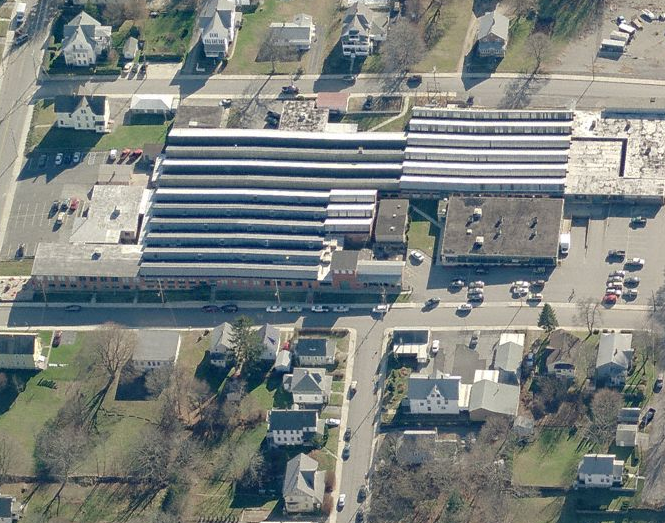
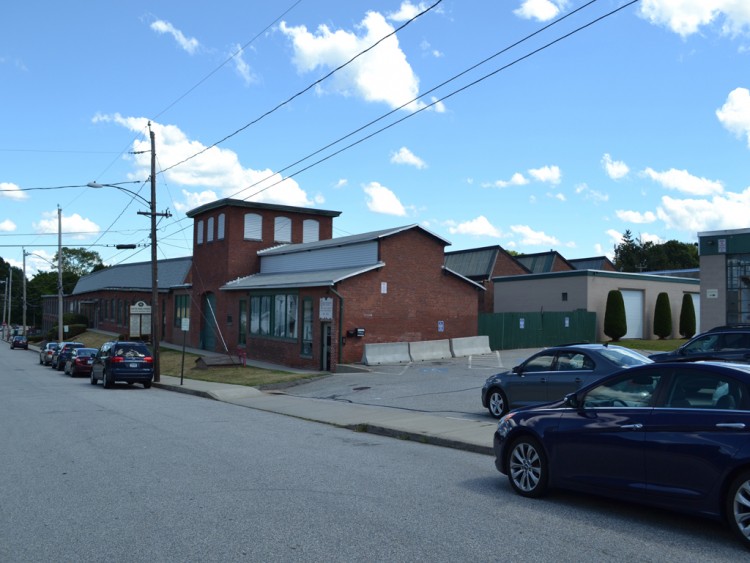
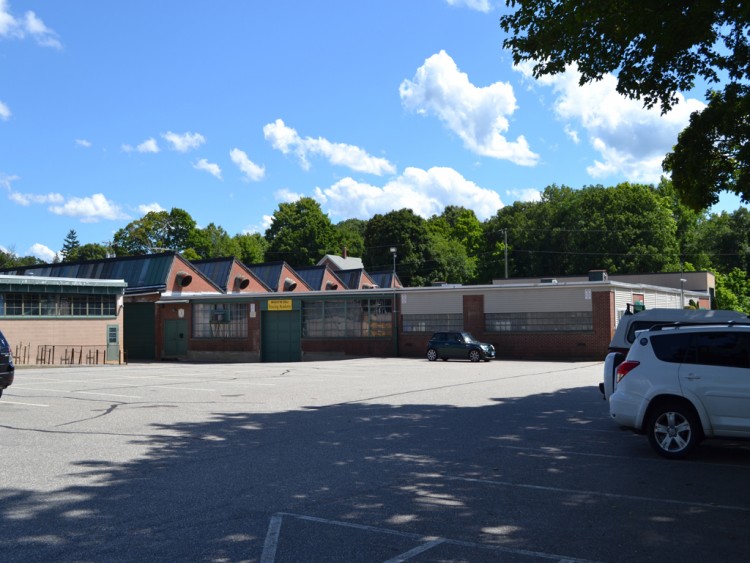
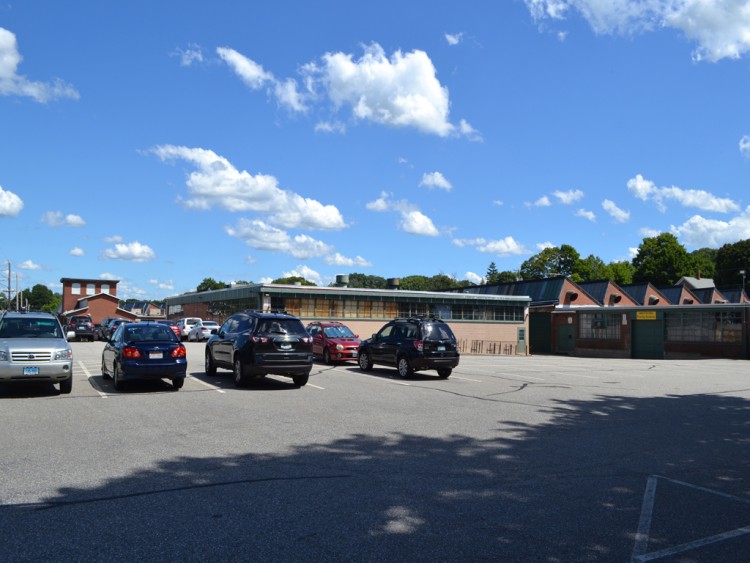
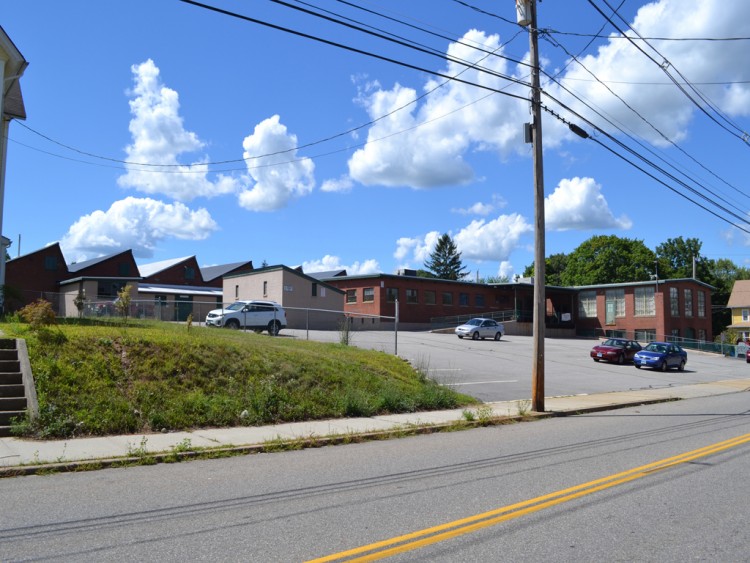
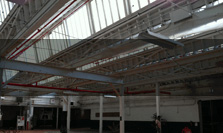
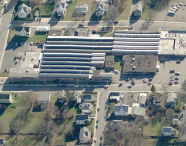
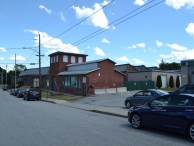
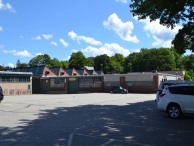
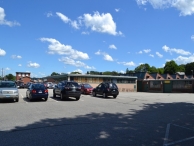
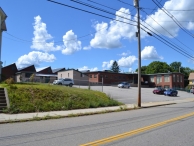
The former Rossie Velvet Company plant is comprised of twelve adjoining and freestanding blocks located on the south side of South Park Street, at the southwest corner of the intersection of South Park and South Streets. The core of the plant was erected in 1911 and consists of a one-story, 180’ x 224’ red brick manufacturing building with a sawtooth monitor roof. Several accessory blocks were erected concurrent to the main mill’s construction. These include a one-story, 108’ x 48’ red brick machine shop adjoining the northern end of its east elevation; a one- and two-story, 70’ x 27’ red brick boiler plant built 14’ west of the mill’s northwest corner; and a one-story, 70’ x 87’ red brick manufacturing ell adjoining the southern end of the main block’s west elevation. The majority of these blocks have segmental-arched window openings with stone sills, however, a variety of roof forms can be identified, these including both clerestory and sawtooth monitor examples. The mill was expanded through the construction of three additional manufacturing and accessory blocks ca. 1920. The most significant is a one-story, 168’ x 130’ red brick manufacturing building erected adjoining the west elevation of the 1911 manufacturing ell. This has large rectangular window openings with concrete sills, multi-pane metal sash with hopper-style openings, and a sawtooth monitor roof with exposed rafter tails. Further additions to the plant were completed between 1948 and 1965 when a one-story, 102’ x 130’ red brick manufacturing block was built adjoining the west elevation of the ca. 1920 mill; and a one-story, 120’ x 85’ concrete block manufacturing building was erected roughly 10’ north of the ca. 1920 mill. The red brick addition is notable for its large rectangular window openings with concrete sills and both multi-pane metal sash and glass block windows. The concrete block addition has multi-pane ribbon windows with metal sash wrapping around all four elevations. Both mid-20th century blocks have flat roofs.
Exterior Material(s)
Structural System(s)
Roof Form
Roof Material
Power Source
Condition
Good
Condition Notes
The plant is in good condition. Several of the blocks have had their original windows or siding replaced, however, overall, the buildings are well maintained and appear sound.
- Property Information
-
Specific Location
One legal parcel (90 South Park Street) totaling 4.41 acres located on the south side of South Park Street, at the southwest corner of the intersection of South Park and South Streets.
Adjacent To
n/a
Exterior Visible from Public Road?
Yes
Parcel ID / Assessor Record Link
- 13-5/161/1 (for record, use link and type in address or parcel number) / Link →
Acreage
4.41
Use (Present)
- Sources
-
Form Completed By
Lucas A. Karmazinas
Date
08/13/2015
Bibliography
- List of Connecticut Manufacturers, 1922, 1924, 1930, 1932.
- Directory of Connecticut State Manufacturers, 1936, 1939.
- Industrial Directory of Connecticut, 1947.
- Register of War Production Facilities in Connecticut, 1951.
- Map of Windham County; E.M. Woodford, 1855.
- Atlas of Windham County; O.W. Gray, 1869.
- Sanborn Map Company, 1924, 1948.
- Hartford Courant, 1911, 1919.
- Spartenburg Herald, 1975.
- A History of Windham County, Connecticut; Bayles, Richard M., ed., 1889.
- A Modern History of Windham County, Connecticut; Lincoln, Allen B., 1920.
- Willimantic City Directories, Various editions.
- National Register Nomination for Rossie Velvet Mill: Mystic, CT; 2007.
- Representative View(s)Click on image to view full file
-
Photographer
Lucas A. Karmazinas
Photography Date
08/13/2015