Mill Record New Haven
RETURN TO ‘FIND MILLS’Disclaimer: Content for these properties was compiled in 2014-2017 from a variety of sources and is subject to change. Updates are occasionally made under Property Information, however the Connecticut Trust for Historic Preservation (dba Preservation Connecticut) makes no representation or warranty that the information is complete or up-to-date.
- Complex Name (Common)
- Southern New England Telephone TO BE DEMO’d 2024
- Complex Name (Historic)
-
- Southern New England Telephone
- Address or Location
- 10 Liberty Street, New Haven
- County
- New Haven
- Historic Designation
- Associated Mill Community
- n/a
- Historic Information
Companies Associated w/Complex
- Southern New England Telephone Co. ca. 1919-1980
Use (Historic)
- Other: Telecommunications
Largest Documented Workforce
Unknown.
Historic Narrative
The Southern New England Telephone Company was originally established in New Haven, Connecticut as the New Haven District Telephone Company on January 28, 1878. The firm’s founders consisted of three residents of New Haven, George W. Coy, local manager of the Atlantic and Pacific Telegraph Company; Herrick P. Frost, a merchant; and Walter Lewis, a clockmaker. The organization was the first commercial telephone exchange in the United States and it began operations in New Haven and Middlesex counties after acquiring a license from the Bell Telephone Company of Boston, Massachusetts. After starting service with a network of just 59 New Haven accounts, the New Haven District Telephone Company rapidly expanded by establishing telephone exchanges in Hartford, Connecticut and Springfield and Holyoke, Massachusetts. In order to reflect the increasingly greater reach of the utility, its name was changed to the Connecticut Telephone Company in 1880, and then it was incorporated as the Southern New England Telephone Company in 1882. This firm was managed from its central office on Court Street in New Haven, however, it also retained offices, exchanges, and support facilities in the various towns it served. Growth of the Southern New England Telephone Company during its first decade in existence was incredibly limited as customers were slow to adopt the technology. The firm’s Hartford network numbered 692 telephones in service in 1882, and had increased to only 762 by 1892. After the turn of the century, however, adoption rates grew exponentially. By 1902 there were 3,356 telephones in service in Hartford, this rising to 14,836 in 1914. By 1919 there were 160,164 telephones in use in the Southern New England Telephone Company’s overall network, this expanding to 330,000 by 1930. Although the Southern New England Telephone Company maintained its Court Street offices throughout the 1910s, 1920s and 1930s, the utility was forced to embark on a substantial building program as its network grew. These facility improvements included the construction of a repair shop, garage, and warehouse complex on Liberty Street in New Haven during the 1910s and 1920s. The Southern New England Telephone Company maintained its Liberty Street facility until it was sold off in 1980 and the utility operated as an independent branch of the Bell System until 1998 when the former was acquired by SBC Communications. SBC Communications subsequently purchased control of the American Telephone and Telegraph Company (AT and T) and all of its holdings were consolidated under the AT and T moniker. AT and T's wireline services were acquired by Frontier Communications on October 24, 2014.
- Architectural Information
Number of Existing Buildings
Four (4) adjoining primary blocks.
Dates of Construction
1919, ca. 1919, 1924, ca. 1930.
Architect
n/a
Builder
n/a
Building Type
Architectural Description
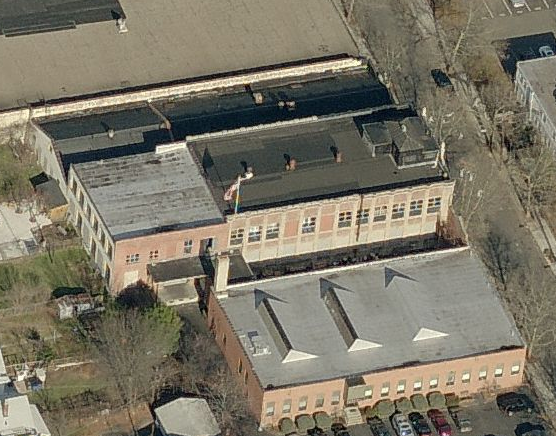
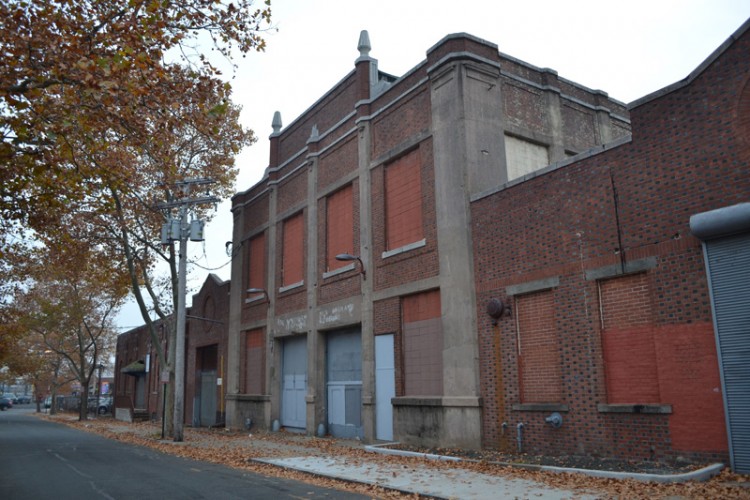
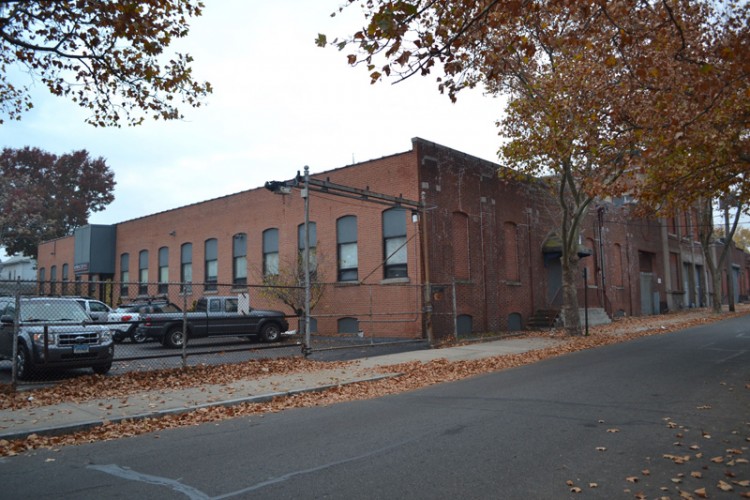
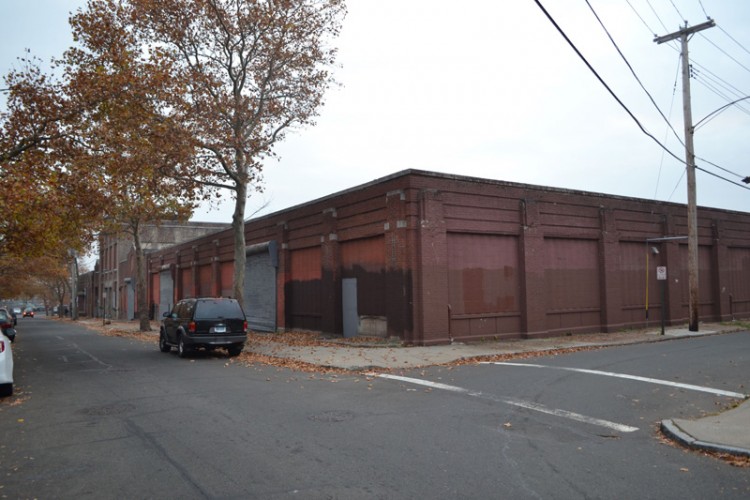
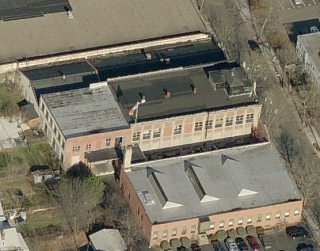
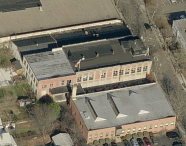
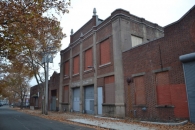
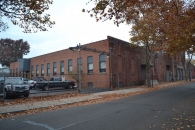
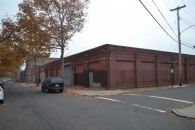
The former Southern New England Telephone Company repair shop, garage, and warehouse facility is comprised of four primary adjoining blocks located at the southwest corner of the intersection of Liberty and Putnam Streets. The oldest portions of the complex consist of three blocks erected in or around 1919. Among these is the one-story, 70’ x 118’ red brick block at the southern end of the facility. This was built as a repair shop and warehouse and has a symmetrical five-bay façade (east elevation) with concrete-capped brick piers, segmental-arched window openings with concrete sills, a brick parapet with concrete coping, and a flat roof with three sawtooth monitors. The brickwork on the façade bears a Flemish rowlock pattern with the exposed headers showing black glazing, a detail repeated on all but the façade of the northernmost block associated with the complex. The primary entrance to the repair shop and warehouse is centered on the façade and is accessed by a two-sided concrete stair. The entry is sheltered by a hipped portico with scroll-cut brackets. The repair shop and warehouse is connected to the next block to the north by a red brick wall with a stepped parapet along Liberty Street, and a one-story passageway at the rear of the building. The next block was built in two phases, with a two-story, 56’ x 52’ red brick block erected in 1919 and then expanded to the east by the construction of a 56’ x 102’ addition in 1924. The combined block was used as a repair and storage building and is the most highly detailed portion of the complex. The building is of reinforced concrete construction and has red brick curtain walls. It bears Collegiate Gothic styling with reinforced concrete piers rising to a highly detailed stepped parapet with concrete finials. The north elevation of the 1919/1924 block adjoins the last portion of the facility erected in or around 1919. This is a one-story, 50’ x 154’ red brick garage with a front-facing gable roof. The symmetrical façade is broken into five bays consisting of a central garage door flanked by two rectangular window openings with concrete sills and lintels on each side. All of the window openings have been bricked up, among these being a large round window in the façade’s gable end. The final block associated with the complex anchors its northern end and has frontage along both Liberty and Putnam Streets. This was erected ca. 1930 and is a one-story, 124’ x 196’ red brick building with concrete foundation, large rectangular window and door openings, concrete sills, stepped brick piers with concrete caps, a brick parapet with concrete coping, and a flat roof. All of the window openings have been infilled with concrete block and modern metal roll-up doors enclose the two garage openings located along Liberty Street.
Exterior Material(s)
Structural System(s)
Roof Form
Roof Material
Power Source
Condition
Fair
Condition Notes
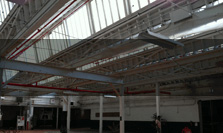
The complex is in fair condition. The exterior walls are in need of cleaning and minor repairs and most of the original windows have been infilled with brick or concrete block.
- Property Information
-
Specific Location
One legal parcel (10 Liberty Street) totaling 1.79 acres located at the southwest corner of the intersection of Liberty and Putnam Streets.
Adjacent To
n/a
Exterior Visible from Public Road?
Yes
Parcel ID / Assessor Record Link
- 265/054/00100. / Link →
Acreage
1.79
Use (Present)
- Commercial
- Other: 12/2023 DECD Brownfield award of $995.6k to abate and demo four buildings on site. 5/2024 proposed demolition for DOH housing project. Construction of new affordable housing in 2025.
- Vacant
- Sources
-
Form Completed By
Lucas Karmazinas
Date
11/05/2015
Bibliography
- List of Connecticut Manufacturers, 1922, 1924, 1930, 1932.
- Directory of Connecticut State Manufacturers, 1936, 1939.
- Industrial Directory of Connecticut, 1947.
- Register of War Production Facilities in Connecticut, 1951.
- Map of New Haven County; Clark, Richard, 1859.
- Atlas of New Haven County, Beers, Ellis & Soule, 1868.
- Aerial Survey of Connecticut, 1934, 1965.
- Sanborn Map Company, 1901, 1911, 1923, 1950.
- New Haven City Directory; Various editions.
- Hartford Courant, 1914, 1930.
- History of the City of New Haven to the Present Time, 1887.
- A Modern History of New Haven and Eastern New Haven County, 1920.
- Representative View(s)Click on image to view full file
-
Photographer
Lucas Karmazinas
Photography Date
11/05/2015