Mill Record Stamford
RETURN TO ‘FIND MILLS’Disclaimer: Content for these properties was compiled in 2014-2017 from a variety of sources and is subject to change. Updates are occasionally made under Property Information, however the Connecticut Trust for Historic Preservation (dba Preservation Connecticut) makes no representation or warranty that the information is complete or up-to-date.
- Complex Name (Common)
- Stamford Watch Case Co.
- Complex Name (Historic)
-
- Stamford Watch Case Co.
- Address or Location
- 174 Richmond Hill Avenue, West Side, Stamford
- County
- Fairfield
- Historic Designation
- Associated Mill Community
- n/a
- Historic Information
Companies Associated w/Complex
- Hamilton Watch Co. 1951-1960
- Ralph W. Biggs and Co., aka Stamford Watch Case Co. c.1949-1951
Use (Historic)
Largest Documented Workforce
40 (1951).
Historic Narrative
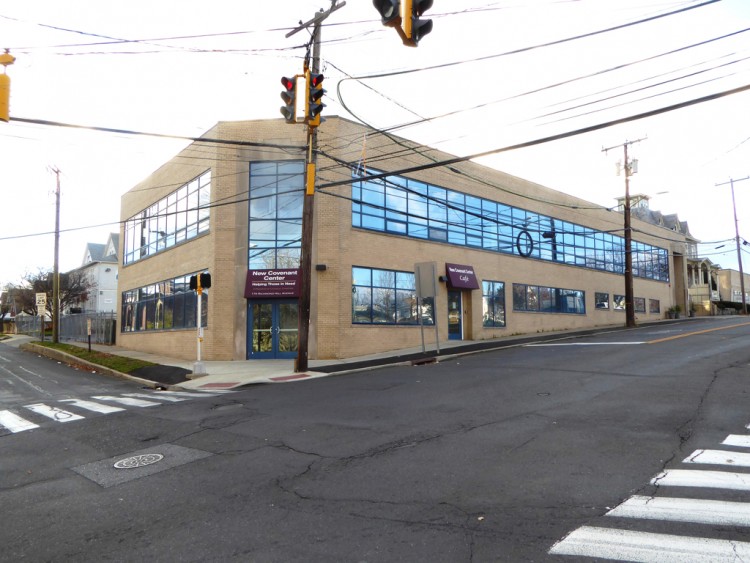
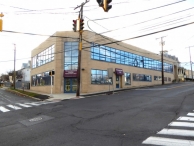
The former Ralph W. Biggs & Co. aka Stamford Watch Case Co. building is architecturally significant as Stamford’s best preserved Moderne factory and an unusual example of an industrial building with strong civic presence as part of an urban streetscape. Within the context of local mid-twentieth century industries, Ralph W. Biggs & Co. was one of several diverse, small-scale manufacturers of specialized products with national markets. Ralph W. Biggs & Co. was founded in 1930 by Ralph W. Biggs and Morris Weiner in New York. In the 1940s the company made jewelry and surgical instruments and obtained several hardware patents under Weiner’s name. After the war, national wristwatch manufacturers developed luxury product lines featuring finer external cases. Biggs made gold and diamond-studded watch cases and clasps primarily for the Hamilton Watch Company of Lancaster, Pa. Biggs’ maker’s mark was a bee superimposed on a capital letter B. The company established its first operations in Stamford in 1948 at 575 Pacific Street, with Samuel Weiner identified as president in the local directory. Stamford Watch was first listed at the Richmond Hill Avenue address in 1950. Hamilton acquired Biggs as a subsidiary in 1951 and operated the plant until 1960 when Hamilton relocated its luxury watch case production and the Biggs’ plant machinery to the Wallace Silversmiths plant in Wallingford. The plant was occupied by small industries until the 1970s when it was renovated as a vocational education center by Aid for the Retarded.
- Architectural Information
Number of Existing Buildings
One (1) block.
Dates of Construction
c.1949
Architect
n/a
Builder
n/a
Building Type
Architectural Description
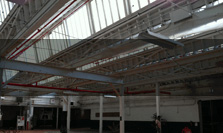
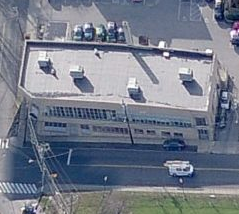
The former Ralph W. Biggs & Co. building is a single block enclosing about 17,400 square feet located at the southwest corner of the intersection of Richmond Hill and Fairfield Avenues. This small, urbane two-story factory is roughly rectangular in plan with its principal entrance located on the 45-degree angled northeast corner facing the intersection. This entrance features a large masonry opening with a glazed door surmounted by a giant vertical transom. A second original entrance is located at the west end of the north (Richmond Hill Avenue) elevation recessed within a two-story rectilinear portal. The site slopes downward from west to east resulting in a change in grade of about one-half story. Window lintels on the street elevations are located at continuous heights on both stories, with window sizes decreasing in size from east to west on the north elevation. Windows are arranged as ribbons at the second story of both street elevations and the first floor of the east (Fairfield Avenue) elevation. The first floor north windows were originally arranged as two short ribbons, with windows grouped in pairs at the west end. The original east ribbon on the north elevation has been modified by the introduction of door opening. Fenestration on the south and west elevations is asymmetrical, arranged in pairs and trios. Original sash was multi-pane steel with awning vents. Two small additions extend from the south (rear) elevation around original loading docks.
Exterior Material(s)
Structural System(s)
Roof Form
Roof Material
Power Source
Condition
Good
Condition Notes
The building is occupied and appears to be structurally sound and well-maintained. It retains its original massing and most original window openings throughout. Original steel sash and door units have been replaced with aluminum units.
- Property Information
-
Specific Location
One legal parcel (174 Richmond Hill Avenue) totaling 0.51 acre located on the southwest corner of the intersection of Richmond Hill and Fairfield Avenues, built along the north and east boundaries of the lot abutting the sidewalk.
Adjacent To
n/a
Exterior Visible from Public Road?
Yes
Parcel ID / Assessor Record Link
- 002/ 6830 / Link →
Acreage
0.51
Use (Present)
- Sources
-
Form Completed By
Wes Haynes
Date
September 2016
Bibliography
- Sanborn Map Co., 1951.
- 'Biggs & Company Moving to Bond Building,' New York Times, February 26, 1943.
- 'Hamilton Watch Buys Biggs Co.,' New York Times, August 28,1951.
- 'Ralph W. Biggs Co. With 40 Employees, Now a Wholly Owned Hamilton Subsidiary, Continues Making Hamilton Cases, No Personnel Change,' [Hamilton Watch Co.] Timely Topics [newsletter], 9:10, October 31, 1951, p. 1.
- 'Companies Issue Earnings Figures,' New York Times, December 20, 1960.
- Representative View(s)Click on image to view full file
-
Photographer
n/a
Photography Date
September 2016