Mill Record Waterbury
RETURN TO ‘FIND MILLS’Disclaimer: Content for these properties was compiled in 2014-2017 from a variety of sources and is subject to change. Updates are occasionally made under Property Information, however the Connecticut Trust for Historic Preservation (dba Preservation Connecticut) makes no representation or warranty that the information is complete or up-to-date.
- Complex Name (Common)
- Waterbury Rolling Mills Inc.
- Complex Name (Historic)
-
- Waterbury Rolling Mills Inc.
- Address or Location
- 240 East Aurora Street, Waterbury
- County
- New Haven
- Historic Designation
- Associated Mill Community
- n/a
- Historic Information
Companies Associated w/Complex
- Waterbury Rolling Mills Co. 1906-2006
Use (Historic)
Largest Documented Workforce
175 (1952).
Historic Narrative
The Waterbury Rolling Mills Company was organized in Waterbury, Connecticut in 1906. The firm was founded by Ambrose H. Wells, who was also the proprietor of A.H. Wells & Co., a small metal tubing manufacturer located in Waterbury, along with Fred B. Beardsley and Frank P. Welton. Wells served as the firm’s president, while Beardsley and Welton held the roles of secretary and assistant treasurer and treasurer, respectively. The Waterbury Rolling Mills Company initially specialized in the manufacture of sheet brass and copper alloys, however, the firm eventually expanded into the production of German silver, Phosphor Bronze, and other specialty metals. The company established its mill on East Aurora Street in 1906 and this was continually expanded through the late 1910s. In 1918 the firm employed 125 hands, a number that grew to over 175 during the 1950s. The Waterbury Rolling Mills Company benefitted from substantial military contracts for ammunition casings during the Second World War and remained in operation into the early 2000s. The firm was acquired by the Olin Corporation, a multifaceted metals and chemicals conglomerate based in Virginia in 2002, however, Olin closed the Waterbury mill, which at that point primarily manufactured Phosphor Bronze for the telecommunications and electronics industries, in 2006.
- Architectural Information
Number of Existing Buildings
Roughly ten (10) primary blocks.
Dates of Construction
ca. 1906, ca. 1908, ca. 1909, ca. 1917, ca. 1940, ca. 2000.
Architect
n/a
Builder
n/a
Building Type
Architectural Description
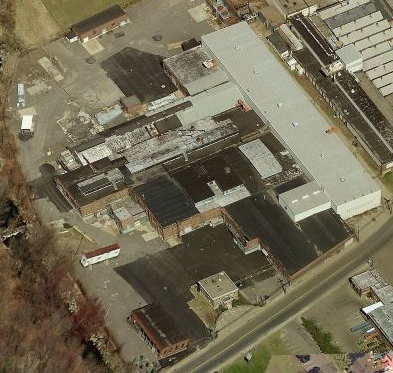
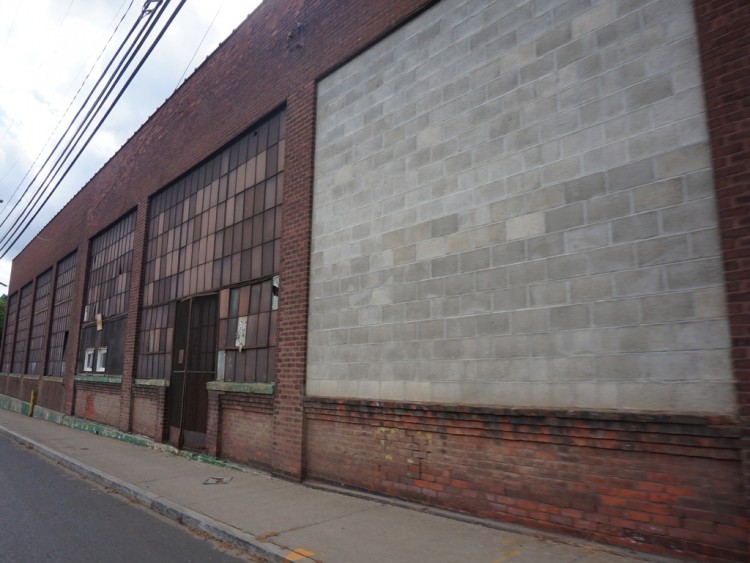
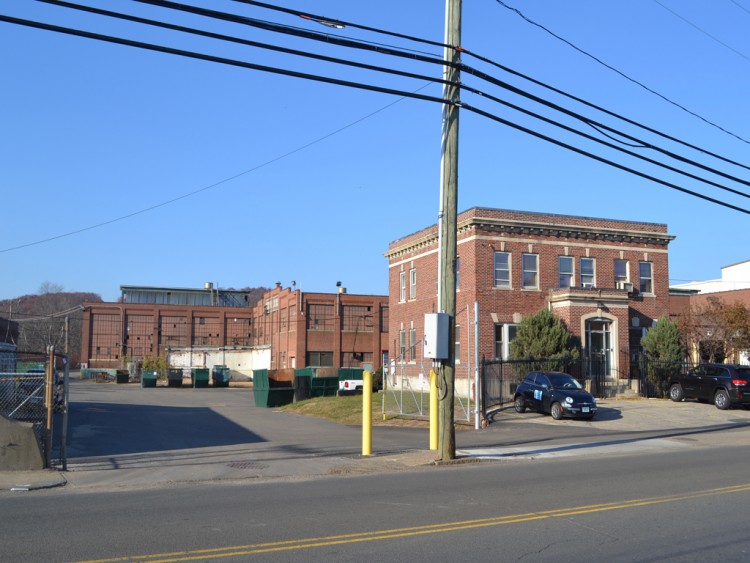
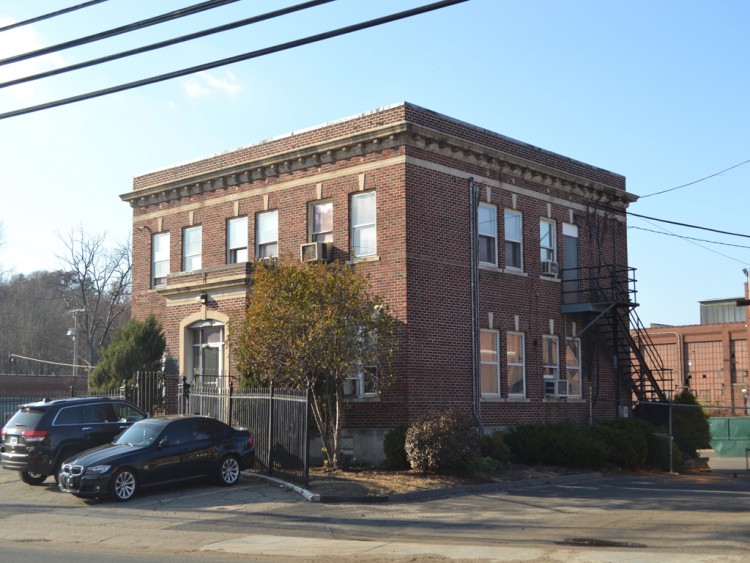
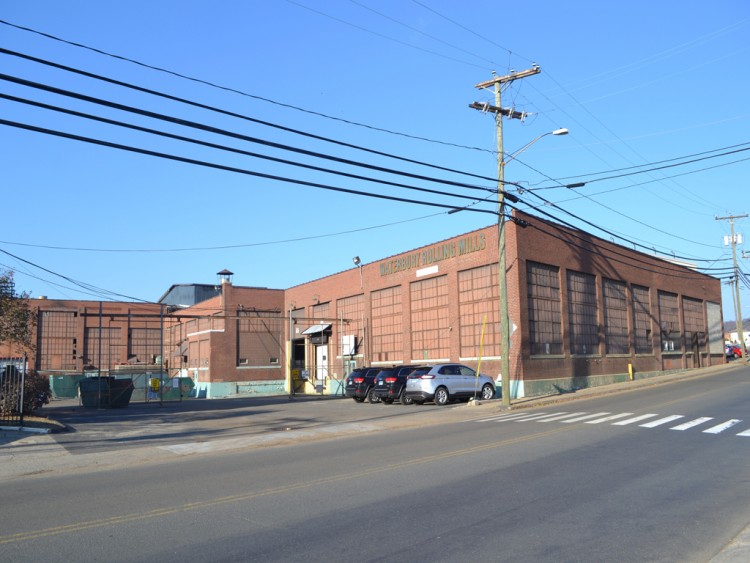
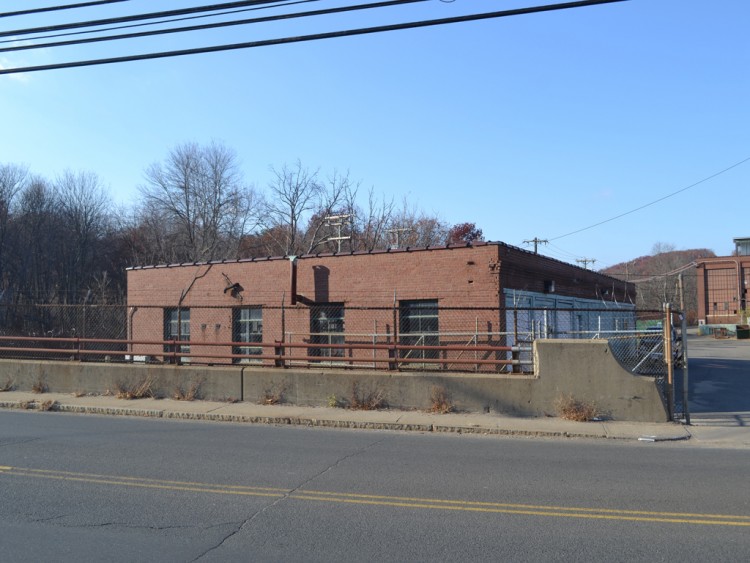
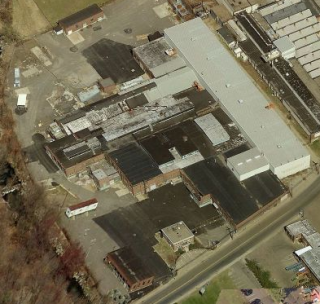
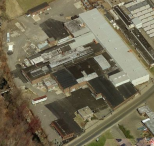
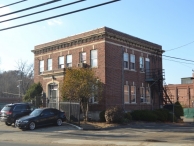
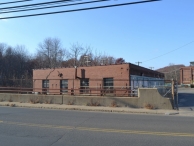
The former Waterbury Rolling Mills Company plant consists of roughly ten adjoining and freestanding red brick blocks located on the north side of East Aurora Street, just east of East Aurora Street’s intersection with Watertown Avenue (CT Route 73). Perhaps the most distinctive building associated with the plant is the main office, which is a freestanding, two-story, 44’ x 44’ red brick Colonial Revival style building located along East Aurora Street. The building was erected ca. 1917 has a concrete foundation, rectangular window openings with splayed red brick and concrete lintels, concrete window sills, a prominent concrete cornice with concrete modillions, red brick parapet, concrete coping, and a flat roof. A one-story red brick garage stands just west of the office building, while the remainder of the plant is situated to the east and north. There are roughly seven adjoining manufacturing buildings, these primarily built and expanded in various stages between ca. 1906 and ca. 1917. Two later additions were completed ca. 1930 and ca. 2000. A one-story red brick block located east of the office building was likely erected ca. 1908 and then expanded ca. 1930. The building formerly housed finishing and shipping operations and adjoined the plant’s main mill and furnace building to the north. To the north of the main mill is the former casting shop and foundry, beyond which there is a scrap storage block. The majority of the buildings have red brick walls with large rectangular window openings, concrete window sills, multipane metal sash with pivot-style openings, tile coping, and flat roofs. Several of the buildings have prominent clerestory monitors. The facility’s most recent addition, a two-story, 80’ x 400’ steel-frame block with corrugated metal siding and a low-pitch front-facing gable roof, adjoins the east side of the plant where the Watertown branch of the New York, New Haven, & Hartford Railroad once ran.
Exterior Material(s)
Structural System(s)
Roof Form
Roof Material
Power Source
Condition
Fair
Condition Notes
The plant is in fair condition. Most of the original windows remain, however, they have been blacked out with paint.
- Property Information
-
Specific Location
One 10.6-acre parcel (240 East Aurora Street) located on the north side of East Aurora Street, just east of East Aurora Street’s intersection with Watertown Avenue (CT Route 73).
Adjacent To
Exterior Visible from Public Road?
Yes
Parcel ID / Assessor Record Link
- 0160-0783-0001 / Link →
Acreage
10.6
Use (Present)
- Sources
-
Form Completed By
Lucas Karmazinas
Date
11/17/2016
Bibliography
- List of Connecticut Manufacturers, 1922, 1924, 1930, 1932.
- Directory of Connecticut State Manufacturers, 1936, 1939.
- Industrial Directory of Connecticut, 1947.
- Register of War Production Facilities in Connecticut, 1951.
- Sanborn Map Company, 1884, 1900, 1924, 1962.
- Aerial Survey of Connecticut, 1934, 1951, 1965, 1970, 1985.
- Waterbury City Directories, Price & Lee Co., 1890-1960.
- History of Waterbury; Pape, William Jamieson, 1918.
- Hartford Courant, 1937, 1991.
- Representative View(s)Click on image to view full file
-



Photographer
Lucas Karmazinas
Photography Date
11/17/2016