Mill Record Norwich
RETURN TO ‘FIND MILLS’Disclaimer: Content for these properties was compiled in 2014-2017 from a variety of sources and is subject to change. Updates are occasionally made under Property Information, however the Connecticut Trust for Historic Preservation (dba Preservation Connecticut) makes no representation or warranty that the information is complete or up-to-date.
- Complex Name (Common)
- Hale Mill
- Complex Name (Historic)
-
- Yantic Woolen Co.
- Address or Location
- 140 Yantic Road, Norwich
- County
- New London
- Historic Designation
- Associated Mill Community
- Historic Information
Companies Associated w/Complex
- Hale Co.
- Hamilton Woolen Mills
- Williams Flannel Mills c.1837-c.1900
Use (Historic)
Largest Documented Workforce
n/a
Historic Narrative
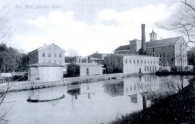
For historical significance see National Register application: http://pdfhost.focus.nps.gov/docs/NRHP/Text/96000780.pdf Textile manufacture began here in 1818 with John and George Tisdale, who built frame mills to make cottons. Erastus Williams bought the mills in 1837 and installed machinery to produce woolens. After a fire in 1865 Williams built the present complex. His son E. Winslow Williams ran the operation for the rest of the century, making flannels and ladies dress goods. At peak operation, in the late 1880s, Williams employed 150 people and ran 10 sets of cards. A synthetic textile producer now occupies the mills. (Roth)
- Architectural Information
Number of Existing Buildings
n/a
Dates of Construction
c.1865, 1877, c.1910
Architect
n/a
Builder
n/a
Building Type
Architectural Description
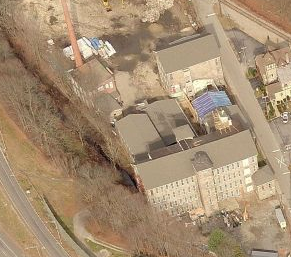
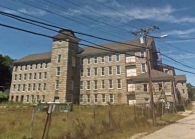
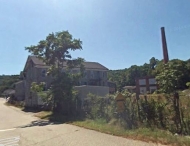
For description see National Register application: http://pdfhost.focus.nps.gov/docs/NRHP/Text/96000780.pdf and https://npgallery.nps.gov/pdfhost/docs/NRHP/Photos/96000780.pdf The buildings all have coursed granite walls and cut-stone sills and lintels. The main mill, 4 1/2-story and about 135' x 40', has a gable roof and a central stair tower with mansard roof. A 2-story wing, about 100' x 40' with near-flat roof, extends to the north. Three smaller contiguous wings, each about 40' x 40', also extend to the north: 3-story, which housed part of the spinning operations; 2-story, which housed carding; and 1-story, which housed picking. Beyond the wings stands a detached 3 1/2-story gable-roofed mill. A c.1910 brick boiler house is the only 20th-century structure in the complex. Several frame workers' dwellings lie south of the mills, but recent highway construction caused demolition of most of the small village. (Roth)
Exterior Material(s)
Structural System(s)
n/a
Roof Form
Roof Material
n/a
Power Source
n/a
Condition
n/a
Condition Notes
n/a
- Property Information
-
Specific Location
on corner of Yantic and Chapel Hill
Adjacent To
Exterior Visible from Public Road?
Yes
Parcel ID / Assessor Record Link
- 49/1/45 / Link →
Acreage
7
Use (Present)
- Other: Initial rehab work for hospitality dating to c.2004; stopped after death of principal. Sold 6/2018 for $826,000 to Michael Jasse, Mill Development LLC, for redevelopment possibilities incl'g hotel. Aug 2020: NPS conditional approval of Part 2. April 2022: project under Gabi Benhamo, Mill Development LLC, received property tax abatement for $26 million rehab as 164-room boutique hotel and banquet hall. 2022-23: Municipality extended gas lines to site. 1/2024: changes to rehab plan approved by Norwich Planning Commission.
- Vacant
- Sources
-
Form Completed By
n/a
Date
n/a
Bibliography
- Roth, Matthew, et al, Connecticut: An Inventory of Historic Engineering and Industrial Sites (Washington DC: SIA, 1981).
- Representative View(s)Click on image to view full file
-
Photographer
n/a
Photography Date
n/a