Mill Record New Hartford
RETURN TO ‘FIND MILLS’Disclaimer: Content for these properties was compiled in 2014-2017 from a variety of sources and is subject to change. Updates are occasionally made under Property Information, however the Connecticut Trust for Historic Preservation (dba Preservation Connecticut) makes no representation or warranty that the information is complete or up-to-date.
- Complex Name (Common)
- Chapin-Stephens Co.
- Complex Name (Historic)
-
- Chapin-Stephens Co.
- Address or Location
- 8 Wickett Street, Pine Meadow, New Hartford
- County
- Litchfield
- Historic Designation
- Associated Mill Community
 What can you do at this mill?
- Historic Information
Companies Associated w/Complex
- Chapin-Stephens Co. ca. 1920-1929
- Stanley Works 1929-late-19th c.
Use (Historic)
Largest Documented Workforce
Unknown.
Historic Narrative
The Chapin-Stephens Company was originally established in 1828 by New Hartford, Connecticut resident Hermon Chapin. Chapin initially manufactured wooden planes, yet began producing carpenters’ rules in 1835. The company’s plant was located in a bend in the Farmington River in the Pine Meadow section of New Hartford, where Chapin created an industrial village consisting of a substantial mill complex and dozens of houses for his employees. In 1854, Chapin’s son Edward assumed the role of superintendant of the firm. Six years later, Edward’s two brothers, George W. and Philip E., likewise joined the company, which was then reorganized as H. Chapin and Sons. This arrangement continued until Hermon Chapin’s death in 1866. H. Chapin and Sons was reorganized following the death of the elder Chapin as Edward bought out his two brothers and formed the E.M. Chapin Company. Philip went on to form the Chapin Machine Company, which manufactured sewing machines in a mill to the southwest of the rule and plane plant. The E.M. Chapin Company continued to operate under the management of Edward Chapin until his death in 1897. The firm, by then one of the most prominent manufacturers of wooden hand planes and other tools in the country, then passed to Edward’s sons, Hermon and Frank, who formed a joint stock company under the moniker of H. Chapin’s Son and Company. This was led by Rufus E. Holmes, who oversaw the firm’s merger with the Riverton, Connecticut-based Stephens Company – the initial founder of which, Delos H. Stephens, having been trained in the manufacture of rulers by the elder Hermon Chapin ¬– between 1900 and 1902. The resultant Chapin-Stephens Company continued to operate until 1929, whereupon the plant was acquired by the Stanley Works of New Britain, Connecticut. The substantial Chapin-Stephens Company plant was largely demolished between 1934 and 1951, perhaps as a result of damage incurred during the 1936 Flood. Two other plants immediately to the southwest, these formerly occupied by the Chapin Machine Company and the D.B. Smith Sons Company, a manufacturer of cotton duck, were likewise removed during this period and little evidence of their existence remains at the present time. The Stanley Works preserved several buildings previously occupied by the Chapin-Stephens Company, yet discontinued the manufacture of wooden planes in order to focus on rule production. The plant was substantially enlarged during the 1960s, yet was vacated by Stanley Works during the late-20th century.
- Architectural Information
Number of Existing Buildings
Roughly six (6) adjoining primary blocks.
Dates of Construction
ca. 1920, ca. 1940, ca. 1960, ca. 1965.
Architect
n/a
Builder
n/a
Building Type
Architectural Description
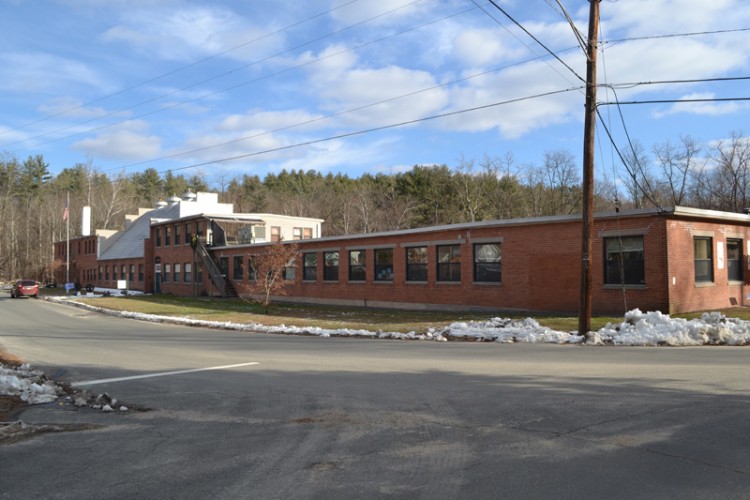
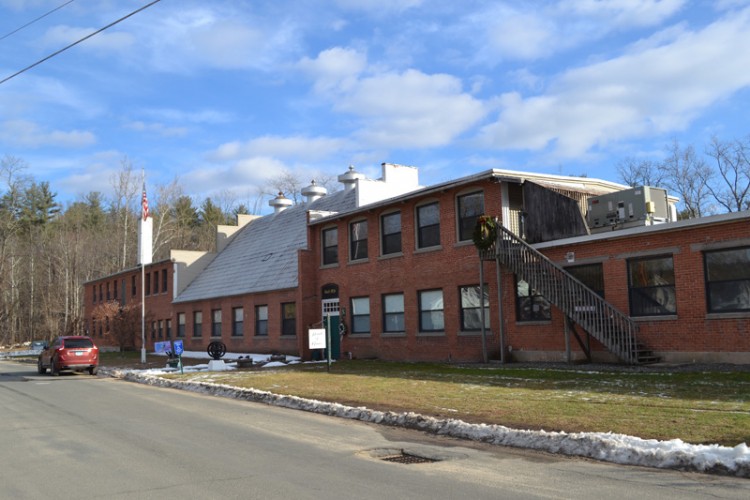
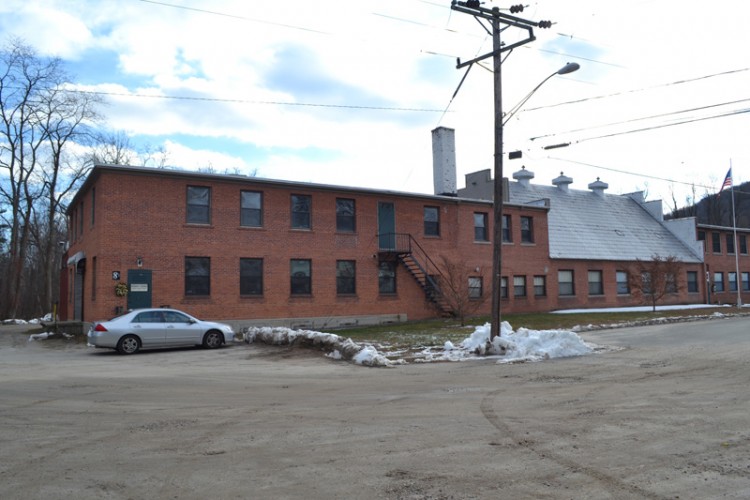
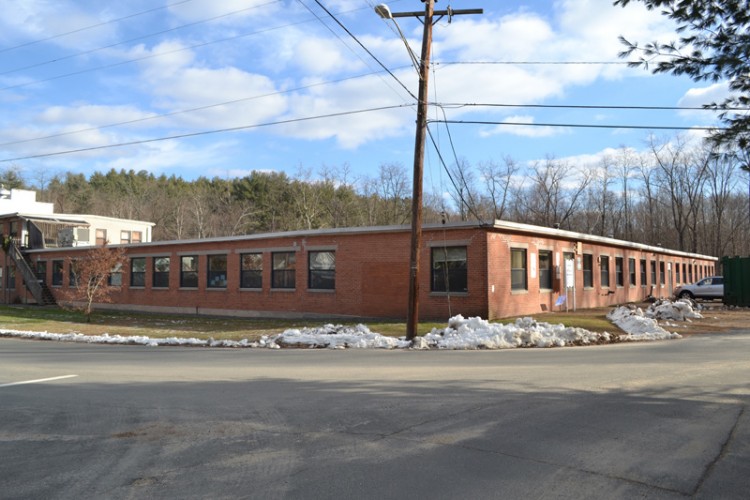
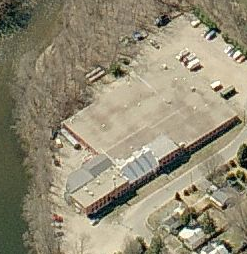
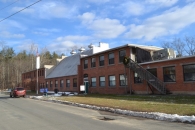
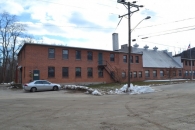
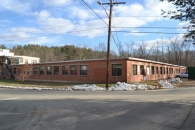
The former Chapin-Stephens Company plant is comprised of roughly seven adjoining primary blocks located on the south side of Wickett Street, at the southeast corner of Wickett Street’s intersection with Ten Street. The two oldest blocks were erected ca. 1920 and are located on the northern side of the plant facing Ten Street. One of the two buildings, which served as an assembly shop, bears a sign above its main entry that reads ‘Built 1826,’ however, the block is not present on Sanborn maps from 1897, 1903, and 1912. The 42’ x 40’, two-story building is of plain red brick mill construction and has a concrete foundation, segmental-arched window openings with concrete sills, and a low-pitch side-gabled roof with exposed rafter tails. The entry is located at the eastern end of the five-bay façade and consists of a paneled replacement door set below a ten-light transom. A blind transom above this contains the aforementioned date plaque. The second ca. 1920 block, this identified on maps as a forge shop, adjoins the east elevation of the assembly building. The two are separated by a stepped brick firewall that rises the full height of the second building’s steeply-pitched side-gabled roof. The forge shop stands one-story tall and measures roughly 60’ x 40’. It is six bays wide and has rectangular window openings with concrete sills and brick lintels. The roof is lined with three evenly-spaced cylindrical metal ventilators. A second stepped brick firewall forming the east elevation divides the block from a third red brick block, this erected in two phases ca. 1940. This two-story, 85’ x 40’ building has a concrete foundation, rectangular window openings with either red brick or concrete sills, a plain wood cornice and exposed rafter tails, and a flat roof. A tall rectangular red brick chimney rises from the center of the block. Another substantial addition to the plant was completed ca. 1960, when a one-story, L-shaped building was erected adjoining the west elevation of the assembly block. This measures roughly 120’ x 175’ and has a concrete foundation, rectangular window openings with concrete sills and lintels, and a flat roof. The present plant was completed through the construction of three additional blocks on the south side of the ca. 1920 and ca. 1940 blocks during the late-1960s. From west to east they consist of a one-story, 152’ x 126’ flat-roofed block; a two-story, 37’ x 41’ side-gabled block; and a two-story, 52’ x 38’ flat-roofed block. All are of red brick construction.
Exterior Material(s)
Structural System(s)
Roof Form
Roof Material
Power Source
Condition
Fair
Condition Notes
The complex is in fair condition. Although the windows throughout the plant have been replaced with modern units, the entirety of the facility appears to be well maintained.
- Property Information
-
Specific Location
One 4.00-acre parcel (8 Wickett Street) located on the south side of Wickett Street, at the southeast corner of Wickett Street’s intersection with Ten Street.
Located in Pine Meadow National Historic District (1996).
http://npgallery.nps.gov/nrhp/GetAsset?assetID=a481a5af-0ece-47ef-a72a-ba097f191db3Adjacent To
Exterior Visible from Public Road?
Yes
Parcel ID / Assessor Record Link
- 44A/117/008. (for record, use link and type in address or parcel number) / Link →
Acreage
4.00
Use (Present)
- Sources
-
Form Completed By
Lucas A. Karmazinas
Date
01/02/2016
Bibliography
- List of Connecticut Manufacturers, 1922, 1924, 1930, 1932.
- Directory of Connecticut State Manufacturers, 1936, 1939.
- Industrial Directory of Connecticut, 1947.
- Register of War Production Facilities in Connecticut, 1951.
- Map of Litchfield County; Clark, Richard, 1859.
- Atlas of Litchfield County, F.W. Beers & Co., 1874.
- Sanborn Map Company, 1897, 1903, 1912, 1925, 1936.
- Aerial Survey of Connecticut, 1934, 1951, 1965, 1970, 1985.
- Connecticut Historical Society, Finding Aid for Chapin Family.
- Cunningham, Jan. 1996. National Register Nomination No. 96001463. National Park Service.
- Representative View(s)Click on image to view full file
-

Photographer
Lucas A. Karmazinas
Photography Date
01/02/2016