Mill Record Thompson
RETURN TO ‘FIND MILLS’Disclaimer: Content for these properties was compiled in 2014-2017 from a variety of sources and is subject to change. Updates are occasionally made under Property Information, however the Connecticut Trust for Historic Preservation (dba Preservation Connecticut) makes no representation or warranty that the information is complete or up-to-date.
- Complex Name (Common)
- Wilsonville Mill
- Complex Name (Historic)
-
- Wilsonville Mill
- Address or Location
- 1405 Riverside Drive, Wilsonville, Thompson
- County
- Windham
- Historic Designation
- Associated Mill Community
- Historic Information
Companies Associated w/Complex
- Israel Putnam Mills Inc. 1929-ca. 1960
- Lawrence Keegan Co. ca. 1890-1929
- Reegan’s Mill mid-19th c.-ca. 1890
Use (Historic)
Largest Documented Workforce
200 (1934).
Historic Narrative
The site along the French River occupied by the Wilsonville Mill has an industrial history extending into the 18th century. Originally known as Child’s Mills, the location was that of grist and saw mills during the late-1700s. In 1823, the mills and water privilege were acquired by Laban T. Wilson, who initiated the manufacture of woolen goods alongside the preestablished uses. Wilson lent his name to the small village that grew up around the mill and he produced wool satinets there for some ten years before selling the business to John Farnham. By the late-1880s the mill had passed to a Mr. Reegan, who succeeded a line of proprietors including Wheeler Barrett, Riel Converse, Archelaus Upham, the Capron Brothers, E.A. Wheelock, and Oscar Chase. The mill was destroyed by fire under Chase’s ownership and it appears to have been Reegan who revived the site’s industrial use. By 1890, the Wilsonville Mill had been acquired by Lawrence Keegan, who manufactured wool cassimeres on the site. The water-powered mill was comprised of six primary buildings by this point in time, including a stone main building, dye room, and boiler plant, and frame scouring, dyeing, and weave buildings. During the early 1900s, the plant housed 36 broad looms and 2,400 spindles and produced woolen textiles for men’s and women’s wear. This work continued into the late-1920s, whereupon Lawrence Keegan’s son, Edward Keegan, assumed control of the mill. The business was reorganized as the Israel Putnam Mills in 1929, however, neither the firm’s ownership or business was changed. Employment doubled from 100 to 200 hands between 1929 and 1934 and despite experiencing to a three-day strike of its entire workforce in November 1934, the company remained in operation into the 1950s. Production during the 1930s shifted towards the manufacture of woolen blankets, however, all textile production appears to have ceased during the mid-20th century.
- Architectural Information
Number of Existing Buildings
Roughly four (4) primary blocks.
Dates of Construction
Mid-19th c., ca. 1890, ca. 1995.
Architect
n/a
Builder
n/a
Building Type
Architectural Description
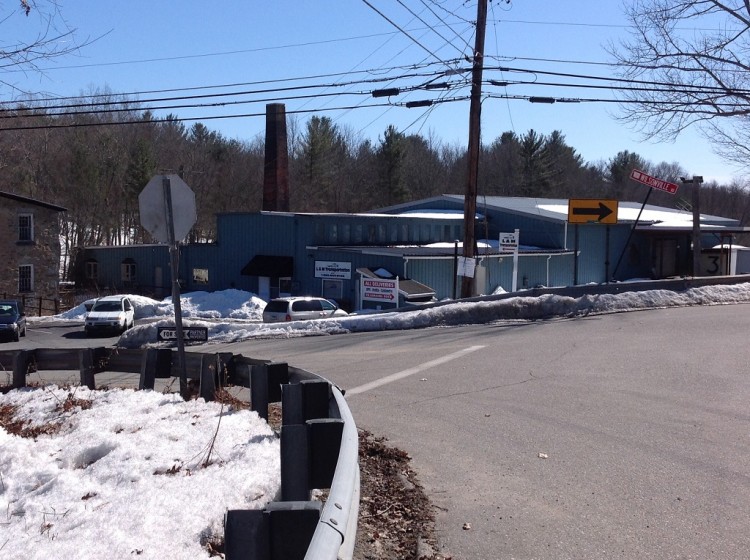
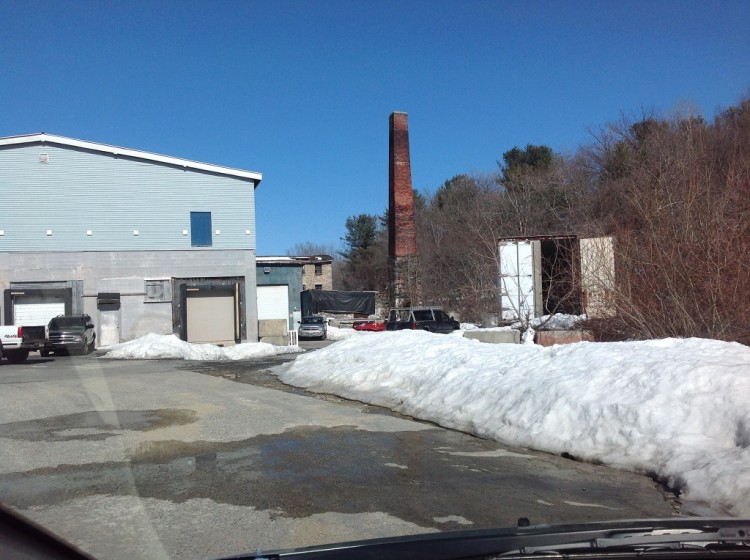
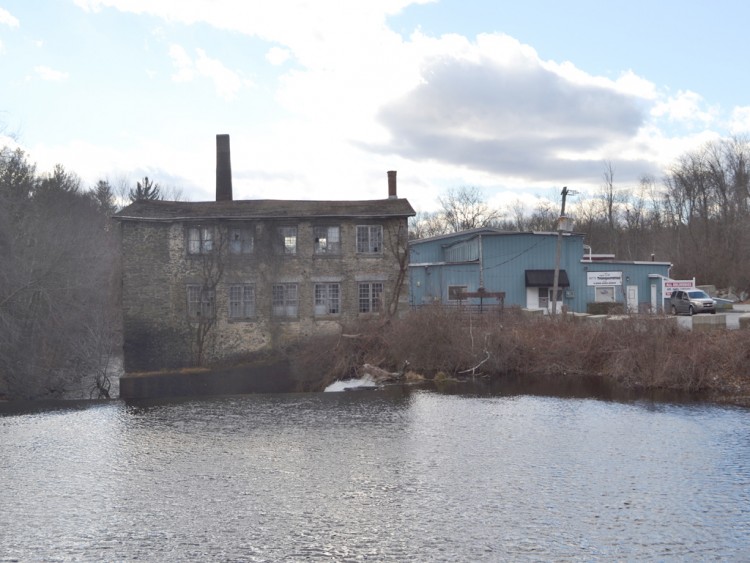
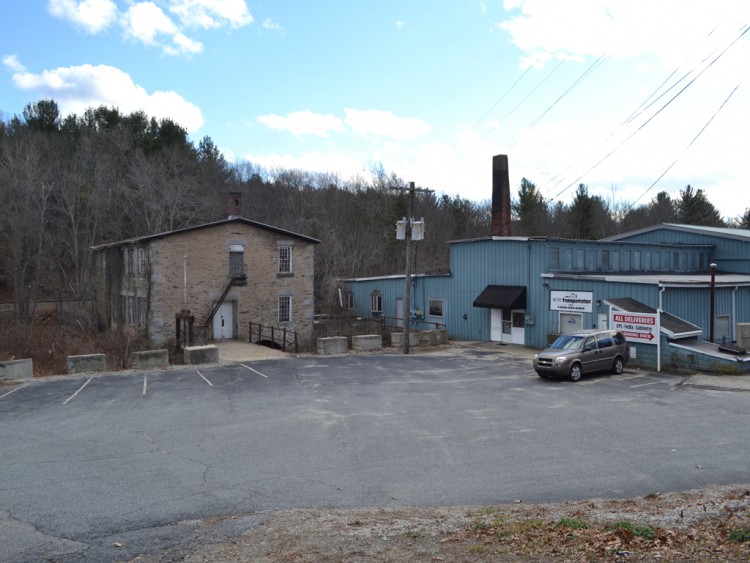
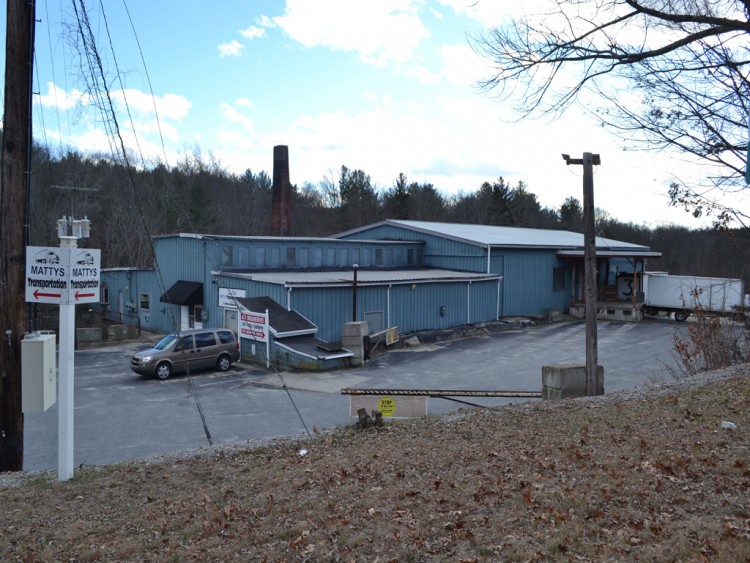
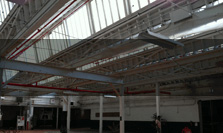
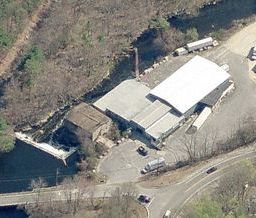
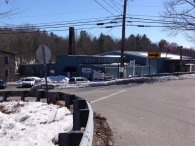
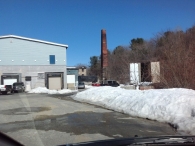
The Wilsonville Mill is comprised of roughly four adjoining and freestanding primary blocks located on the south side of Riverside Drive, at the southeast corner of Riverside Drive’s intersection with Wilsonville Road. The oldest block associated with the mill was erected alongside the French River during the middle of the 19th century and is a freestanding, two-story, 42’ x 58’ rubblestone building with a stone foundation, rectangular window openings with heavy stone sills and lintels, and a low-pitch front-facing gable roof. The fenestration on the front and rear (west and east) elevation consists of twelve-over-twelve double-hung wood sash, while the windows on the side (north and south) elevations of the building are comprised of nine-over-nine double-hung wood sash, these in paired arrangements. The primary entrance to the mill is located just north of center on the façade, and consists of a recessed entry set in a heavy stone surround. The remainder of the mill consists of three adjoining one- and two-story blocks that stand roughly 25’ south of the original mill. One of the three blocks, this measuring roughly 58’ x 86’, stands along the French River where an illustration from 1890 identifies three blocks, a stone dye house and frame dye and scouring rooms. It appears that these have since been unified under a single roof and the gaps between the buildings enclosed and sheathed with vertical aluminum siding. A 76’ x 62’ wood-frame weave building adjoins the west elevation of the amalgamated block. This was erected ca. 1890 and is notable for the tall clerestory monitor that extends the full length of the block. The building has been sheathed in vertical aluminum siding, thus obscuring its original details. A two-story, 70’ x 112’ metal-frame block adjoins the south elevation of the ca. 1890 weave building. This appears to have been erected ca. 1995 and it replaced a two-story reinforced concrete manufacturing building previously located on the site. The new structure lacks window openings and has a concrete foundation, vertical aluminum siding, and a low-pitch front-facing gable roof. A covered loading dock is located on its west elevation, this providing access to a single loading bay.
Exterior Material(s)
Structural System(s)
Roof Form
Roof Material
Power Source
Condition
Fair, Deteriorated
Condition Notes
The complex is in fair to deteriorated condition. Although the wood-frame blocks appear to be well maintained, the original stone mill stands vacant and in disrepair.
- Property Information
-
Specific Location
One 3.36-acre parcel (1405 Riverside Drive) located on the south side of Riverside Drive, at the southeast corner of Riverside Drive’s intersection with Wilsonville Road.
Adjacent To
Exterior Visible from Public Road?
Yes
Parcel ID / Assessor Record Link
- 57/61/1 / Link →
Acreage
3.36
Use (Present)
- Sources
-
Form Completed By
Lucas A. Karmazinas
Date
01/11/2016
Bibliography
- List of Connecticut Manufacturers, 1922, 1924, 1930, 1932.
- Directory of Connecticut State Manufacturers, 1936, 1939.
- Industrial Directory of Connecticut, 1947.
- Register of War Production Facilities in Connecticut, 1951.
- Map of Tolland County, Wm. C. Eaton & H.C. Osborn, 1857.
- Atlas of Tolland County, O.W. Gray, 1869.
- Sanborn Map Company, 1897, 1903, 1912, 1925, 1936.
- Aerial Survey of Connecticut, 1934, 1951, 1965, 1970, 1985.
- Map of Windham County, E.M. Woodford, 1855.
- Atlas of Windham County, O.W. Gray, 1869.
- Hartford Courant, 1929, 1934, 1949.
- A History of Windham County, Connecticut; Bayles, Richard M., ed., 1889.
- A Modern History of Windham County, Connecticut; Lincoln, Allen B., 1920.
- Representative View(s)Click on image to view full file
-


Photographer
Lucas A. Karmazinas
Photography Date
01/11/2016